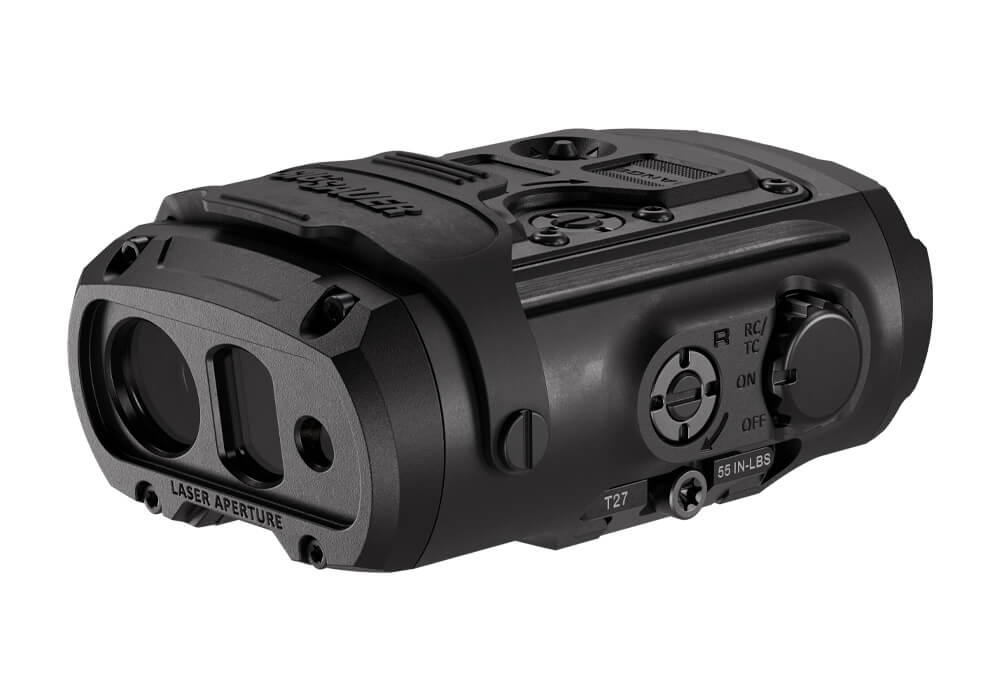
Angle rangefinders are designed for situations where elevation changes make a straight line-of-sight measurement less useful. A conventional rangefinder reports the direct distance between the user and the target, but an angle-compensating rangefinder also measures whether the target is above or below the user and calculates the true horizontal distance. That distinction matters because gravity acts across a horizontal plane. When a shot is taken uphill or downhill, the projectile or arrow generally travels a shorter horizontal distance than the line-of-sight reading suggests, which can cause an inexperienced shooter to hold or dial for too much distance and strike high. An angle rangefinder helps account for that difference by displaying an adjusted distance, often alongside the actual line-of-sight measurement and the incline or decline angle. This can be particularly valuable from a tree stand, a hillside, a ridge, or across a canyon, where even a moderate slope can influence trajectory. Bowhunters may use the compensated distance to select the appropriate pin or aiming reference, while rifle hunters can use it as one part of a broader process that includes understanding their cartridge, confirmed ballistic data, environmental conditions, and a properly zeroed optic. These tools also have practical value for target shooting on uneven terrain, course management, and outdoor observation where knowing the horizontal equivalent helps with planning. For shoppers comparing angle rangefinders, the most important first step is matching the unit to the distances, terrain, and activity where it will be used. A compact model may be convenient for carrying in a pocket or chest pack, while a unit with greater optical reach and a brighter display may be preferable for open country or extended glassing sessions. Magnification can make distant targets easier to identify, but a wider field of view may be more helpful in thick cover or when locating moving game. Consider how quickly the rangefinder returns a reading, how easily its buttons can be operated with gloves, and whether the display remains legible against shaded timber, bright snow, or a pale sky.
Durability and handling become especially important during the cooler months, when damp ground, frost, wind, and changing light can turn a short outing into a demanding one. Look for a weather-resistant housing, secure grip, protected lenses, and controls that are simple enough to use without taking your attention away from the surroundings. A rangefinder that fits naturally in the hand and returns consistent readings can be more useful than a feature-packed unit that is awkward to steady or difficult to configure. Battery life is another practical consideration, particularly for hunters who spend long days away from a vehicle or base camp. Check the battery type, carry a suitable spare, and store the rangefinder where it can be reached without rummaging through a pack. Some angle rangefinders provide more than one ranging mode, such as a standard line-of-sight distance, an angle-compensated distance, or a scan function that updates readings as the user moves across a landscape. These features can help when a target is partially obscured, when several possible aiming points are in view, or when the user needs to assess a route through broken terrain. Before heading afield, take time to understand which distance is displayed, how the unit indicates compensation, and whether a mode intended for archery or rifle use is selected. It is also wise to compare readings at known distances and practice on slopes similar to those found in the field. An angle rangefinder supports sound judgment; it does not replace positive target identification, a safe backstop, responsible handling, knowledge of local regulations, or a verified understanding of the equipment being used. For shoppers who regularly work at greater distances, our selection of Long Distance Rangefinders offers another category to consider when comparing optical reach and ranging performance.
Angle rangefinders can be a thoughtful gift for a hunter, archer, outdoor enthusiast, or precision-minded sport shooter, especially for someone who spends time in hilly country and appreciates equipment that solves a specific field problem. They are also useful for experienced users who already own binoculars, a spotting scope, or other optics and want a dedicated tool for confirming distance without changing their viewing setup. A gift recipient may use an angle rangefinder while scouting a new property, preparing for a mountain hunt, checking a long cross-valley shot, or practicing from an elevated position before the season becomes busy. During the transition from warmer weather into the cooler months, changing leaves and low-angle sunlight can make familiar terrain look different, and reliable distance information can make planning a position more straightforward. In open country, the tool may help distinguish a nearby slope from a farther ridgeline; in wooded terrain, it can provide a quick reading through a gap in the trees before the opportunity disappears. For bowhunters, compact dimensions and fast operation are often priorities because the rangefinder may be carried alongside a release, calls, and other accessories. Rifle hunters may place greater emphasis on optical clarity, extended ranging capability, ballistic compatibility, or a display that is easy to read while wearing gloves. Golfers and land managers may also appreciate angle measurement when evaluating elevation changes across a course or property, although the ideal features can differ from those preferred for hunting. No matter the intended use, buyers should consider the distance at which the unit can reliably range realistic targets rather than relying only on an advertised maximum, since target reflectivity, weather, surface texture, and visibility all affect performance. A well-chosen angle rangefinder becomes part of a deliberate routine: locate the target, confirm the reading, account for the terrain and conditions, and make decisions within the limits of personal training and equipment. That combination of accurate information, straightforward controls, and dependable construction makes angle rangefinders a practical addition to an outdoor kit throughout the changing seasons.