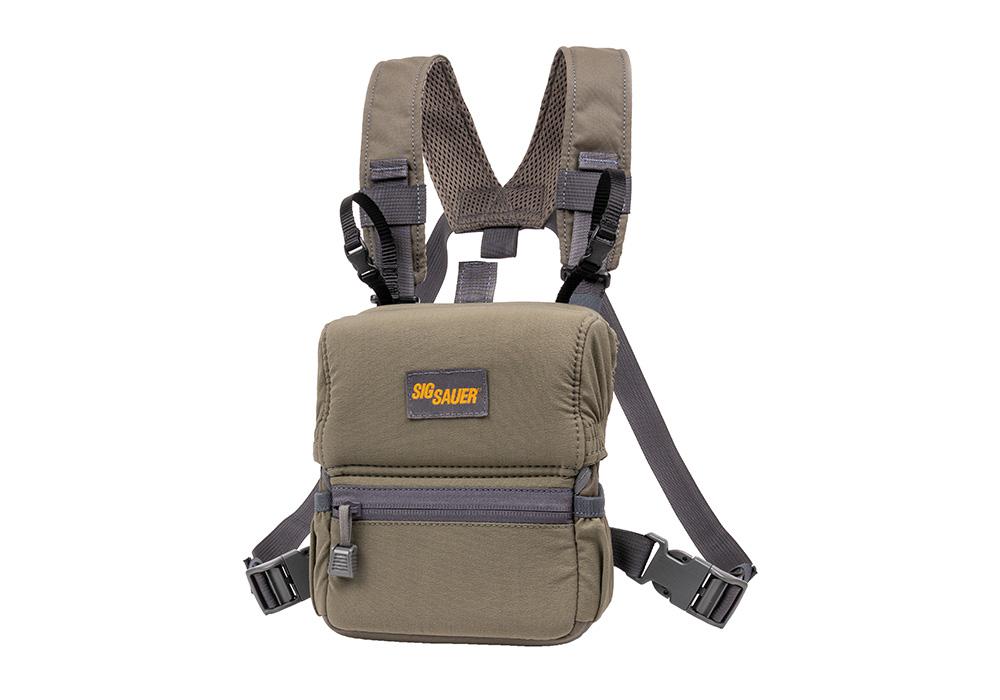
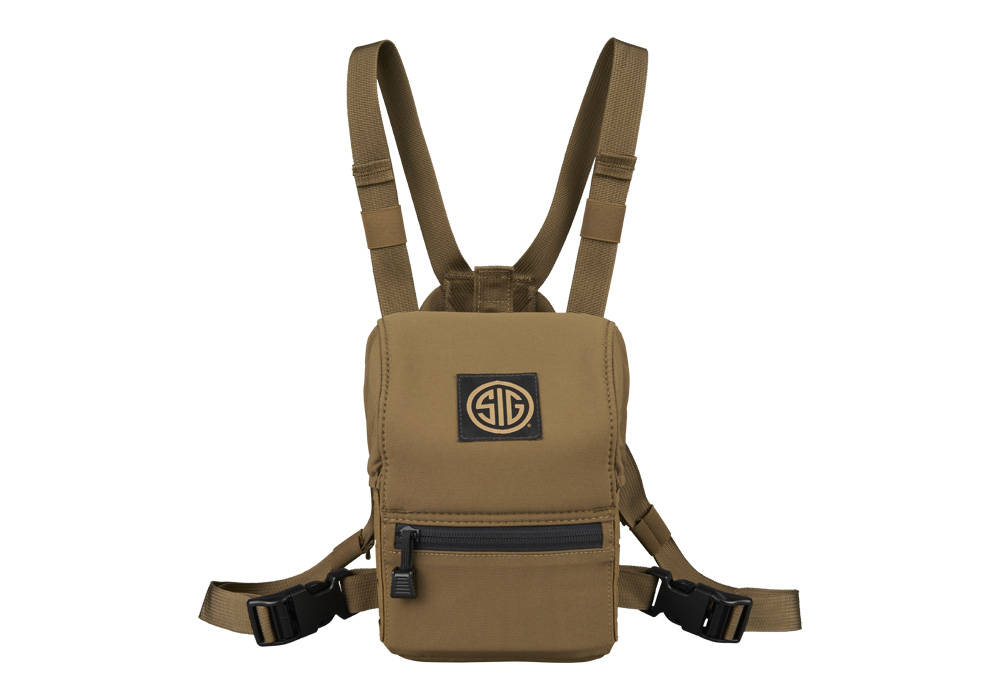
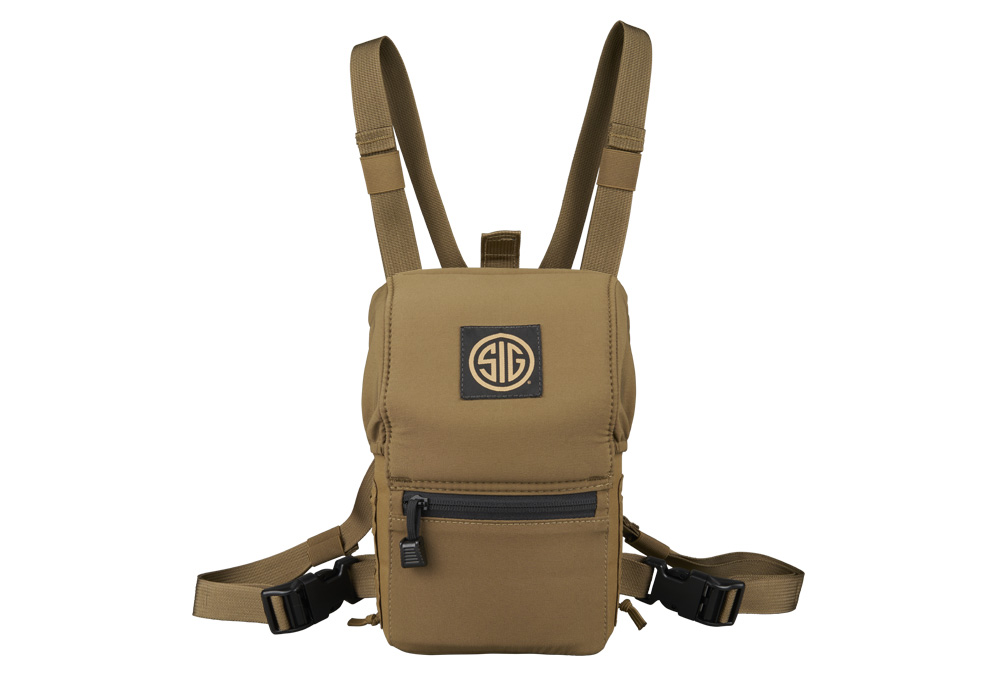
A binocular harness is a chest-mounted carrying system that holds binoculars close to the body while distributing their weight across the shoulders and back. Compared with a traditional neck strap, a properly fitted harness can reduce pressure on the neck and limit swinging as the wearer walks, climbs, or bends forward. That balance of support and access makes binocular harnesses useful for hunters, birdwatchers, hikers, wildlife photographers, and anyone who spends extended periods observing at a distance. Instead of having binoculars swing toward a rock when stepping over a log, the wearer can keep them centered against the chest until the next opportunity to glass. The category includes simple strap systems that connect directly to the binoculars and enclosed chest pouches that surround the optics with an additional protective layer. Open designs emphasize low bulk and straightforward access, while pouch-style harnesses help shield lenses and housings from brush, dust, and contact with other equipment. The right arrangement depends on how the binoculars will be carried and how frequently they need to reach eye level. A birder following movement through a stand of trees may favor an unobstructed lift, while someone covering uneven ground may place greater value on a secure enclosure. Comfortable support matters during quiet observation as much as it does on the move: a harness should allow the binoculars to rise naturally without pulling the shoulder straps out of position. When the binoculars are lowered, they should return to a stable resting point rather than hang loosely below the chest. For people who alternate between walking and prolonged viewing, that predictable movement can make the carrying system feel less intrusive. A harness does not change optical performance, but it can help keep binoculars within reach, protected between observations, and comfortable enough to carry throughout an outing rather than leave tucked inside a pack.
Fit involves both the wearer and the binoculars. Adjustable shoulder straps and torso webbing allow a harness to sit securely without restricting breathing, arm movement, or the ability to bend at the waist. A chest pouch generally works best when it rests high enough for easy access but not so high that its upper edge presses into the throat when seated. The strap arrangement also needs to work with other equipment. Backpack shoulder straps, sternum straps, and a camera strap can compete for the same space, so a low-profile back panel and well-positioned adjustment hardware may make a noticeable difference over several miles. Matching the enclosure to the binoculars requires more than checking the objective lens diameter. Overall height, width, eyecup position, lens covers, and attachment points all affect how easily the optics enter and leave the pouch. A snug fit should still leave enough clearance to grasp the binoculars without forcing them past the opening. For a lighter carrying arrangement, compact binoculars can pair well with a suitably sized harness, provided the retention straps and interior dimensions match the smaller housing. Materials influence comfort, protection, and long-term durability. Nylon and polyester fabrics are common choices for their useful balance of strength and weight, while reinforced stitching helps support areas that receive repeated tension. A soft interior lining can reduce rubbing against the binocular housing, and breathable backing may improve comfort where the pouch rests against the torso. Buckles, strap keepers, and closure hardware deserve equal attention because they are handled repeatedly throughout an outing. Closure styles also affect the experience: a lid that opens away from the body may provide a clearer view into the pouch, while elastic, buckle, or magnetic systems each have different handling characteristics. Quiet operation can be valuable when observing nearby wildlife, but secure retention remains important when crouching, scrambling, or leaning forward. Where a harness includes accessory pockets, their placement should preserve an easy binocular draw rather than crowd the main opening.
Durability comes from the whole construction, not simply a rugged-looking exterior. Consistent stitching, reinforced attachment points, smooth hardware, and webbing that holds its adjustment all contribute to dependable use. Narrow, twisted straps or bulky seams can become distracting during a long walk, even when the pouch itself feels well padded. A balanced setup carries the binoculars without encouraging the wearer to overtighten the harness, and loose strap ends should remain contained rather than catch on branches or interfere with other equipment. Retention tethers can provide an additional connection between the binoculars and harness, but their length needs to allow a full, comfortable viewing position. Care is generally straightforward and should follow the fabric and hardware instructions supplied with the harness. Removing loose grit before wiping the exterior helps prevent abrasive particles from working into seams and closures. Gentle spot cleaning is often more appropriate than aggressive scrubbing, and the harness should be completely dry before storage. Binocular lenses require separate optical cleaning methods; a fabric pouch lining or shirt sleeve is not a substitute for suitable lens-care materials. Periodic checks of stitching, buckles, cord attachments, and adjustment points can reveal wear before it interferes with an outing. Storing the harness without heavy objects pressing against it also helps preserve the shape of an enclosed pouch. As a gift, a binocular harness suits someone who already carries optics for birding, trail exploration, hunting, or wildlife observation, especially if a neck strap has become uncomfortable. The most useful details to know are the recipient’s binocular dimensions, preferred carrying position, and whether the harness needs to work alongside a backpack. Those practical considerations matter more than appearance alone. Whether the day involves following a distant bird across an open field or pausing along a wooded trail, a well-matched harness keeps the emphasis on observation, with binoculars supported close to the body and ready for the next clear view.