Bowhunting Rangefinders

Explore bowhunting rangefinders with attention to archery settings, portability, and display readability. Compare each model’s ranging modes, power source, and carry options to find a practical fit for your field kit.

per page
Bowhunting rangefinders put a number on distances that can be surprisingly hard to judge by eye. A stump across a shallow draw can look closer than it is, especially when brush hides the ground between the two sides. On a wooded archery course, a gap between two trunks may look wider from the trail than it does from the practice station. A handheld laser rangefinder measures the distance to a surface and shows the reading in the viewfinder, so the number and the landmark are visible together. For archery use, the shortest distance the unit can measure may tell a shopper more than the biggest number on the spec sheet. A rangefinder with a long advertised reach isn’t necessarily a better fit for practice lanes, wooded terrain, and nearby landmarks. That maximum often refers to a large, reflective surface under favorable conditions; a small patch of bark isn’t likely to return the same reading at the same distance. The type of readout matters as well. A straight-line reading gives the direct distance to the object in view, while an angle-adjusted mode accounts for the incline or decline. The distinction is easiest to see on steep ground, where a tree at eye level and a stump well below the trail can be the same straight-line distance away but yield different angle-adjusted readings. Clear mode indicators make it easier to tell which number is on the screen without taking a second look. A single-reading mode is a straightforward choice for checking a fixed landmark, while a scan mode can update the readout as the view passes from one surface to another. Not every archer needs several modes. For someone who mainly checks distances along a familiar practice course, a legible display and a control that’s easy to find by touch may get more use than a long list of settings.

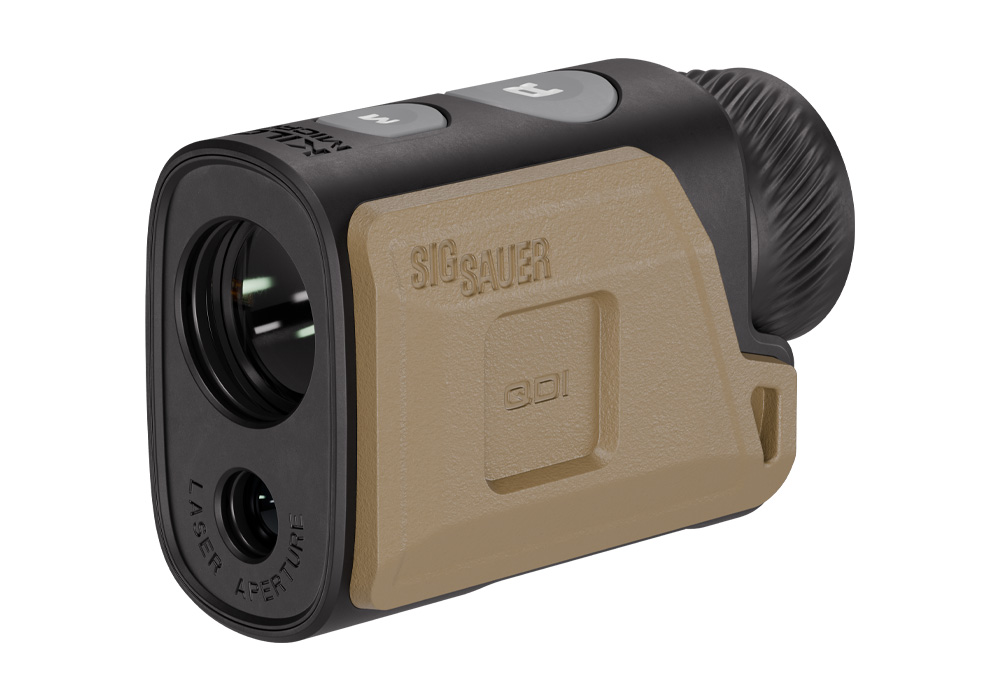
The feel of a bowhunting rangefinder can matter as much as the list of functions. A compact housing is easier to tuck into a close-fitting pouch, but there still needs to be enough room for a comfortable grip without covering the front lens or crowding the controls. Textured rubber can give the thumb and fingers a more secure hold, while a rigid polymer or metal housing provides structure around the optics and electronics. A sealed housing can add protection against dust and moisture, though the degree of protection varies by model. The eyepiece is another point of fit. For an archer who wears glasses, enough eye relief, or space between the eye and the eyepiece, can help keep the full readout visible without pressing the unit against the glasses. A focus adjustment can bring the digits into sharper view, and adjustable brightness can be useful when a pale patch of ground and a shaded tree trunk sit side by side in the viewfinder. Brighter isn’t always clearer: digits that stand out against a light background can overpower detail against darker bark. Magnification brings distant details into view, but a wide field of view can feel more natural in close timber, where several trunks might look alike through a narrow window. Carry comfort depends on where the unit sits relative to the rest of the gear. A pouch that fits the housing without pinching it, or a lanyard attachment that keeps the unit from swinging against other equipment, can make it less cumbersome to carry. Care is similar to that of other handheld optics. Brushing away grit before wiping the lens helps protect the glass, and putting the unit away dry keeps moisture from sitting against the housing inside a closed pouch. A separate pocket also keeps the lens away from keys and other hard objects, which can leave marks even when the housing itself shows little wear.

These rangefinders suit a range of archers, from someone learning what twenty yards looks like without markers to a longtime bowhunter who wants a compact optic for unfamiliar ground. At a practice range, a distance reading gives a beginner a way to compare an estimate with a known number. On a wooded course, that same comparison can show how much an open stretch of ground changes the impression of distance compared with a lane framed by trees. For an experienced archer replacing a familiar unit, the details worth noticing may be smaller: whether the readout uses the preferred units, whether the main button has a distinct feel, and whether the battery indicator is visible without opening a menu. Those are practical details on a device that often spends more time in a pouch than at the eye. A rangefinder can also be a thoughtful gift for someone taking up archery or spending more time on outdoor practice courses. A simple interface is a sensible choice when preferences aren’t yet clear. For someone who already carries a binocular harness, wears glasses, or favors a particular pouch, the shape of the housing and the fit of the eyepiece may be better clues than the number of modes. The broader Hunting Rangefinders selection offers another point of comparison for shoppers who also want an optic for more open terrain or general field use. For a purchase centered on bowhunting, the most noticeable differences tend to show up close to home: how naturally the unit comes to the eye, how readily the digits separate from a busy background, and how comfortably the housing fits alongside gear already in regular use. A bright, readable display and a grip that feels natural can count for more in those moments than extra reach that rarely comes into play.

FAQ

Related Pages

Compare Products
Items
Launch Compare

Zip Code Verification

Some localities have legal restrictions on products which requires the validation of your ZIP code

Age Verification

Some localities have legal restrictions on products which requires the validation of your age