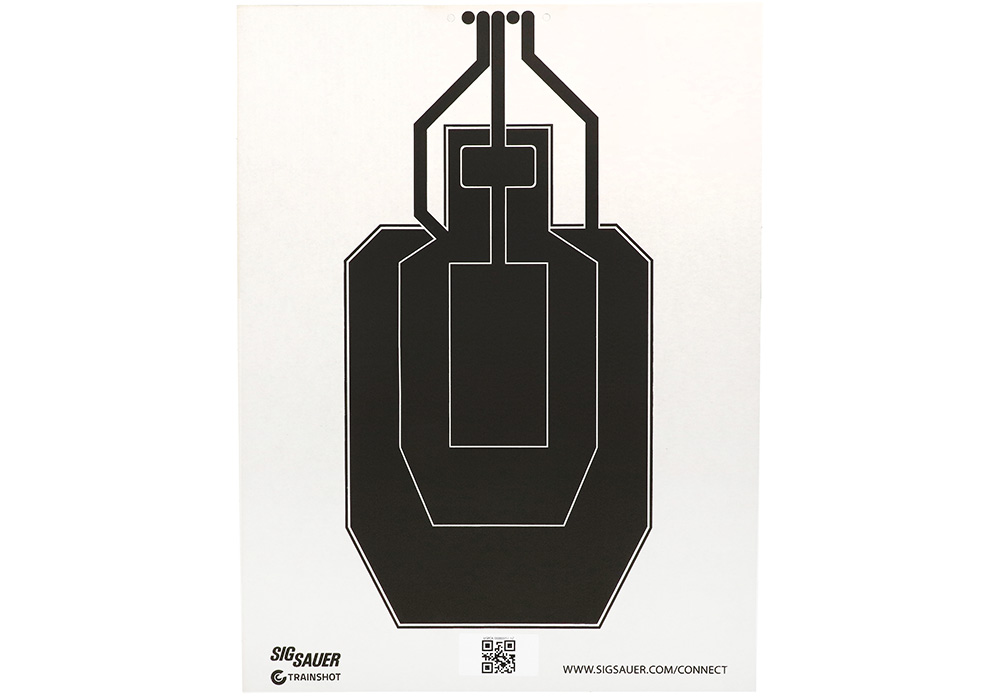
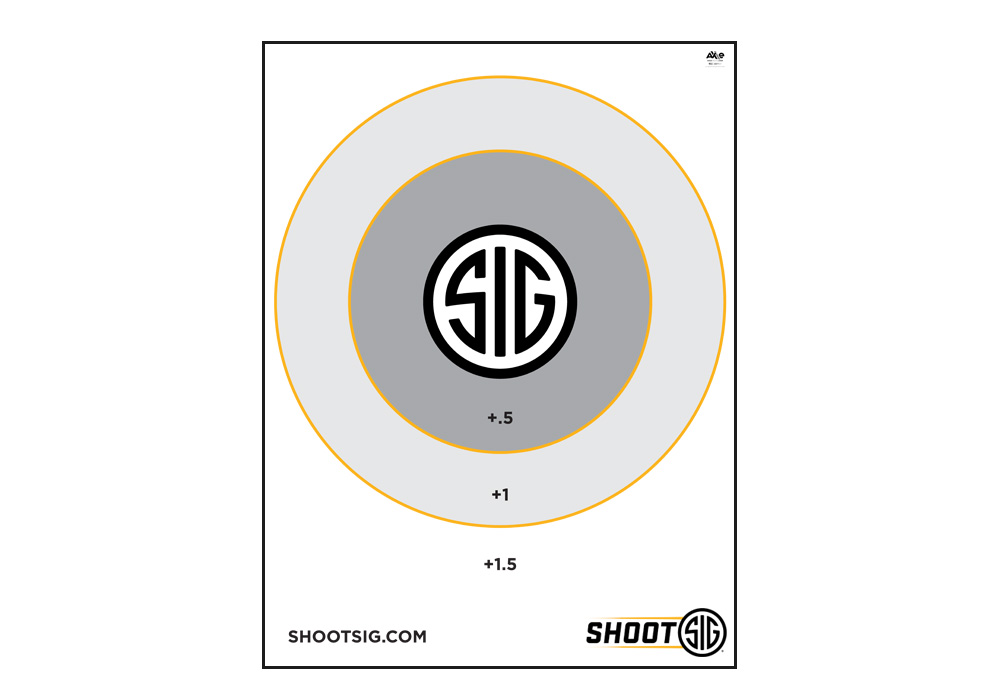
Bullseye targets are practice targets with a central aiming point surrounded by concentric rings, giving shooters a clear reference for precision, shot placement, and scoring. Their familiar circular layout works for casual range visits, organized competition, and equipment checks because it keeps the visual task consistent from one session to the next. A well-defined center draws the eye, while the surrounding rings help show how closely impacts cluster and how far they sit from the intended point of aim. Those are related but different observations: a tight group can sit away from the center, while scattered hits can still include a few shots in the bullseye. That distinction is one reason this target style remains useful across experience levels. Paper bullseye targets are common for handgun, rifle, and airgun practice, while archery requires target faces paired with backing designed to stop arrows. The printed face alone is not a stopping surface for bullets or arrows. Target dimensions also matter. A large sheet can provide room to locate impacts, but the diameter of its center determines how prominent the aiming reference appears at a given distance. Bold black centers, contrasting backgrounds, numbered rings, and fine scoring lines each serve different preferences. Some shooters favor a simple, uncluttered circle that is easy to resolve through their sights; others prefer detailed rings that support consistent scorekeeping. A target intended for a particular competitive discipline may use prescribed dimensions and scoring zones, so a similar-looking design is not necessarily an equivalent match target. For general recreation, a readable layout and compatibility with the range setup often matter more than formal scoring specifications. Whether used to establish a baseline with familiar equipment or document progress over repeated visits, bullseye targets provide a straightforward record on the page. The most useful format is one whose center, rings, and overall dimensions suit the intended activity without adding visual clutter that makes results harder to interpret. Clear printing matters as much as an elaborate design when the goal is to compare sessions fairly.
Materials and construction influence how a bullseye target handles before, during, and after a range session. Lightweight paper is convenient to carry in quantity and easy to file afterward, while heavier paper and cardstock generally offer more stiffness during mounting and transport. Clean printing and a flat sheet help keep rings legible and reduce distracting folds across the aiming area. Paper weight alone does not guarantee neat impact edges, since ammunition, backing, and other factors also affect the appearance of holes. Reactive target faces can create a contrasting mark around an impact, helping shooters see results when ordinary paper holes are difficult to distinguish. That visual feedback can be useful, although visibility still depends on distance, lighting, eyesight, and the size of the impact. Adhesive-backed designs offer another mounting option, provided the support surface is compatible with the adhesive and permitted by the range. Small repair patches can cover previous holes on suitable faces, but a fresh target is often easier to read when recording scores or comparing groups. Fit includes more than the dimensions of the bullseye itself: the sheet needs to suit the target holder, clips, frame, or backing without obscuring important scoring areas. Multiple-bull layouts place several separate aiming references on one sheet, while a single-bull design leaves more space around one central point. Steel targets with a bullseye pattern belong to a different category from disposable paper and require careful attention to the manufacturer's firearm, ammunition, mounting, and distance requirements. A circular shape or painted center does not establish that a steel target is suitable for every use. For paper and adhesive formats, dry storage and protection from creasing help preserve readable faces and dependable handling. Keeping unused sheets flat in a folder or rigid carrier also prevents corners from curling against the holder. Durable construction is valuable, but a clean, interpretable surface remains the priority when the purpose is to evaluate results rather than simply keep a target in service.
Bullseye targets suit a broad range of people, from a first-time range visitor learning how scored target faces work to an experienced competitor who wants a familiar practice layout. Their appeal is partly practical: a defined center gives each string a reference, and a saved sheet preserves details that memory can blur. A dated target with a brief equipment note can be more useful later than a photograph without context, especially when someone is comparing results across several visits. For handgun-focused practice, Pistol Targets provide a related category for considering layouts suited to that activity, including the relationship between aiming-area size, scoring detail, and the intended distance. Rifle shooters may place greater emphasis on a center that remains distinct through their chosen sighting system, while airgun enthusiasts often value clearly printed rings that make smaller impacts easier to assess. In each case, the target should match the equipment and the facility's rules rather than relying on appearance alone. Instructors and range organizers may prefer consistent faces across a group so participants can discuss results using the same visual reference. Recreational shooters may appreciate multiple aiming points that keep separate attempts easy to identify without confusing old holes with new ones. A gift of bullseye targets can also be thoughtful for someone who already enjoys range time, particularly when the format matches the recipient's usual discipline and target holder. Familiar dimensions and a layout the recipient actually uses are generally more useful than an elaborate design chosen only for its appearance. After practice, targets worth keeping are easiest to compare when stored flat with their identifying notes intact; worn sheets and used backing should be handled according to facility procedures. The lasting value of a bullseye target is its clarity. A crisp center, readable rings, appropriate material, and suitable mounting format turn an ordinary consumable into a dependable reference for recreational shooting, structured practice, or competition preparation, without requiring a complicated design or an overcrowded face.