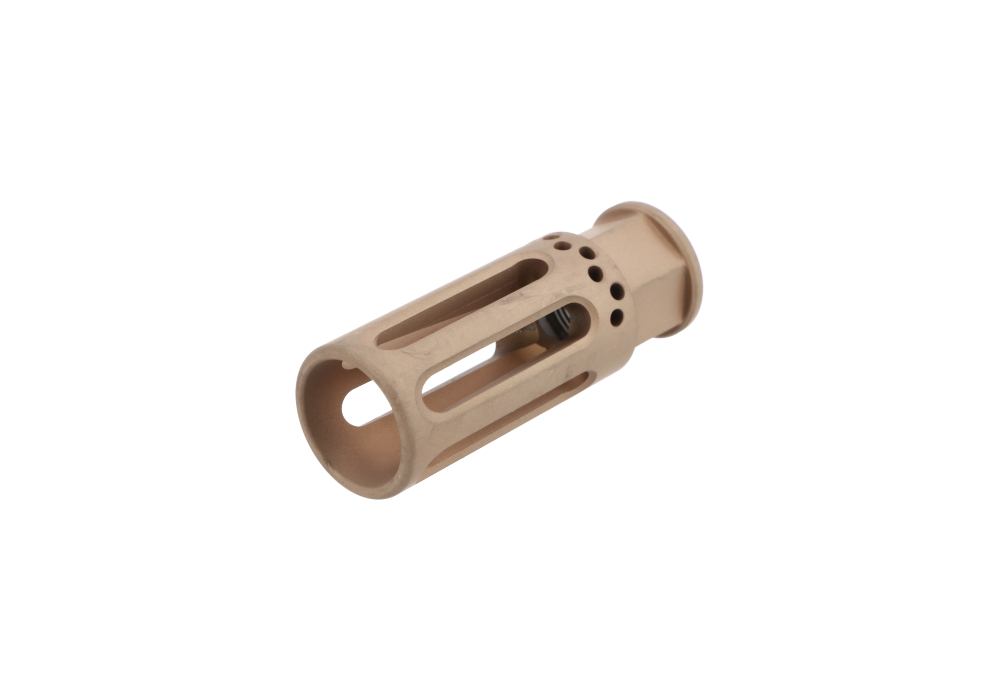
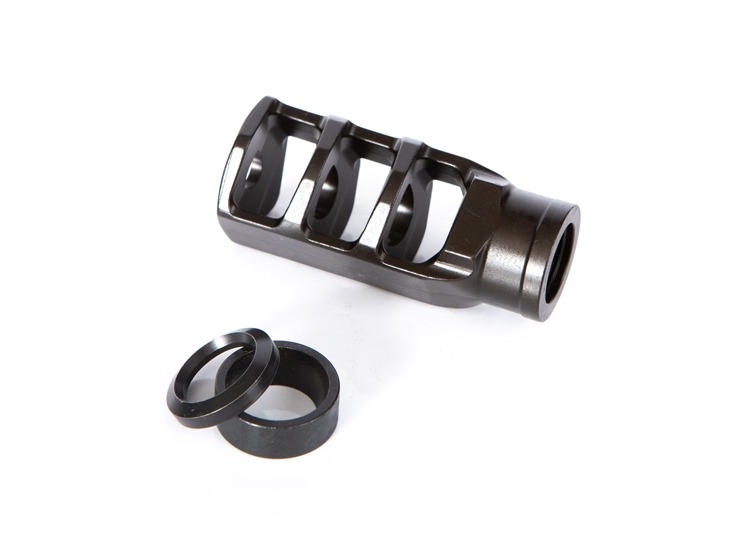
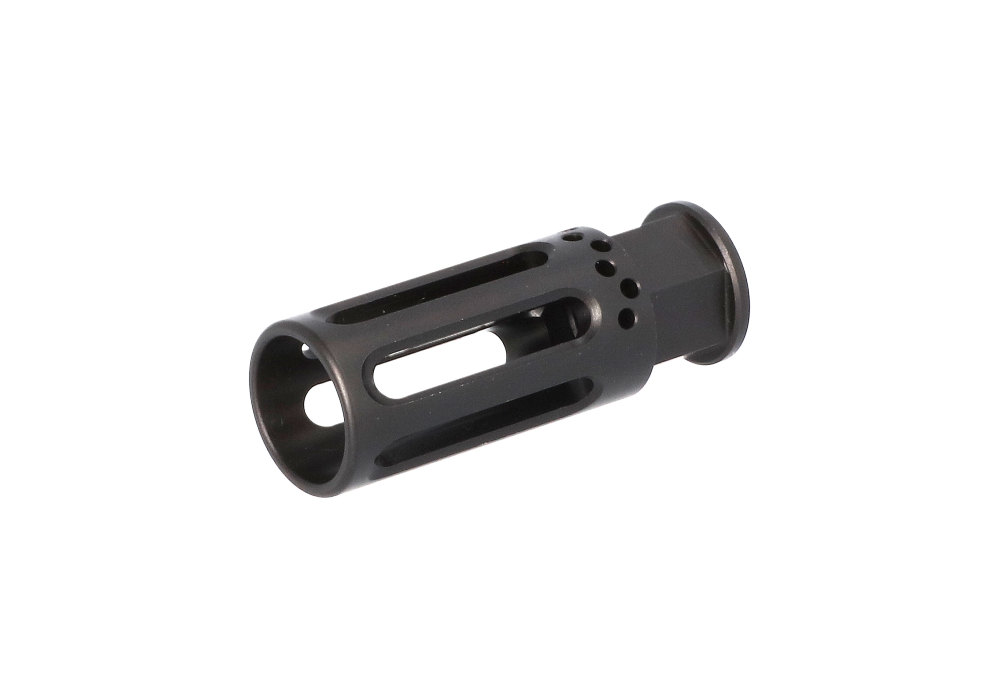
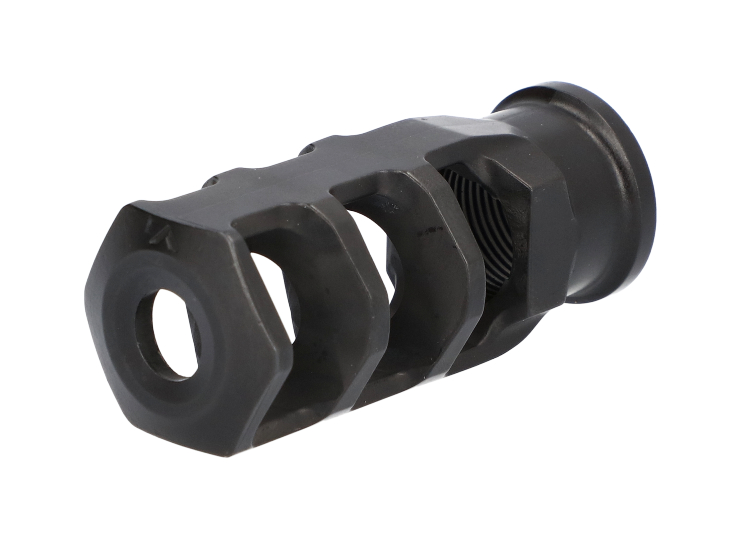
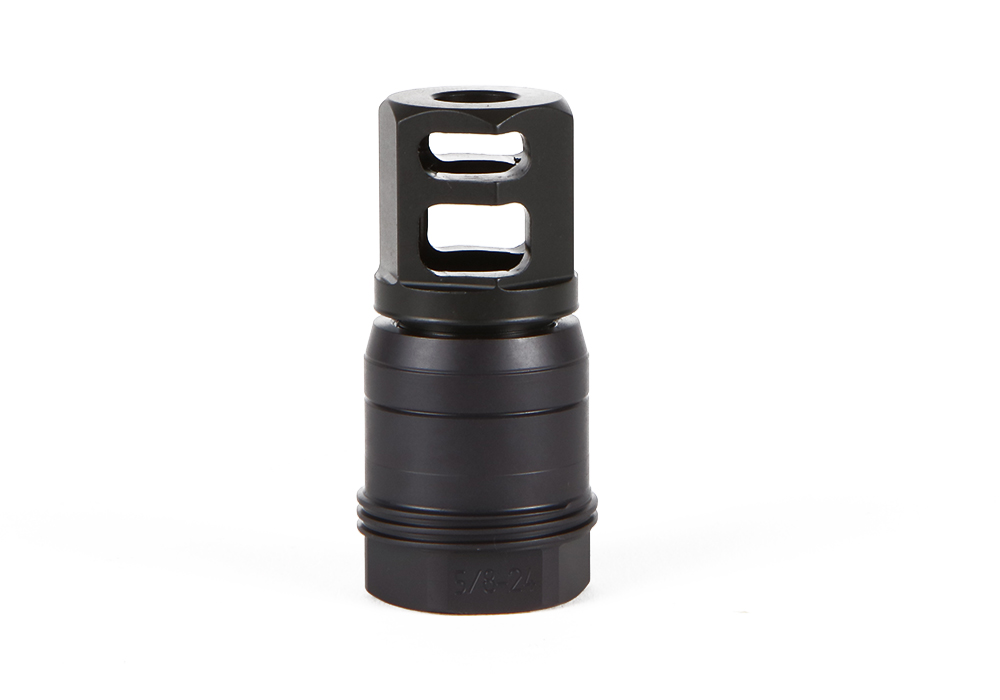
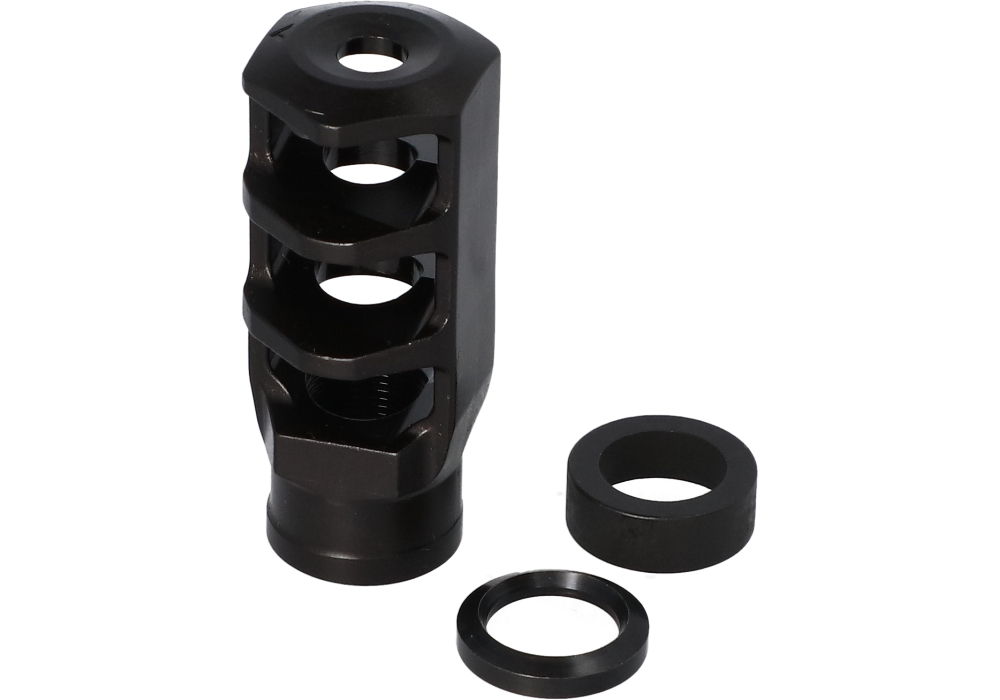
CQB muzzle devices are firearm muzzle attachments associated with managing the direction of muzzle blast, particularly on compact firearms used in close-quarters training and other settings where nearby surfaces can make blast especially noticeable. The term CQB, short for close quarters battle, describes a category rather than a single mechanical design. Linear compensators, blast deflectors, and certain shielded muzzle brakes can fall within this category, but their functions are not interchangeable. A linear compensator generally directs expanding gases forward, while a blast deflector redirects some of the lateral blast produced at the muzzle or by a compatible brake. A conventional muzzle brake uses directed gas to counter recoil or muzzle movement, often with a more pronounced report at adjacent shooting positions. Flash hiders address visible muzzle flash, a separate consideration from the direction of blast. Some designs combine functions, and others use a removable shield around a compatible mounting device. These distinctions matter on a covered firing line, where a neighboring shooter may feel the pressure from side-facing ports, or in an enclosed training bay, where reflected sound can be uncomfortable. Forward-directed blast does not mean quiet operation: a blast shield or linear compensator is not a sound suppressor, does not eliminate concussion, and does not make gunfire hearing-safe. Appropriate hearing and eye protection remain essential. For recreational shooters, qualified professionals, and participants in supervised training, the practical appeal is a muzzle configuration suited to the firearm and its permitted use, with a clear understanding of what the attachment can and cannot do. Barrel length, ammunition, firearm design, and the surrounding space all influence the experience. A compact profile alone does not establish how a device manages blast, and an aggressive exterior does not establish its effectiveness. Functional descriptions, dimensional specifications, and documented compatibility provide more useful context than appearance. Even within the same category, differences in internal geometry and mounting design can produce different results, so broad labels should never replace the specifications for the individual attachment.
Materials, finish, and mechanical fit help distinguish CQB muzzle devices intended for sustained use from accessories chosen primarily for appearance. Common material options include steel, stainless steel, and other alloys selected for their strength, heat resistance, or weight characteristics. The material needs to suit the attachment’s intended firing conditions; a lighter design is not automatically the better choice, and a heavier one is not automatically more durable. Wall thickness, construction, mounting quality, and the manufacturer’s stated limits all contribute to service life. Protective surface treatments can help resist corrosion and wear, but no finish removes the need for inspection and care. Edges, ports, internal surfaces, and attachment interfaces experience different stresses, especially with repeated range use. Overall length and outside diameter also deserve attention because a device can change the firearm’s dimensions, affect case fit, or interfere with nearby components. A wider blast shield may require clearance that a narrower muzzle attachment does not. Some configurations place part of the muzzle assembly near the end of a handguard, making documented compatibility particularly important. Correct fit involves more than matching the general firearm platform: barrel thread diameter and pitch, caliber compatibility, bore clearance, shoulder geometry, and any proprietary mounting interface must agree with the relevant specifications. A shield designed for one mounting system should not be assumed to fit another simply because the parts look similar. Likewise, an attachment with matching threads may still be unsuitable for a particular barrel or configuration. Manufacturer requirements and evaluation by a qualified gunsmith are the appropriate references for installation and alignment. Barrel-length restrictions and applicable legal requirements also remain part of the selection process. For shoppers comparing options, clear specifications provide a dependable basis for comparison without relying on assumptions about universal fit. The most suitable choice is one whose dimensions, materials, attachment method, and stated purpose match the firearm as a complete system, rather than an accessory considered in isolation.
Routine care supports consistent function and helps preserve the fit of a CQB muzzle attachment over time. Carbon residue can accumulate around ports, internal chambers, and mounting surfaces, while handling and transport can leave moisture or debris on exposed areas. Cleaning methods should follow the manufacturer’s recommendations for the device and its finish, with the firearm unloaded and handled according to established safety practices. Abrasive tools, incompatible chemicals, and unnecessary disassembly can damage surfaces or create problems that ordinary cleaning would not. Removable shields and other multi-part designs may have additional inspection requirements, particularly at locking features and mating surfaces. A change in fit, visible damage, unusual wear, or persistent loosening warrants professional evaluation rather than continued use. Durability also depends on respecting the stated use limits; a rugged appearance is not a substitute for the correct material, secure attachment, and ongoing maintenance. For regular range visitors, a useful comparison includes the attachment’s weight, overall dimensions, cleaning access, and compatibility with the range’s rules. Some facilities restrict certain muzzle configurations, and policies can vary between open firing lines and enclosed bays. Shooters exploring the relationship between brakes, compensators, and other attachments can find broader category context in AR15 Muzzle Devices for Improved Control. That wider perspective helps distinguish recoil-related functions from blast direction and flash management without treating those benefits as identical. For an experienced firearm owner receiving a muzzle accessory as a gift, exact specifications matter far more than a familiar platform name or a preferred finish; confirmed compatibility is essential before selecting any attachment. Across recreational use, professional requirements, and supervised practice, thoughtful selection comes back to the same fundamentals: a clearly defined purpose, verified fit, appropriate construction, and realistic expectations. CQB muzzle devices serve different roles within that framework, and understanding those differences supports a more informed comparison of the category.