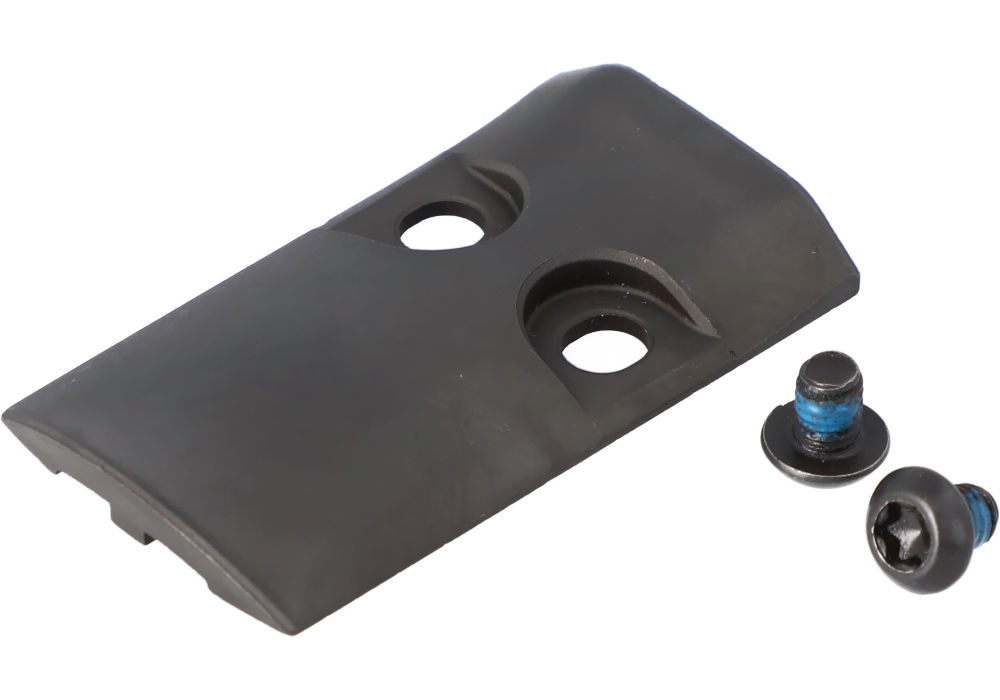
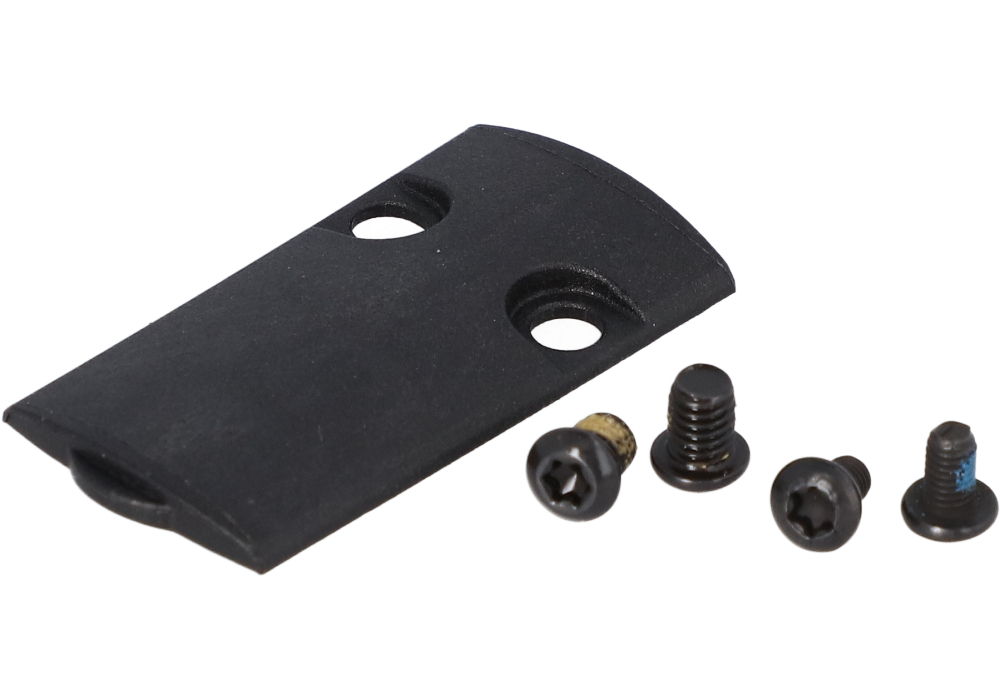
Factory sight plates are components used at a firearm’s factory optics interface, either to support a compatible optical sight or to cover the mounting area when an optic is not fitted. The distinction matters: an optic adapter plate connects a particular slide interface to a particular sight footprint, while a cover plate closes the unused optics cut and helps maintain the slide’s finished profile. These functions are related, but the parts are not necessarily interchangeable. In product terminology, a factory plate generally refers to an original-equipment component intended for a specified firearm configuration. The word “factory” alone does not establish which slide, sight, or hardware combination it fits. Compatibility depends on details such as the dimensions of the slide cut, mounting-hole locations, locating features, plate thickness, and the optic’s underside geometry. Two plates can look nearly identical from above yet have different interfaces beneath them. Likewise, two pistols from the same model family may use different mounting arrangements across versions or production changes. A useful comparison therefore starts with the exact firearm configuration and the manufacturer’s documented application, not simply the plate’s outline or finish. When comparing pistol sight plates, check whether the component is identified as a cover, an adapter, or part of a broader sight-mounting assembly. That description helps establish its purpose before appearance enters the decision. For an adapter, both sides of the connection matter: the lower interface must suit the slide, and the upper interface must suit the intended optic. A shared screw pattern does not necessarily mean that every other feature matches. For a cover, the important considerations include the specified slide application, contour, retention method, and any relationship to the rear sight. Clear compatibility information is more useful than a broad claim that a plate fits an optics-ready pistol, because optics-ready describes a category of firearm configurations rather than one universal mounting standard.
Materials and construction influence how a sight plate handles repeated use, but the best choice cannot be determined by material alone. Steel and aluminum are common materials for sight plates, with each offering a different balance of weight, strength, surface treatment, and resistance to wear. Steel can provide substantial strength in a compact component, while aluminum can reduce weight within a design engineered around its properties. Neither material compensates for an incorrect interface, unsuitable hardware, or a damaged mounting surface. Precise dimensions, cleanly formed locating features, consistent contact surfaces, and an appropriate protective finish all contribute to a durable assembly. The finish also deserves practical attention. Repeated handling, perspiration, cleaning residue, and contact with equipment can leave marks or affect exposed surfaces over time. A dark finish may coordinate neatly with a slide, but color is not a reliable measure of corrosion resistance or service life. Care should follow the firearm and component manufacturers’ recommendations, including guidance on suitable cleaners and inspection. Abrasive treatment or an incompatible chemical can alter a protective surface without improving the fit. During routine maintenance, visible damage, unusual movement, worn hardware, or a change in how the assembly sits warrants attention before further use. A plate that no longer rests as intended should not be treated as a cosmetic issue. Hardware is part of the system, too: fasteners that appear similar may differ in dimensions or suitability for the intended assembly. The correct specifications matter more than a familiar-looking screw head. Where installation or inspection calls for technical judgment, a qualified gunsmith can evaluate the complete interface rather than the plate in isolation. Durability ultimately comes from the relationship among the slide, plate, optic, and specified hardware, supported by appropriate care—not from a single material claim or an especially rugged appearance.
The intended use helps explain which characteristics deserve the closest attention. A recreational range shooter may want an original cover configuration between optic-equipped setups, while a competitor may need an adapter that matches an established sight and firearm combination. An owner maintaining a pistol for lawful personal protection may prioritize documented compatibility, consistent condition, and a mounting arrangement that can be inspected and serviced according to the manufacturer’s requirements. In each case, the plate serves a defined mechanical role rather than acting as a universal upgrade. Adapter thickness can influence the sight’s position above the slide, and some mounting arrangements affect the relationship between the optic and the iron sights. Whether both sighting systems remain usable together depends on the complete configuration; a plate alone cannot guarantee that result. The plate’s contour may also matter where the slide, sight body, and existing equipment sit close together. These details become especially relevant when replacing a lost cover, returning a pistol to its original configuration, or matching a replacement component to an established setup. Keeping the firearm’s exact designation, relevant configuration information, and component documentation together can make later identification much easier. Retaining original parts and clearly identifying their associated hardware also helps prevent confusion between similar-looking assemblies. As a gift, a sight plate is best suited to a recipient whose firearm configuration and intended use are already known. It is a highly application-specific component, so guessing from the pistol’s general appearance is less useful than confirming the documented fit beforehand. For any owner, the strongest selection is one with a clearly defined purpose, an explicitly supported interface, suitable construction, and straightforward care requirements. A properly specified factory sight plate should integrate with the intended assembly without asking the owner to overlook uncertain fit, unexplained movement, or mismatched hardware. That combination of precise application and sound condition is what gives this small component its practical value.