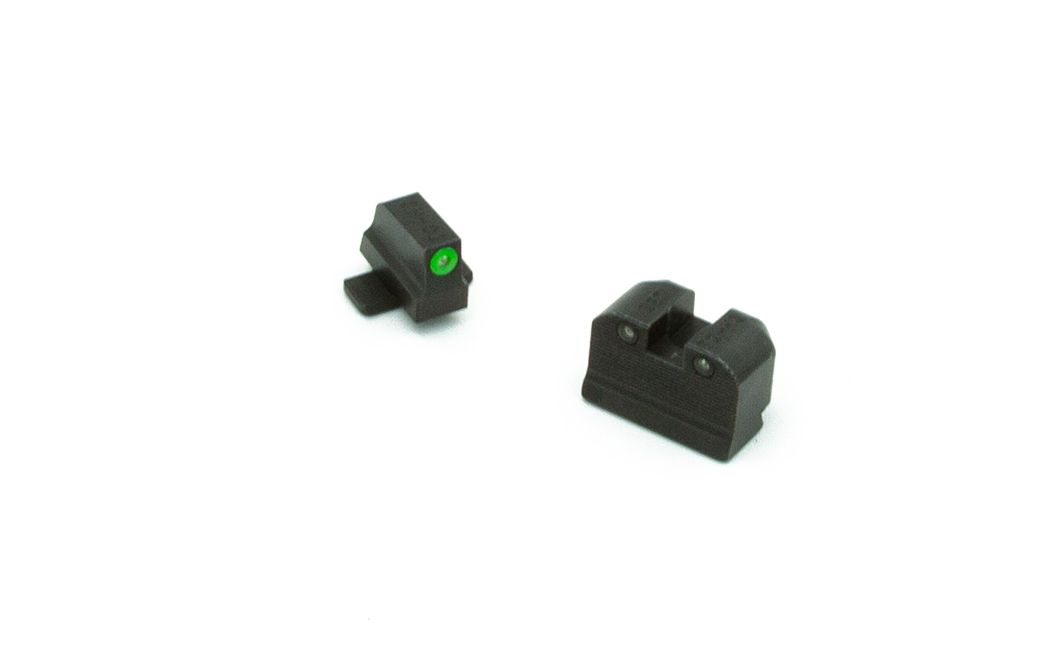
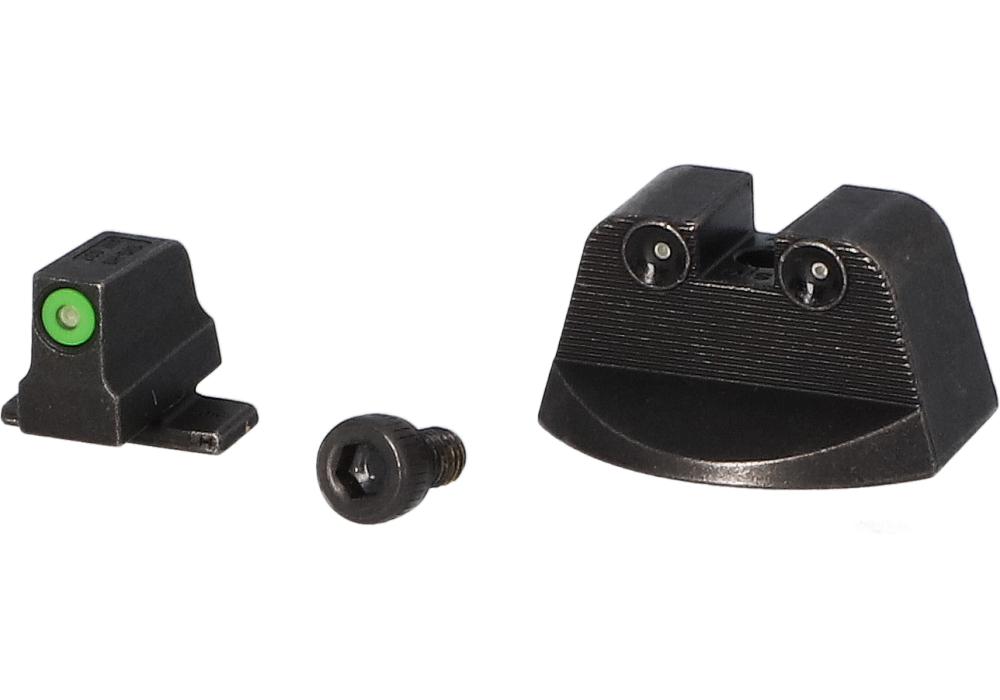
Factory sights are the standard aiming devices installed on a firearm by the original manufacturer before it reaches the buyer. They establish the reference point between the shooter’s eye and the target, typically using a front sight paired with a rear sight in a familiar post-and-notch, three-dot, or similar arrangement. Because they are selected for a particular firearm platform, factory sights offer a practical starting point for shooters who want a consistent sight picture without changing the basic configuration of their firearm. They may be made from polymer, steel, or other durable materials, and some include bright inserts, fiber-optic elements, or tritium illumination for improved visibility in changing light. Polymer sights are lightweight and often found on standard configurations, while steel sights provide a more robust option for regular training, duty use, holster work, or environments where the sights may encounter hard edges and repeated contact. Tritium sights use sealed, self-luminous capsules designed to remain visible in low-light conditions without batteries, while fiber-optic sights gather available ambient light and present a vivid aiming point during daylight or on an illuminated range. Each style has a distinct purpose, and the best choice depends on how the firearm is carried, stored, practiced with, and used. A sight that looks crisp beneath bright outdoor light may present differently in a dim indoor range, and a sight that works well for slow, deliberate groups may not offer the same speed during close-range drills. Factory sights can also be useful as direct replacements when an original sight is damaged, worn, or lost, helping restore the firearm to a familiar configuration. Before selecting a set, confirm the firearm model, generation, slide or barrel configuration, sight-cut dimensions, mounting method, and required sight height. Small differences between otherwise similar models can affect fit, point of impact, and the amount of adjustment available after installation.
Choosing factory sights is often a matter of matching the sight picture to the shooter rather than simply selecting the most visible option. A three-dot arrangement can provide an intuitive reference for general-purpose shooting, while a front sight with a contrasting insert may help the eye settle quickly on the leading aiming point. Plain black sights are valued by shooters who prefer a clean, uncluttered picture and precise alignment, especially when bright dots might blend into a target or draw attention away from the front blade. Fiber optics can be especially helpful during daytime practice, outdoor recreation, and range sessions where natural light makes the aiming point stand out, but their performance depends on available light and the condition of the light-gathering rod. Tritium can support sight alignment during the cooler months when daylight fades earlier or when training takes place in indoor facilities with subdued lighting, though no illuminated sight can replace a safe target identification process or proper use of a reliable light. Steel construction is worth considering for firearms that see frequent holster presentations, repeated training, or hard use, while polymer may suit a new firearm owner who wants a lightweight, straightforward configuration. The rear sight’s profile also deserves attention. A lower or rounded profile may reduce snagging during presentation from a holster, while a more pronounced rear notch can give the shooter a clearer reference during deliberate practice. The front and rear sights should be evaluated as a matched set whenever possible, since mixing heights or sight styles without confirming compatibility can change elevation, alignment, or the overall sight picture. Installation may require a sight pusher, a properly sized tool, or a qualified professional, particularly when working with tight dovetails or delicate illumination components. After installation, confirm that the sights are secure and verify the point of impact at a safe range using the ammunition and shooting distance that best reflect the firearm’s intended role. A few careful groups can reveal whether the new sight picture feels natural and whether a minor adjustment is needed.
Factory sights can serve a broad range of shooters, from someone setting up a first handgun for structured range practice to an experienced owner maintaining a trusted training or carry configuration. They can also be a thoughtful gift for a shooter who has mentioned difficulty seeing a standard sight picture, plans to replace worn components, or wants a second sight set for a different kind of practice. Gift buyers should avoid guessing at compatibility; the firearm’s exact make, model, generation, and existing sight configuration are more important than appearance alone. A gift card, a sight installation service, or a carefully confirmed replacement can be more useful than a sight that does not match the firearm. For personal selection, consider the lighting conditions encountered most often, the distances used during practice, the shooter’s eyesight, preferred aiming style, and whether the firearm is carried in a holster, stored for home protection, or used primarily for recreation. Shooters who spend time moving between bright outdoor bays and darker indoor lanes may appreciate a sight design that remains legible across both settings, while those who focus on daylight competition or informal target work may prioritize a fast, high-contrast front sight. Owners interested in a compact, foldable aiming solution for equipment that must remain streamlined can also explore Flip Sights as a separate category, keeping in mind that folding systems have their own mounting and deployment requirements. Whatever the application, inspect sight edges, inserts, and fasteners periodically, especially after cleaning, transport, or repeated practice. Keep illuminated components protected from impact, follow the manufacturer’s installation and maintenance guidance, and confirm the firearm is unloaded before handling or replacing any sight. With the right fit and a familiar sight picture, factory sights can make practice more comfortable, support repeatable alignment, and help a firearm remain dependable through changing light, varying weather, and the everyday wear that comes with responsible ownership.