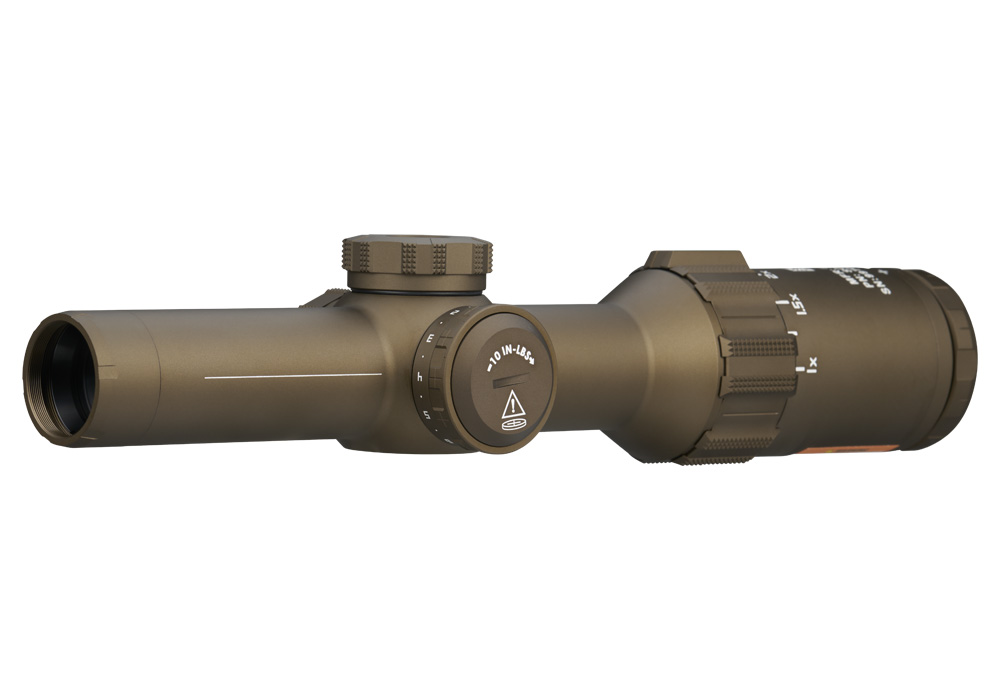
A fiber optic reticle is an aiming pattern inside a riflescope or prism optic that uses a thin optical fiber to deliver light to an illuminated reference point, often a central dot. The fiber channels light through total internal reflection, helping concentrate illumination into a clearly defined part of the reticle. Depending on the design, the light source may be an external ambient-light collector or a battery-powered emitter. That distinction matters: fiber optic illumination does not automatically mean an optic operates without batteries, and an ambient-light system depends on the light reaching its collector. Some optics pair illuminated fiber elements with an etched reticle that remains visible when illumination is absent. Others use different arrangements, so the underlying reticle construction is as important as the illuminated appearance. For recreational target shooters, hunters, and shooting-sports competitors, the appeal is a visible aiming reference within a complete optical sight. A small illuminated center can stand out against a visually busy background while leaving the surrounding view relatively open. Fine crosshairs, heavier outer lines, and additional reference marks each give the sight picture a different character. A simple center point keeps visual clutter low, while a more detailed pattern provides additional references for users who prefer them. The apparent size of that center point also influences the experience: a larger point can be easier to notice, while a smaller one obscures less of a distant target. Brightness should complement the view rather than overwhelm it. Excessive illumination can make an otherwise precise point appear less distinct, particularly against a dark background. In an ambient-light design, the relationship between the collector’s surroundings and the target’s surroundings can affect perceived contrast. A bright target viewed from a shaded shooting position presents a different visual situation from a uniformly lit range lane. Fiber optic reticles therefore belong to a broader optical system, where illumination, reticle geometry, lens quality, and magnification work together rather than acting as separate features.
Fit begins with the optic itself, because a fiber optic reticle is generally an integrated component rather than an interchangeable accessory. Compatibility involves the firearm’s mounting interface, the optic’s tube diameter or mounting footprint, and the space required for comfortable eye placement. Appropriate mounting height helps support a natural viewing position, while sufficient clearance keeps the optic from interfering with nearby components. Eye relief, eye-box flexibility, and field of view can matter just as much as the brightness of the reticle. An illuminated center is most useful when the full sight picture is comfortable to acquire and maintain. For a low-power variable optic, the viewing experience can change considerably across the magnification range; a fixed-power prism optic has its own eye-relief and positioning requirements. Where magnification is adjustable, focal-plane placement also affects how the reticle appears. A first-focal-plane pattern changes apparent size with magnification, while a second-focal-plane pattern maintains a more consistent apparent size. Neither arrangement alone determines the quality of fiber optic illumination, but each shapes how the complete reticle looks during use. Materials and construction deserve similar attention. Aluminum housings are common because they balance structural strength with manageable weight, while optical glass, lens coatings, internal supports, and protected illumination components contribute to the overall viewing experience. A durable housing should protect the optical assembly without adding unnecessary bulk to the firearm. Recoil resistance, dependable adjustment mechanisms, and secure mounting all contribute to consistent performance over time. An exposed light collector also deserves consideration as part of the overall construction, including how it is positioned and protected from contact. Published specifications are more useful than appearance alone when comparing these characteristics. A compact optic may suit a firearm carried for extended periods, while a larger configuration may offer viewing characteristics that appeal to someone spending more time at a supported range position. The strongest match brings together optical comfort, practical dimensions, and a reticle that remains readable at the magnification levels the shooter actually uses.
Care for an optic with a fiber optic reticle centers on preserving clear optical surfaces, protecting the illumination system, and maintaining secure attachment. Loose grit should be removed with an appropriate lens blower or soft optical brush before a lens cloth touches the glass. Lens-safe cleaning materials help remove fingerprints and smudges without relying on household cleaners that may affect coatings or seals. Light-collecting surfaces, when present, also need to remain unobstructed; a clean objective lens cannot compensate for a collector covered by debris or an accessory. Protective lens covers and a padded storage case can limit unnecessary contact during transport, and storage should keep the optic away from solvents or objects that could scratch exposed surfaces. For powered designs, battery type, compartment access, and illumination controls are practical ownership details. Ambient-light designs have different considerations, including collector placement and the visibility of the underlying reticle when little light reaches the fiber. Any supplemental illumination system should be evaluated on its own specifications rather than assumed from the words “fiber optic.” Maintenance and mounting procedures should follow the optic manufacturer’s directions, particularly where fastener torque or sealed components are involved. Fiber optic reticles should also be distinguished from fiber optic front sights. A reticle is viewed within an optical instrument; a fiber optic front sight presents a visible reference on the firearm’s external sighting system. Collectors interested in that separate category can explore Fiber Optic Front Sights for Gun Collectors. The distinction helps keep compatibility expectations clear, especially when considering accessories as a gift for an experienced shooter or collector. For an optical sight, knowing the recipient’s mounting setup and preferred reticle style is more useful than choosing by illumination color alone. Across recreational shooting, hunting, and competition, lasting satisfaction comes from a balanced combination of a readable aiming pattern, comfortable viewing, durable construction, and straightforward care. Fiber optic illumination adds a distinctive visual element, but its value is strongest when it complements the entire sighting system.