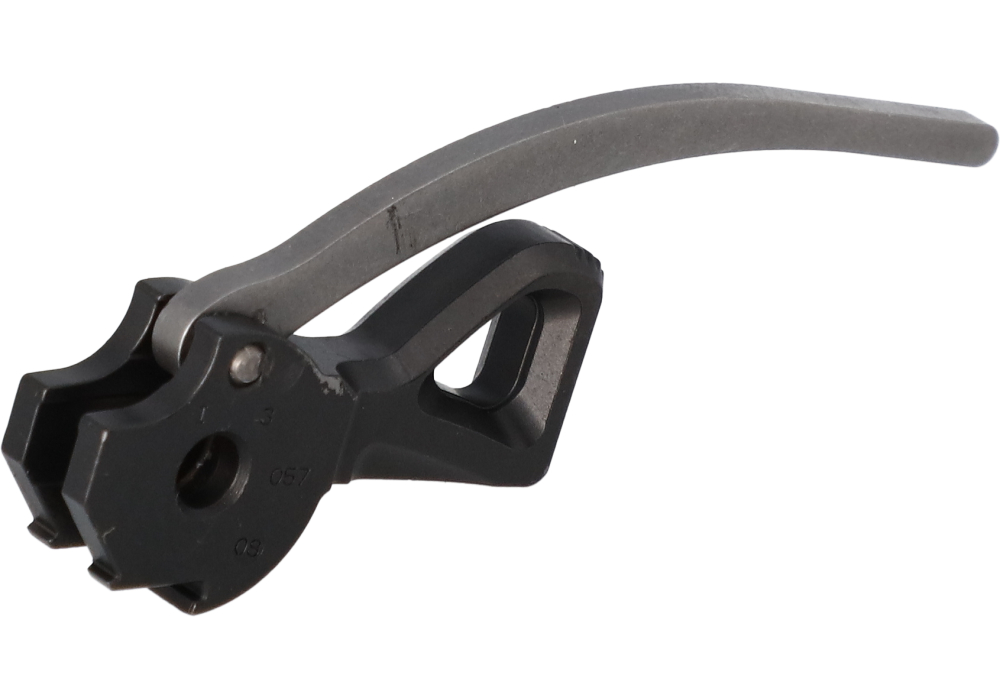
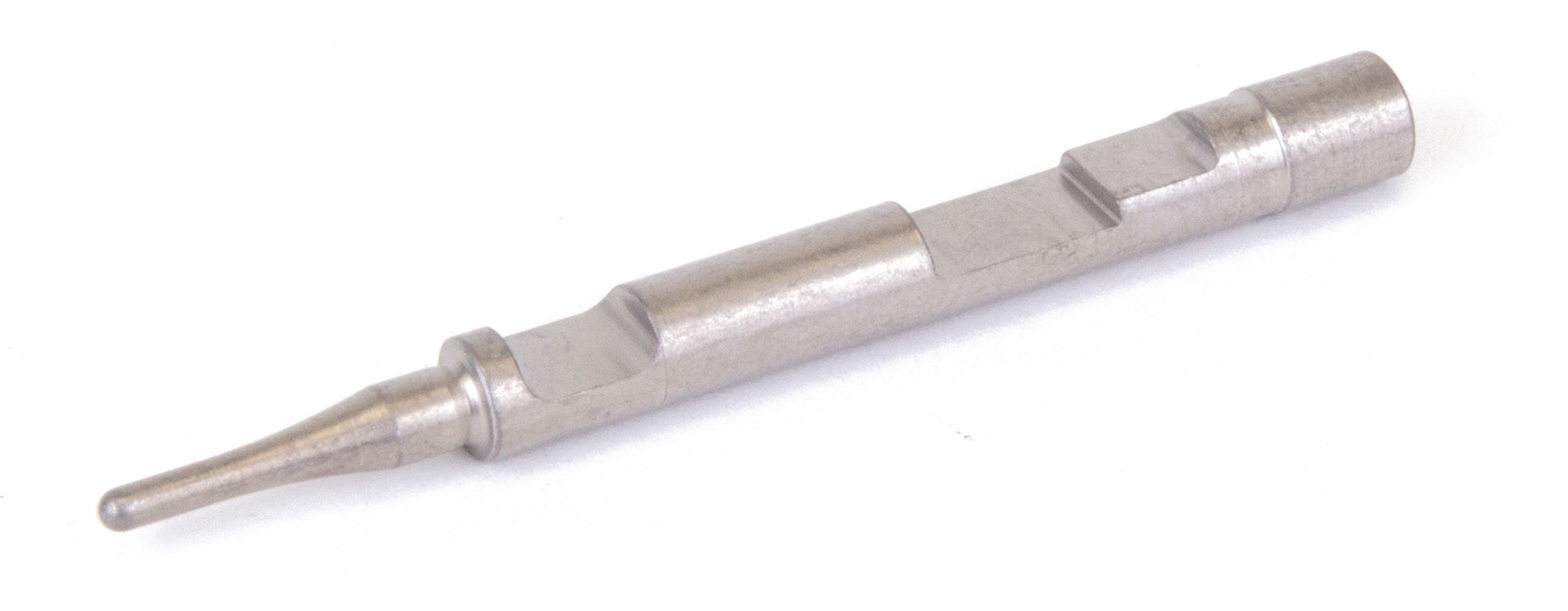
Firearm hammer and pin assemblies are essential internal fire-control components found in many hammer-fired firearms. The hammer is a weighted metal part that pivots on a hammer pin and moves forward under spring pressure to strike a firing pin or, in some designs, the primer directly. That controlled impact initiates the firing sequence when the firearm is properly loaded, cocked, and fired. The hammer pin serves as the steel axis that keeps the hammer aligned inside the frame or receiver, while related pins may retain the trigger, sear, and disconnector in their correct positions. Although these parts are small, their fit and function matter greatly: a properly matched assembly supports consistent movement, dependable reset, and reliable primer ignition. Replacement components may be useful when original parts show wear, become damaged during service, or no longer provide the expected strike force. They can also be considered during a professional repair or a carefully planned parts replacement project. Because designs vary considerably, shoppers should begin by identifying the exact firearm model, variant, generation, caliber, and frame or receiver configuration. Even firearms that appear similar may use different pin diameters, hammer profiles, spring arrangements, or retention methods. Reviewing the manufacturer’s specifications and comparing dimensions before ordering helps prevent mismatched parts and unnecessary returns.
When selecting a hammer and pin assembly, pay close attention to what is included. Some listings may contain only a hammer and its retaining pin, while others may include a hammer spring, strut, trigger pin, sear pin, disconnector pin, or additional retaining hardware. A complete replacement set can be convenient for a firearm undergoing a broader service, while an individual pin or spring may be the better choice for a targeted repair. Materials, surface treatments, and machining quality are also worth considering because these components operate within a confined space and experience repeated impact, pressure, and friction. The hammer should pivot smoothly on its pin without excessive side-to-side movement, and the pin should seat securely without forcing or binding. Springs should be appropriate for the firearm’s design and intended ammunition; changing spring weight without understanding the complete fire-control system can affect ignition reliability, trigger characteristics, and safe operation. A dependable assembly should preserve the manufacturer’s intended engagement relationships rather than create an unpredictable change in how the trigger, sear, hammer, or disconnector interact. For related retention hardware and compatible components, shoppers may also review Firearm Trigger Assembly Pins. Keeping a written record of the firearm’s model and serial-related configuration, where applicable, can make future parts selection easier, particularly when maintaining more than one firearm during the warmer and cooler portions of the year.
These components are commonly purchased by firearm owners maintaining a personal collection, competitive shooters preparing equipment for a match, instructors servicing training firearms, and qualified armorers or gunsmiths completing repairs. They may also make a practical gift for an experienced firearm enthusiast who keeps a carefully organized parts cabinet, although compatibility is more important than appearance or presentation. A small labeled container of correctly matched pins and springs can be as useful to a hands-on owner as a spare set of tools, especially when a worn retaining pin or fatigued spring interrupts a maintenance schedule. Installation and inspection should be approached with the same care given to any fire-control work. The firearm must be completely unloaded, with the chamber, magazine well, and any applicable ammunition storage areas checked before handling internal parts. Removing or installing pins can require properly sized punches, a stable bench block, good lighting, and a clear understanding of the firearm’s design; improvised tools may mar the frame, deform a pin, or damage adjacent components. After any replacement, a qualified gunsmith should verify correct assembly, hammer movement, trigger engagement, disconnector function, reset, and overall safety before the firearm is returned to service. A component that looks correct may still be unsuitable if its dimensions or engagement surfaces differ from the original specification. Careful buyers should favor clearly described parts, verify compatibility through reliable documentation, and inspect all components for burrs, cracks, unusual wear, or shipping damage. Stored clean and protected from excess moisture, a properly matched hammer and pin assembly can remain ready for a future repair, seasonal maintenance session, or professional service appointment.