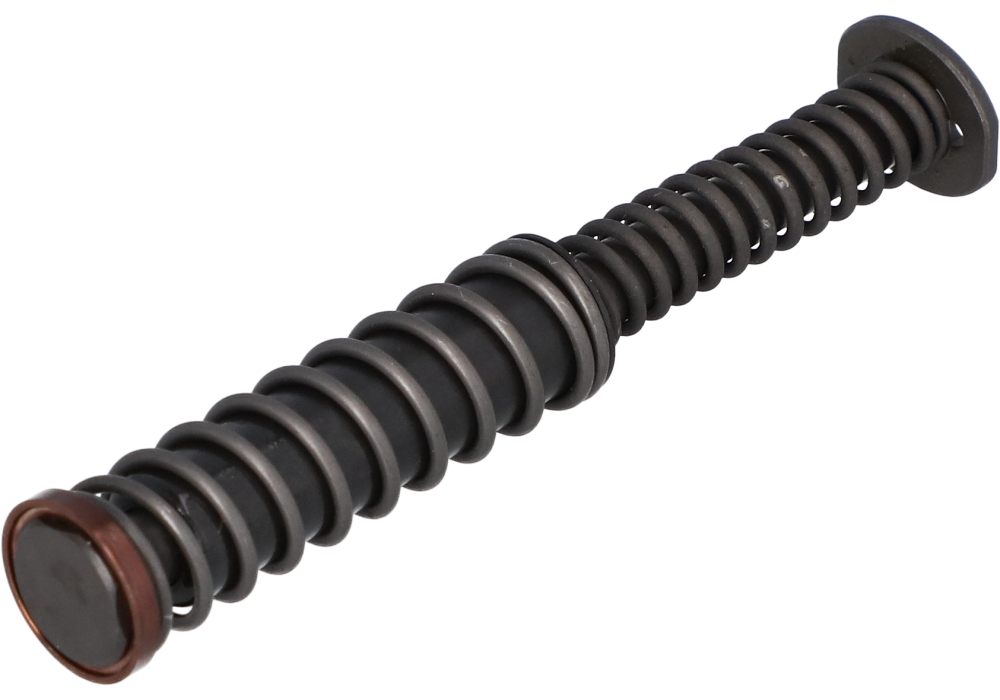
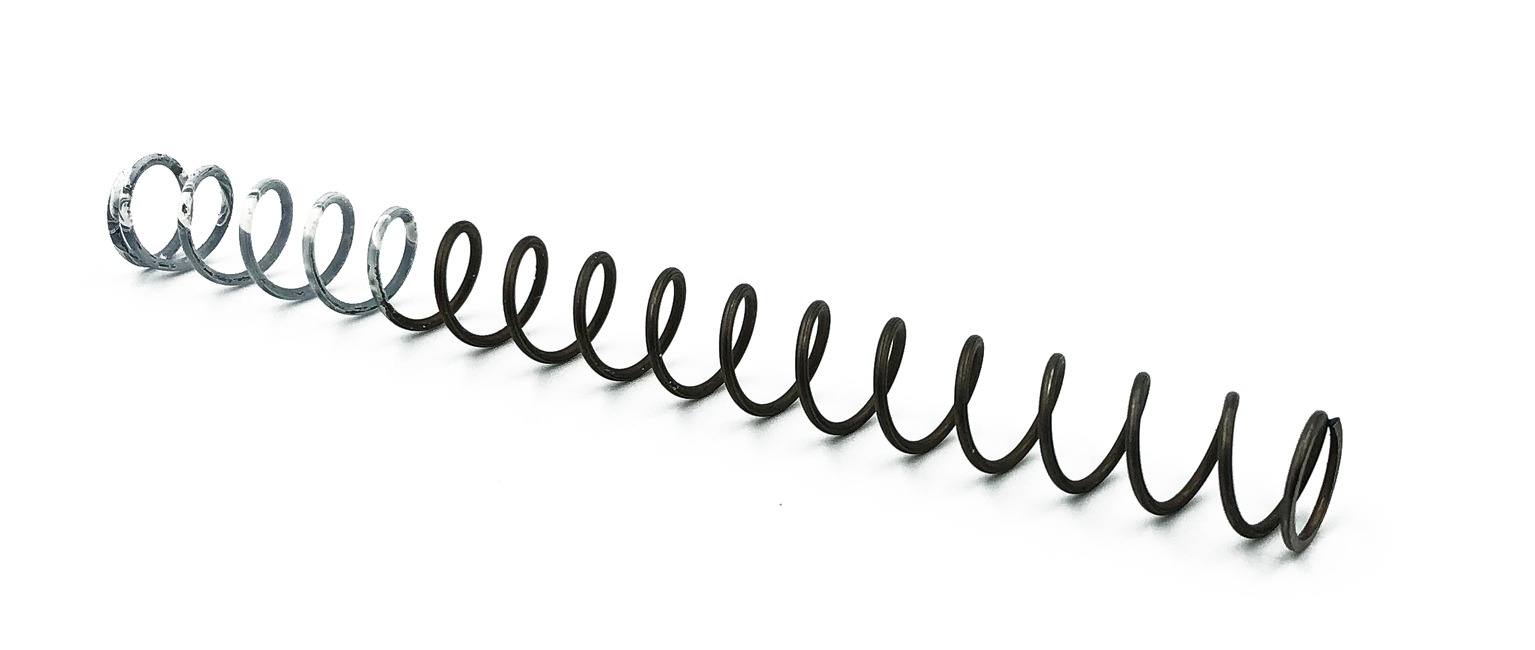
Firearm recoil guides are components of a firearm’s recoil assembly, most often discussed in connection with semiautomatic pistols. Their primary job is to support and align the recoil spring as the slide moves through its operating cycle. Although the name can sound like a category of shooting advice, these are physical parts, and choosing among them starts with understanding the firearm they are intended to fit. A guide rod, a recoil spring, and a complete recoil spring assembly are related, but they are not interchangeable descriptions. Some assemblies retain the spring on the guide rod as a single unit; others use separate components. That distinction matters when comparing what is included in a listing and deciding whether it matches a replacement need. It also helps to separate the function of these parts from the broader subject of recoil. Recoil is the rearward momentum associated with firing, while felt recoil describes how that event feels to the shooter. Firearm weight, ammunition, fit, and the way moving components interact all influence that sensation. A recoil guide supports spring alignment; it does not eliminate recoil, and a different guide rod does not automatically make a firearm more comfortable to shoot. For many owners, the practical value of this category is straightforward: finding a correctly specified replacement component that supports the firearm’s intended operation. Think of the familiar moment at the workbench when a routine inspection turns into a search for a part number. Clear compatibility information is more useful there than a sweeping promise about softer shooting. Whether the firearm accompanies its owner to a recreational range or sees regular use in organized practice, recoil components deserve the same attention to fit and condition as other model-specific replacement parts. The best starting point is the manufacturer’s documentation, followed by the details in the individual product listing.
When shopping for firearm recoil guides, prioritize confirmed compatibility over visual similarity. Two assemblies can look almost identical in a photograph yet differ in dimensions, spring specifications, or the firearm versions they support. Model designation, size configuration, chambering, and production changes may all matter, so a broad description such as “compact pistol” is not enough to establish fit. Read the full listing and check whether it identifies a guide rod alone, a spring alone, or an assembly containing both. Product photographs provide useful context, but the written specifications should resolve what is included. If the listing leaves a compatibility question unanswered, the manufacturer or a qualified gunsmith is a better source than a guess based on appearance. Materials are another consideration, though they should be evaluated in context rather than ranked by weight or price alone. Metal and polymer components can each be appropriate within the designs that specify them. Surface finish, construction, and the relationship between the guide and spring belong to the complete assembly’s design, not just its appearance on the bench. A heavier component is not automatically a better replacement, and spring strength should not be treated as a universal measure of quality. The recoil assembly works within an operating system designed around particular specifications. For an owner replacing a worn part, matching the approved specification is generally more relevant than seeking a different shooting feel. Maintenance schedules also vary, so there is no single replacement interval that applies to every firearm or every recoil assembly. Consult the owner’s manual for inspection and service guidance, and seek professional evaluation if a component appears damaged or the firearm is not functioning normally. Price comparisons are most useful after those requirements are settled. An inexpensive part with unclear fit information can create more uncertainty than value, while a clearly documented, correctly specified assembly makes the purchasing decision easier to verify. Keep the packaging and product information with your maintenance records so the next replacement search starts with a reliable reference.
These products are particularly relevant to firearm owners planning routine upkeep, frequent range visitors tracking service needs, and anyone organizing the correct replacement parts for a firearm they already own. Their appeal is practical rather than decorative: a small, model-specific component can be important even when it attracts little attention in a range bag or parts drawer. During the cooler months, when some owners spend more time reviewing equipment between outings, checking records and confirming replacement needs can be a useful part of that routine. There is a quiet satisfaction in having the correct information at hand instead of sorting through nearly identical listings before a planned range visit. For shoppers buying a gift, however, recoil guides require more care than broadly compatible accessories. Unless the recipient has supplied an exact, verified specification, it is better to involve them in the selection than to choose by firearm size or appearance. Experienced owners often have established maintenance preferences, and the right gift respects those details. Buyers whose main concern is shooting comfort should also distinguish replacement recoil components from the wider range of products intended to address felt recoil. The Recoil Reducers category offers a related place to explore, with the same need to verify intended use and compatibility for each listing. Neither category should be approached with the expectation that one component will transform every firearm in the same way. Comfort is personal: what feels manageable to one shooter may feel abrupt to another, even with similar equipment. Hand size, overall firearm fit, and sensitivity to movement can shape that experience, which is why broad claims deserve careful scrutiny. A qualified instructor can help assess comfort and fit, while a qualified gunsmith can address mechanical questions. For recoil guide purchases, the most dependable approach remains simple: identify the firearm precisely, confirm the approved component, understand what the package contains, and follow the manufacturer’s service guidance. Those details turn a crowded field of similar-looking parts into a focused selection grounded in the firearm’s actual requirements.