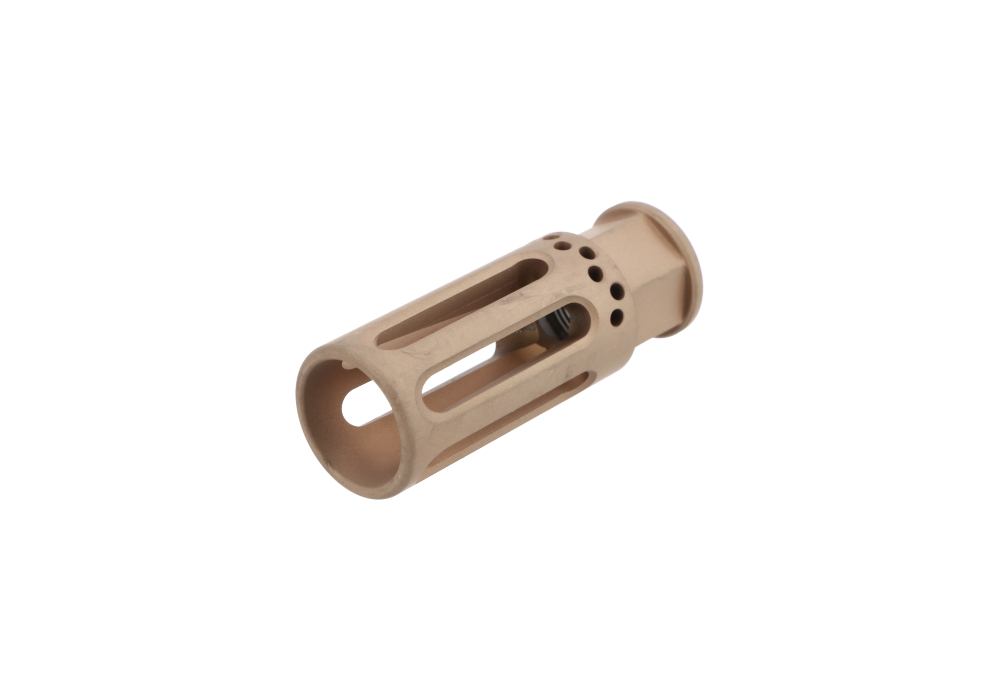
Recoil reducers are firearm accessories intended to reduce felt recoil, the rearward impact a shooter experiences when a firearm is fired. Depending on the design, they cushion contact with the shoulder, spread pressure across a broader surface, or moderate how recoil energy reaches the shooter. That distinction matters: a softer shooting experience does not mean recoil has disappeared, and an accessory intended to cushion the shoulder may not address muzzle rise. For rifles and shotguns, recoil management often centers on the point where the stock meets the body. A resilient pad can soften that contact, while some stock-based systems use mechanical or hydraulic resistance to moderate the recoil impulse. Handgun accessories approach comfort differently, often emphasizing grip shape, surface texture, and how pressure is distributed across the hand. Across these categories, the practical goal is a more comfortable, consistent connection between shooter and firearm. Someone spending an afternoon at a supervised range may value less shoulder discomfort between strings of fire; a clay-target shooter may be more concerned with maintaining familiar stock contact throughout a long practice session. A hunter may prefer a compact accessory that preserves the handling characteristics of a familiar rifle. Those needs are related, but they are not interchangeable. More cushioning is not automatically the best answer if it changes how the firearm fits or adds unwanted bulk. Meaningful comparisons begin with the intended firearm, the shooting activity, and the particular source of discomfort. Recoil reducers can support comfort and help limit fatigue, but they do not substitute for proper fit, safe handling, hearing and eye protection, or qualified instruction. The same accessory can feel different to two shooters, especially when their shoulder dimensions or usual shooting positions differ. Firearm weight, ammunition, and individual sensitivity also influence the experience, so broad claims about recoil reduction deserve a careful reading.
Materials and construction help explain how recoil management accessories feel and how well they hold up to regular use. Rubber and other elastomers are common cushioning materials because they can compress under pressure and recover their shape. Their firmness, thickness, and surface finish affect the experience as much as their appearance. A soft contact surface may feel comfortable against the shoulder, while a firmer design may better suit someone who prefers a less compressible interface. Textured surfaces can help maintain contact, although an especially tacky finish may catch on clothing as the firearm is brought into position. Where a design includes metal housings or internal components, corrosion resistance, protective finishes, and the quality of the overall construction become additional considerations. Compatibility remains essential regardless of material. Stock shape, attachment style, and the manufacturer’s stated firearm compatibility determine whether an accessory belongs on a particular setup. A pad that looks close in a photograph may still leave exposed edges, fit unevenly, or change the distance between the shoulder and trigger. Even a modest increase in that distance can affect how naturally the firearm comes into position. Added weight can also change balance, which matters to someone carrying a rifle or moving a shotgun through a target presentation. A recoil reducer should therefore be evaluated as part of the complete firearm rather than as an isolated cushion. Dimensions, mounting requirements, and any stated restrictions deserve attention before selection, with uncertain fit questions directed to the manufacturer or a qualified gunsmith. For handgun owners comparing Recoil Management Grips, similar considerations apply to hand size, grip circumference, reach, and texture. A fuller grip may distribute pressure differently, but it should still allow comfortable access to the firearm’s controls. Comfort is most useful when it accompanies secure contact and familiar handling rather than forcing the shooter to adapt to an awkward fit.
Long-term satisfaction depends on how a recoil reducer performs after repeated use, not simply how soft it feels when first handled. Durable cushioning should retain its intended shape without persistent flattening, cracking, or separation, while attachment points should remain secure under the conditions described by the manufacturer. Regular inspection can reveal worn edges, torn contact surfaces, loose components, or changes in fit before they become larger concerns. Cleaning requirements vary with the materials and mechanism, so care should follow the manufacturer’s directions rather than assumptions based on appearance. Some solvents and oils used elsewhere on a firearm may be unsuitable for rubber, polymer, adhesives, or protective finishes. A clean contact surface also helps keep grit from rubbing against the stock or clothing. Mechanical and hydraulic designs may have service requirements that differ from those of a simple pad, and sealed components should not be treated as user-serviceable unless the manufacturer expressly permits it. Storage matters as well: prolonged compression or contact with incompatible chemicals can affect some cushioning materials. For frequent range visitors, durability and straightforward care may be as important as the initial change in comfort. For occasional shooters, a simple design with clear compatibility information may be easier to evaluate and maintain. Recoil management accessories can also be thoughtful gifts for an experienced firearm owner when the recipient’s exact firearm configuration and preferences are known. Guessing at fit is less useful than understanding whether the recipient wants shoulder cushioning, a different contact texture, or an accessory that leaves the existing dimensions largely unchanged. These are personal preferences, much like the fit of protective eyewear or the feel of a familiar stock. The strongest choice is not necessarily the thickest, softest, or most elaborate design. It is the option whose materials, fit, care requirements, and intended use suit the firearm and the person using it, with realistic expectations about the comfort it can provide.