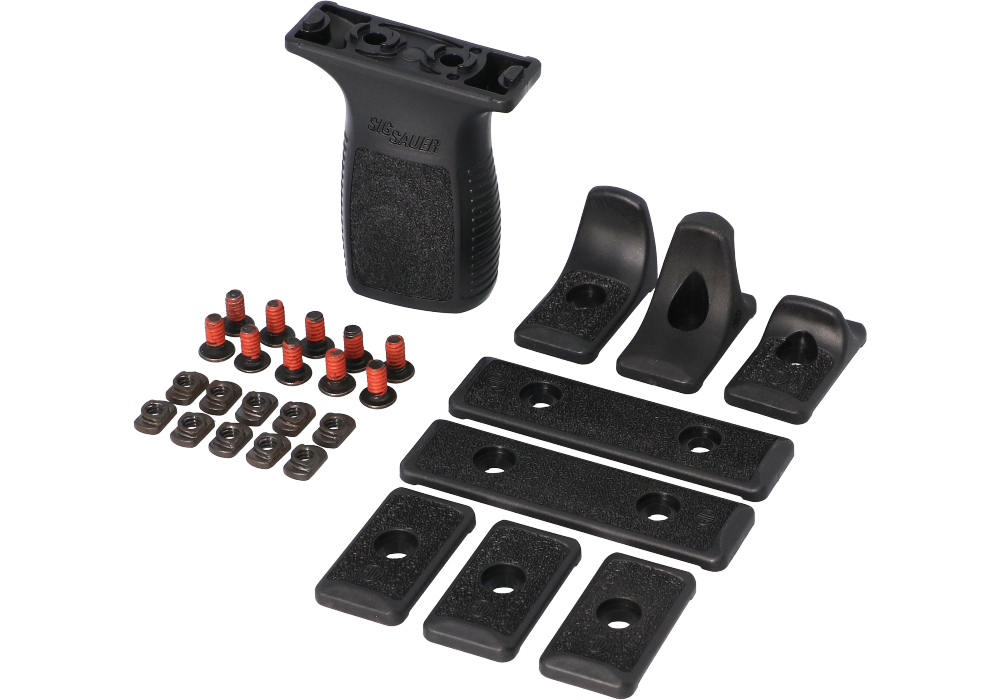
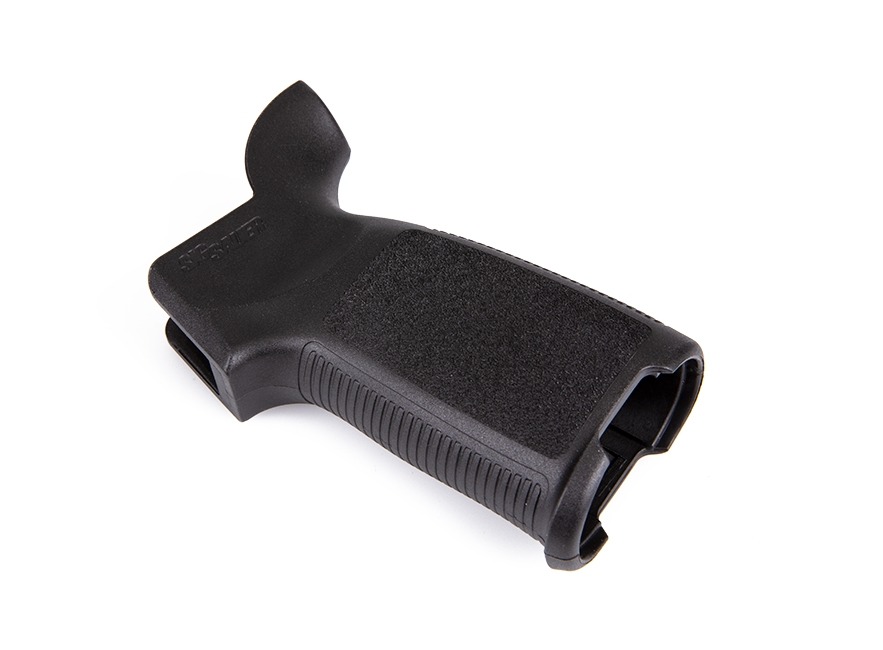
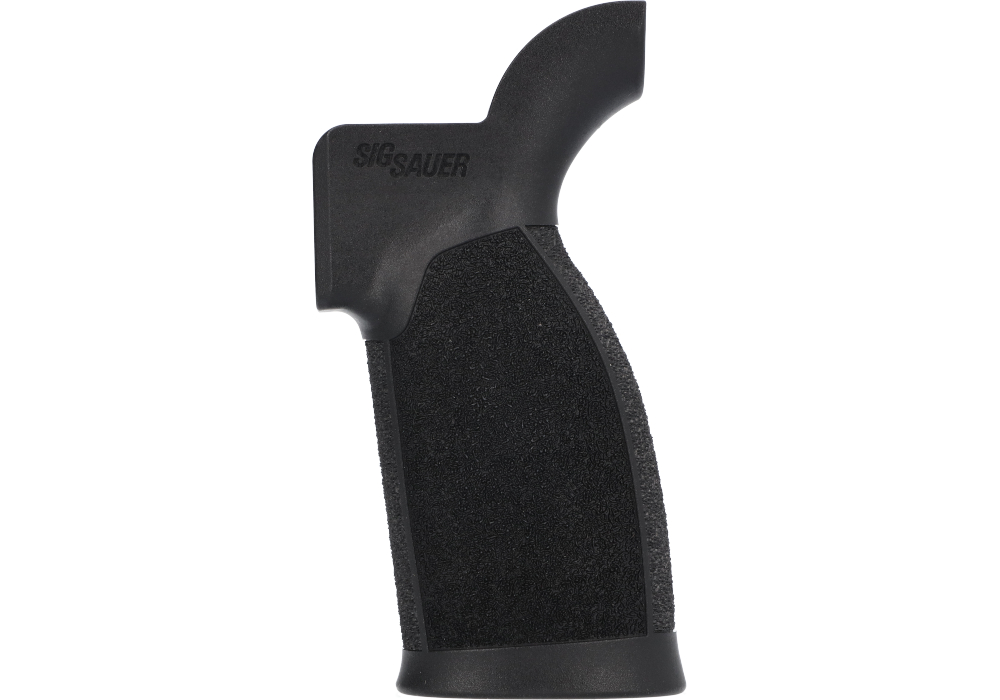
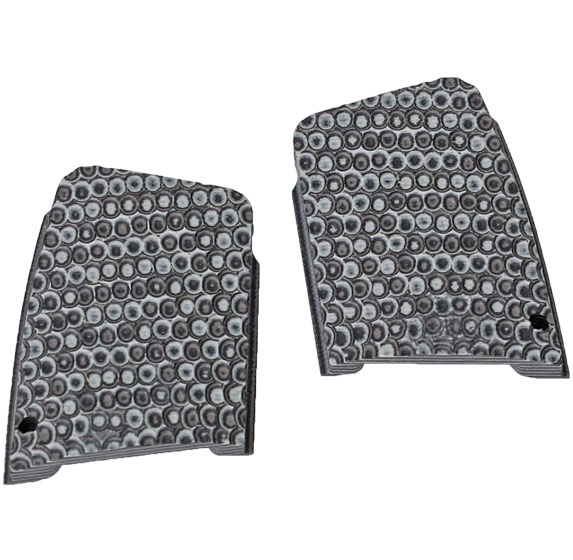
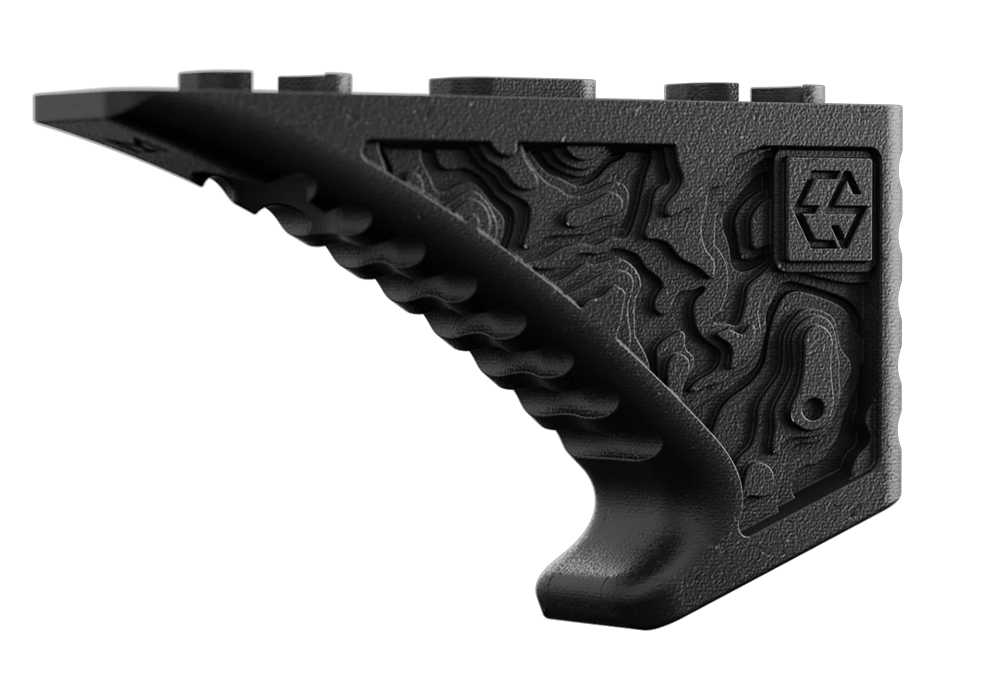
A forward grip, also called a foregrip, is an accessory attached to the front handguard of a rifle or carbine that provides an additional contact point for the support hand. Its purpose is primarily ergonomic: it gives that hand a defined place to rest and offers an alternative to holding the handguard alone. Forward grips come in several shapes, with vertical and angled styles representing two common approaches. A vertical foregrip projects beneath the handguard, while an angled foregrip presents a sloped surface that follows a different wrist position. Short, compact designs provide a smaller contact area without extending as far below the firearm. Hand stops are related accessories, although they generally establish a boundary for the hand rather than provide a full gripping surface. These differences matter because comfort depends on the relationship between the accessory, the handguard, and the person holding the firearm. Hand size, finger reach, and preferred support-hand position can make the same shape feel natural to one shooter and awkward to another. A broad palm surface may feel comfortable during an extended recreational range session, while a smaller profile may suit someone who prefers more direct contact with the handguard. Rounded edges, the angle of the contact surface, and the amount of space around the fingers all influence that experience. Texture is another part of the fit rather than a simple measure of quality. Pronounced ridges can feel secure, but a less aggressive pattern may be more comfortable against bare skin over time. For recreational shooters and owners interested in personalizing the feel of a compatible long gun, forward grips offer a way to tailor a specific contact point. Their value lies in appropriate fit and comfortable handling, not in elaborate styling or promises that an accessory can replace sound fundamentals. A useful comparison therefore considers the entire shape, including its width and contours, rather than judging a grip by its length or appearance alone.
Materials and construction help distinguish forward grips that may look similar in photographs. Reinforced polymer is common because it allows complex contours and textured surfaces in a relatively lightweight form. Aluminum offers a rigid structure and can support slim profiles, with surface finishes that influence both appearance and resistance to wear. Some designs combine a firm body with softer contact areas, creating a different feel against the palm and fingers. No single material is automatically the best choice for every owner. Wall thickness, edge finishing, mounting hardware, and the overall quality of construction matter alongside the material name. A cleanly finished polymer grip can be a practical match for regular recreational use, while a metal design may appeal to someone who prefers a particularly firm, solid feel. Added weight and overall dimensions deserve attention as well, since an accessory becomes part of the firearm’s handling and storage profile. Compatibility is equally important. A forward grip must match the handguard’s attachment interface; a similar appearance does not establish that two mounting systems are interchangeable. Product specifications should clearly identify the intended interface, required hardware, and any limitations involving the handguard or mounting surface. The accessory’s footprint also affects how much usable space remains around existing attachments. A broad mounting base may occupy more room than its grip surface suggests, and a longer body may change how the firearm fits inside a case. Clear measurements are more useful than descriptions such as compact or universal without supporting detail. Compatibility also extends beyond a secure mechanical connection. Some foregrip configurations are subject to legal restrictions, so suitability includes the firearm’s classification and applicable federal, state, and local laws. Manufacturer documentation remains the appropriate source for installation requirements and maintenance specifications. A well-matched accessory should fit its intended interface without improvised alterations, preserve access to necessary controls, and remain appropriate for the firearm’s configuration. These practical considerations provide a stronger basis for comparison than appearance alone.
Care and durability are closely connected to how a forward grip is used, transported, and stored. Textured recesses can collect dust, lint, and residue, while mounting areas may conceal wear that is not obvious from the outside. Routine inspection, performed with the firearm unloaded and handled according to its manufacturer’s safety instructions, helps reveal cracks, damaged hardware, or movement at the attachment point. Cleaning requirements vary by material and finish, so compatible cleaners and the accessory manufacturer’s care directions matter more than a one-size-fits-all routine. Harsh solvents, abrasive tools, or incompatible treatments can affect surfaces that otherwise tolerate ordinary handling well. Cosmetic wear is not always a structural concern, but a split body, compromised mounting surface, or persistent looseness deserves attention before further use. Durability also involves the less visible details: hardware that remains serviceable, edges that stay comfortable, and a mounting design suited to repeated inspection. For someone who regularly transports a rifle to a range, the grip’s profile can matter as much inside the case as it does in the hand. Sufficient clearance helps prevent the accessory from pressing against neighboring equipment or straining the case closure. Owners who share a compatible firearm may also find that a moderate contour accommodates different hand sizes more comfortably than a highly sculpted shape. As a gift, a forward grip is most appropriate when the recipient’s mounting interface, preferences, and lawful configuration are already understood; visual similarity alone is not enough to establish a good match. Shoppers considering the firearm’s primary gripping area rather than its support-hand contact point can explore Carry Grips as a separate category. Forward grips serve a distinct role farther along the firearm, where shape, surface feel, and attachment compatibility come together. Thoughtful selection centers on those tangible details, with lasting usefulness measured by comfortable contact, dependable construction, and straightforward care.