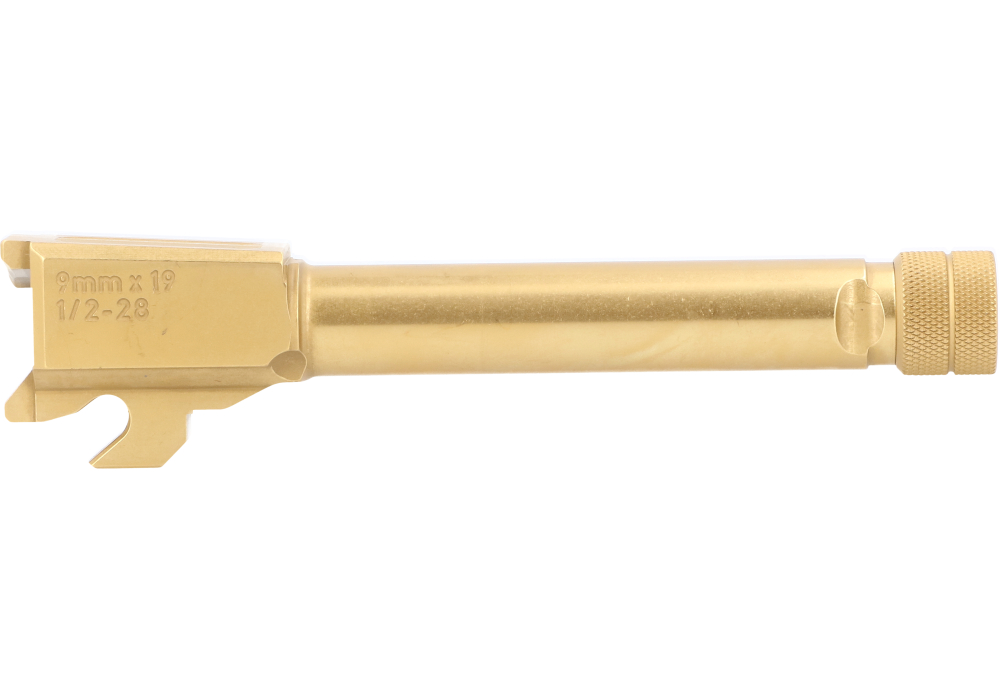
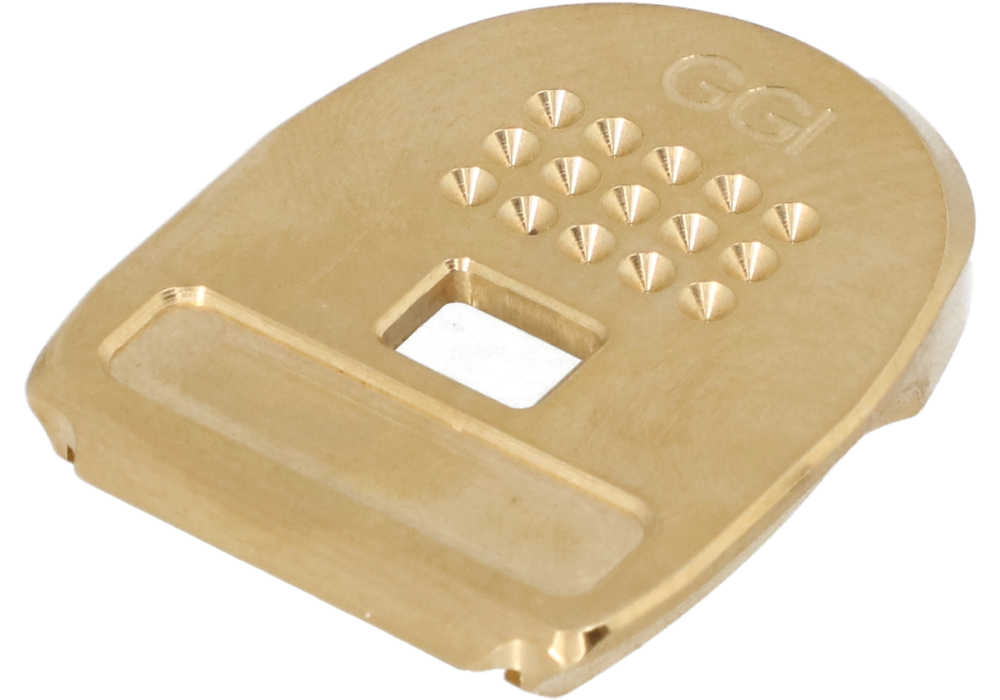
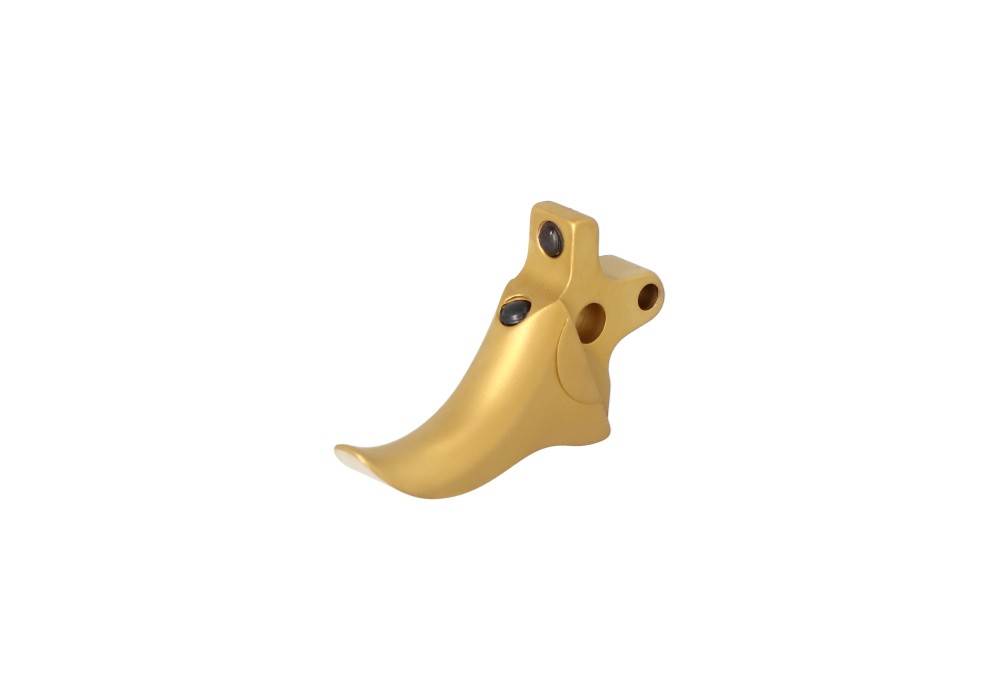
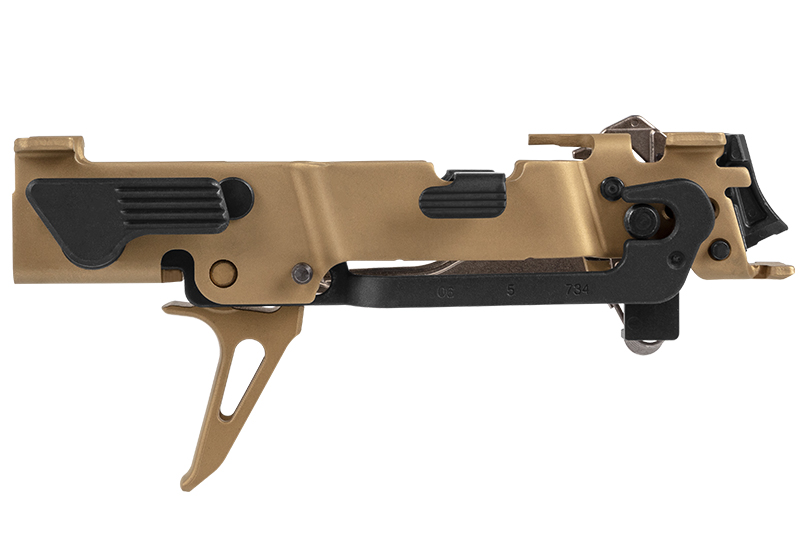
Gold firearm parts introduce a distinct visual accent without requiring every visible surface to share the same finish. Against a dark frame or slide, a small area of gold can create a clear focal point; across several coordinated components, the effect becomes more deliberate and pronounced. The category encompasses gold-toned components and accents, with differences in color, texture, base material, and surface treatment that matter beyond appearance. A gold-colored surface does not necessarily contain gold, and the color alone does not identify its composition. Some finishes use titanium nitride, a hard ceramic coating that can be applied through physical vapor deposition. Other gold tones can result from different coatings, plating processes, or treatments suited to the underlying metal. These methods are not interchangeable, and similar-looking finishes can have different care requirements and wear characteristics. Steel, stainless steel, and aluminum each bring different properties to a component, while the surface treatment contributes its own appearance and protective characteristics. The underlying material, component design, and manufacturing specifications remain central to suitability for a particular firearm. Finish descriptions are therefore more useful than color names alone when comparing gold firearm parts. A pale champagne tone, a rich yellow hue, and a warmer brass-like shade may all fall within the same visual category while looking noticeably different beside one another. Surface texture changes the impression as well: a polished finish reflects light sharply, while a satin or matte treatment gives the color a quieter presence. Product photography can help establish the overall style, though lighting and screen settings may affect how closely separate finishes appear to match. For an understated result, one gold accent can provide enough contrast. A coordinated appearance depends on compatible tones and textures rather than simply choosing every component described as gold. Neither approach changes the central requirement: each part must be appropriate for its intended application.
Fit deserves more attention than finish when selecting any firearm component. Compatibility depends on the exact firearm model and configuration, not merely a shared platform name or similar exterior shape. Differences between generations, sizes, and factory configurations can affect whether a component is suitable, even when two firearms look closely related. Manufacturer documentation is the strongest starting point for understanding those distinctions, and qualified professional evaluation is appropriate whenever compatibility or installation requirements are unclear. A decorative goal should never take precedence over reliable operation or the firearm manufacturer’s requirements. Gold finishes sit within the broader Firearm Parts category, where materials, dimensions, and intended function distinguish components that may appear similar in a photograph. Exterior accents, controls, and components exposed through openings in the firearm can each create a different visual effect, but their functional roles remain separate from their color. A finish associated with hardness or wear resistance should not be treated as a promise of better accuracy, smoother operation, or longer service life in every application. Those outcomes depend on the complete component and its relationship to the firearm. Intended use adds another layer to the decision. A firearm used regularly for target practice encounters handling, cleaning, and repeated contact with supporting equipment. One reserved primarily for a collection may receive less handling, but still requires appropriate maintenance and storage. Holster contact can leave visible marks on exposed surfaces, while a highly reflective finish may be less desirable when a subdued appearance is the priority. Organized shooting sports can also have equipment requirements that affect component choices. These practical distinctions help explain why the most visually striking finish is not necessarily the best match for every owner. A thoughtful selection balances appearance with documented compatibility, expected use, and a realistic understanding of how the surface will look after regular handling. That balance gives gold accents a place in a personalized firearm without treating color as a substitute for engineering.
Care and durability are closely connected, particularly when a bright finish makes small marks easy to notice. No decorative or protective surface is immune to wear, and the edges or contact areas of a component may develop a different appearance from areas that rarely touch other surfaces. That change does not automatically indicate a defect, but unusual wear or any concern about function warrants evaluation by a qualified professional. Cleaning products and methods should follow the instructions for both the firearm and the particular finish. A cleaner suitable for one metal or treatment may be inappropriate for another, and aggressive polishing can alter a surface that was intended to remain intact. Soft, nonabrasive cleaning materials are generally preferable where the manufacturer permits them, while moisture, residue, and fingerprints deserve attention before storage. A gold finish also does not replace any lubrication or maintenance specified for the component. Firearms should be unloaded and handled according to established safety practices during cleaning and inspection. For owners who value presentation, keeping similarly finished components separated from loose tools and other hard objects can help limit cosmetic scuffing during storage or transport. Gold firearm parts can appeal to experienced target shooters, collectors, and enthusiasts who enjoy a restrained personalized detail as much as a coordinated visual theme. They can also be a considered gift for an owner with a clearly identified firearm configuration and a known preference for gold accents. In that setting, exact compatibility and the recipient’s taste matter more than surprise: a subtle satin detail and a bright polished surface can suit very different preferences. Care information, finish specifications, and professional installation requirements are useful parts of that decision. The lasting appeal of a gold accent comes from how well it belongs on the firearm—visually consistent, appropriate to the application, and maintained with the same attention given to the rest of the equipment.