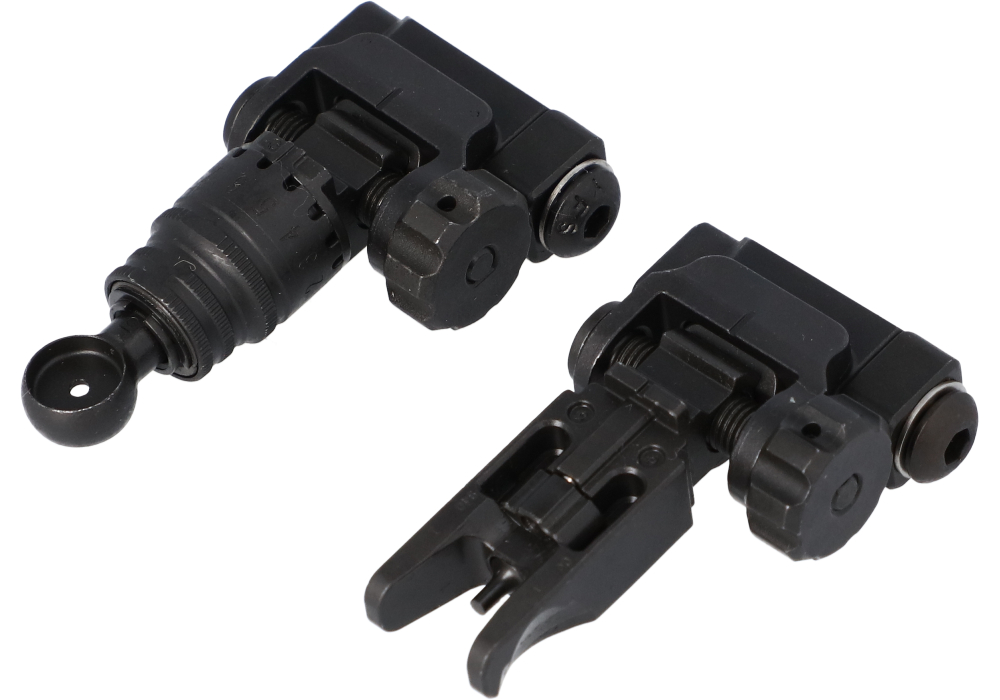
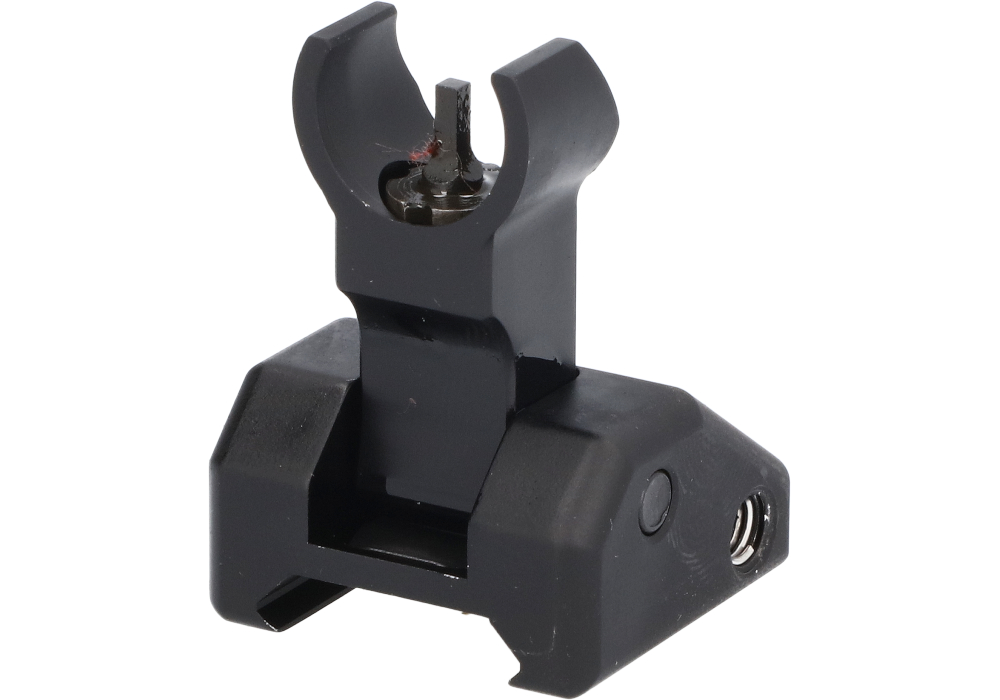
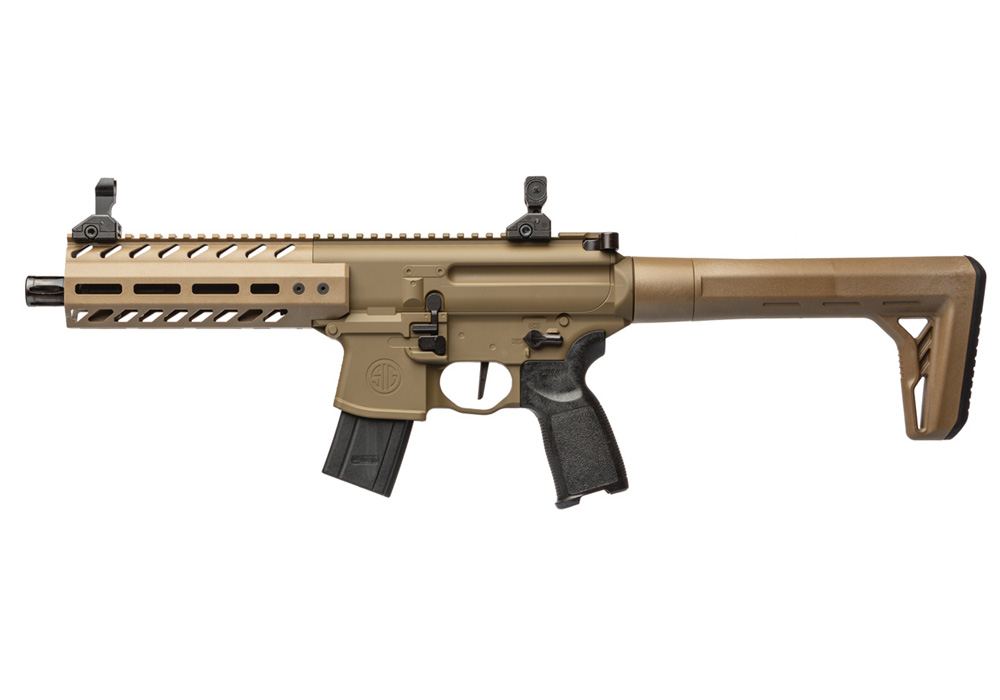
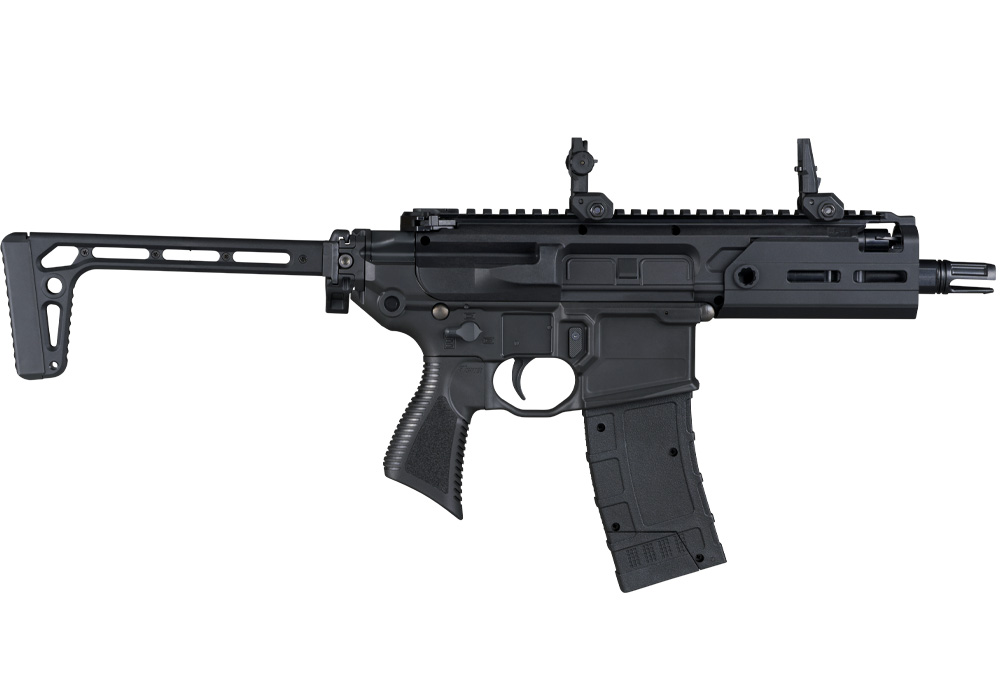
Gun flip-up sights are folding front and rear aiming sights that attach to a compatible firearm mounting surface, typically a rifle’s top rail, and fold down when not in use. Often called backup iron sights, or BUIS, they provide a sighting option without batteries or an electronic display. Their appeal is straightforward: a compact folded profile leaves room for a compatible primary optic, while the raised position provides a familiar front sight and rear aperture. For range practice, organized shooting sports, and general rifle ownership, that combination offers flexibility without requiring a permanently raised sight arrangement. Folding sights can also serve as primary sights for shooters who prefer a simple, uncluttered sight picture. The category includes individual front sights, individual rear sights, and paired configurations, with differences in material, adjustment features, mounting requirements, and folded dimensions. A well-matched pair matters more than appearance alone because the front and rear units must work together at the correct height for the firearm. Steel construction can provide substantial strength in a compact shape, aluminum can balance rigidity with lower weight, and reinforced polymer can offer a lightweight alternative. Material labels tell only part of the story, though. Hinge construction, protective ears, mounting hardware, and the engagement of moving parts all influence how a sight feels and holds up through repeated use. Some designs use spring-assisted deployment, while others require manual movement; retention and locking arrangements vary as well. These differences are noticeable in ordinary handling, whether a rifle is coming out of a padded case or moving between a storage rack and a shooting bench. The Flip Sights category brings these practical considerations into focus: mechanical aiming equipment selected for its fit, usable sight picture, and ability to occupy relatively little space when folded. For shoppers comparing gun flip-up sights, those characteristics provide a useful foundation without assuming that every folding design suits every rifle or optic arrangement.
Fit involves more than whether a mounting clamp attaches to a rail. The rail specification, the intended mounting position, and the sight’s designed height all affect compatibility. A front sight intended for a rail at the same height as the receiver is not automatically interchangeable with one intended for a different mounting height. Likewise, a firearm with a fixed front sight may call for a compatible folding rear sight rather than a complete folding pair. Product specifications should identify the intended arrangement clearly, especially when a rifle combines components from different sources. Space around an optic is another practical consideration. A rear sight may fit beneath some scope arrangements when folded, yet interfere with others because of its height, length, or the position of the scope’s eyepiece. Red dot configurations introduce their own fit considerations: whether the iron sights are visible through the optic depends on the relative heights of the sights and optic mount. Folding construction alone does not guarantee that relationship. Handguard design also matters, since a front sight relies on a suitable, secure mounting surface. Beyond physical clearance, the sight picture deserves attention. A clearly defined front post and a rear aperture with clean edges can help the aiming references remain visually distinct against a target. Some rear sights offer more than one aperture size, giving shooters different viewing options, while other designs favor a single opening and a simpler layout. Windage and elevation adjustments also differ, including whether a tool is required and where each adjustment is located. These are useful comparison points for shoppers who prefer fewer separate tools in a range bag or who value a particular adjustment interface. None of these features is inherently best for every owner. A compact rifle with limited rail space presents different requirements from a longer rifle with a magnified optic, and a sight that looks unobtrusive in a photograph may still need more clearance than a particular setup provides.
Durability is especially relevant for folding sights because their hinges, attachment points, and aiming components experience repeated handling. A slim profile is useful, but it should be considered alongside protection for the front post and rear aperture, a secure mounting interface, and dependable movement between folded and raised positions. Protective finishes can help resist surface wear and corrosion, although no finish removes the need for appropriate care. Steel, aluminum, polymer, and small hardware components may have different cleaning requirements, so compatibility with cleaners and lubricants matters. Routine care generally centers on keeping debris away from moving parts, removing residue with suitable materials, and following the manufacturer’s maintenance recommendations. Excessive oil can collect grit, while aggressive cleaning products may affect certain finishes or nonmetallic components. Storage deserves similar attention: a crowded case can press against a sight even when it is folded, and loose equipment can rub against exposed edges. A fitted case layout gives the rifle and its accessories room without unnecessary contact. For frequent range visitors, the practical attraction of backup iron sights is not novelty but continuity. A familiar mechanical sighting system offers another option when an electronic optic is not in use, and it supports practice with the fundamentals of sight alignment and a consistent sight picture. Newer rifle owners may appreciate straightforward controls and clearly documented compatibility, while experienced sport shooters may prioritize a particular aperture arrangement, lower folded height, or robust construction. Folding sights can also be a thoughtful gift for a responsible firearm owner when the recipient’s exact platform, existing sights, and optic configuration are known. Without those details, even a carefully chosen accessory may not fit as intended. Across these uses, the strongest selection is one that suits the firearm, leaves the necessary clearance, and matches the owner’s expectations for handling and maintenance. Quality in this category is tangible: cleanly finished edges, controls that are accessible without feeling exposed, and a folding mechanism that feels secure rather than loose. Those everyday details give flip-up sights their lasting value as compact, practical components of a compatible rifle setup.