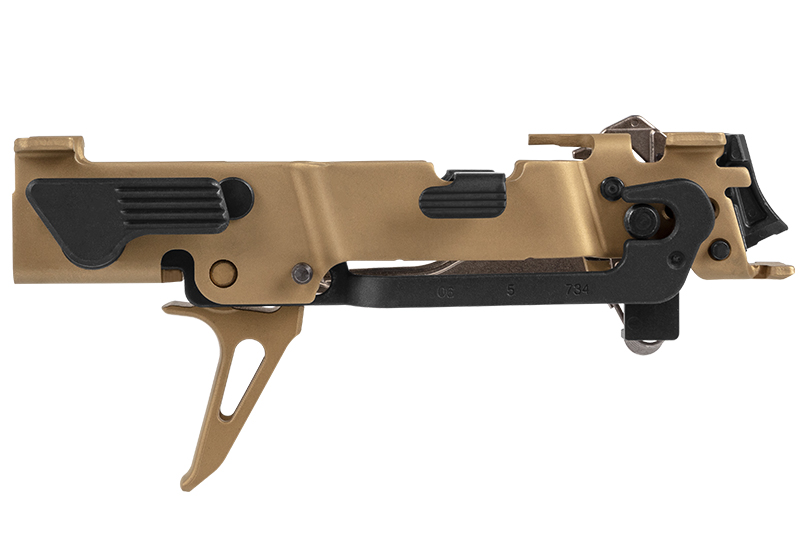
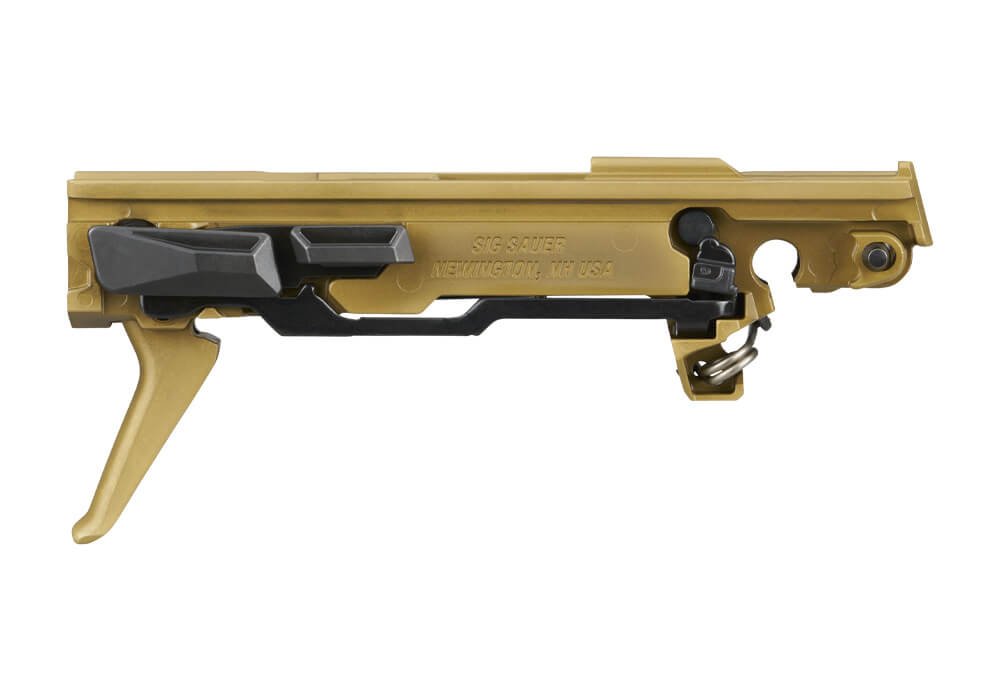
A handgun frame is the structural foundation of a handgun, providing the grip and supporting the components that allow the firearm to function. In a typical semiautomatic pistol, the frame accommodates the magazine and trigger mechanism while supporting the slide and barrel assembly through rails or an internal chassis. Its shape determines much of how the handgun sits in the hand, where the controls fall under the fingers, and how comfortably the shooter can maintain a secure hold. A revolver frame serves a related structural role, supporting the barrel, cylinder, and operating mechanism, although its construction and compatibility requirements differ from those of a pistol. Handgun frames and removable grip modules are not always interchangeable terms. On some modular pistols, a separate fire control unit fits inside the grip module; on other designs, the frame itself contains the principal operating components. That distinction matters when comparing descriptions, dimensions, and intended applications. A replacement grip module should not be assumed to serve the same purpose as a complete or stripped frame. Beyond its mechanical role, the frame is the main point of contact between the firearm and the shooter. Grip circumference, backstrap contour, frontstrap shape, and trigger reach can each affect comfort. A broad grip may fill a larger hand naturally, while a narrower profile may allow someone with smaller hands to reach the controls without shifting their hold. Texture also changes the feel: pronounced patterns provide a more assertive surface, while less aggressive textures may be more comfortable against clothing during lawful carry. Neither shape nor texture is universally preferable. For someone who spends extended sessions at the range, pressure beneath the trigger guard or along the backstrap can become more noticeable over time. A useful fit feels balanced rather than forced, with a grip shape suited to the shooter’s hands and the handgun’s intended role. Overall dimensions deserve attention as well, because grip length and frame width influence how the firearm feels during handling and how it fits compatible accessories.
Materials give handgun frames different weight, surface feel, and maintenance characteristics. Polymer is common because it combines relatively low weight with resistance to corrosion, making it practical for many carry and recreational applications. Its molded construction also allows varied contours and textured surfaces, although the composition, reinforcement, and internal support structure differ among designs. Aluminum alloy provides a metal frame with less weight than a comparable steel construction, and protective finishes help limit wear and corrosion. Steel generally adds weight and a substantial feel that some shooters prefer for range use. Additional firearm weight can influence perceived recoil, but frame material alone does not determine how a handgun handles; overall design, ammunition, grip fit, and the shooter’s technique all contribute. Durability likewise depends on more than whether a frame is polymer or metal. Engineering, manufacturing quality, finish condition, and care matter throughout the life of the component. Contact with belts, holsters, and range bags can leave cosmetic marks, while exposed metal surfaces may need attention after contact with moisture or perspiration. Cleaning products should be suitable for the frame material and finish, since an incompatible solvent can damage a surface even when it is effective on other firearm components. Manufacturer care recommendations provide the appropriate reference for cleaning methods, lubrication requirements, and inspection intervals. Before any handling for maintenance, the firearm should be unloaded and ammunition kept separate from the work area. Routine visual inspection can help identify cracks, unusual wear, loose components, or damage that calls for evaluation by a qualified professional. Grip texture deserves practical consideration here, too: deeper patterns can hold lint and residue, while smoother surfaces may be easier to wipe clean. A frame intended for frequent range practice benefits from a finish and grip surface that remain comfortable through repeated handling. For lawful everyday carry, lower weight, manageable dimensions, and compatibility with the intended holster may take greater importance. These are different priorities, not a simple ranking of one material over another.
Compatibility is the central consideration when choosing handgun frames or grip modules. Similar appearance does not establish fit, and a familiar platform name alone may not identify the correct component. Model family, size designation, generation, and the manufacturer’s stated compatibility should align with the handgun involved. Depending on the design, frame dimensions can affect the relationship among the slide assembly, magazine, controls, and holster. Accessory rails, trigger guard contours, and changes in grip length may also influence whether existing equipment remains suitable. Descriptions such as full-size, compact, and subcompact are useful starting points, but they do not replace the specifications for a particular platform. A stripped frame may differ substantially from a frame assembly, and a grip module may not include the internal parts a shopper expects. Clear component descriptions are therefore as important as material and appearance. Someone choosing a frame for recreational target shooting may prioritize a comfortable grip and substantial feel; a person considering a lawful carry configuration may place more emphasis on weight and dimensions. An experienced owner replacing a worn component has a different need from a new shooter evaluating an unfamiliar grip shape, and qualified assistance can help resolve uncertain fit or condition without relying on assumptions. Frame ergonomics also matter when comparing complete firearms, making Handguns With Tactical Frame Design a related category for considering grip shape, control placement, and overall handling together. Legal classification is another important distinction: depending on the firearm’s design and applicable law, the frame or a separate fire control unit may be the regulated firearm component. A removable grip module is not necessarily classified the same way. Purchase and transfer requirements can vary under federal, state, and local law, and a licensed dealer can help clarify requirements for the component involved. Any fitting, repairs, or uncertain compatibility should be addressed according to manufacturer guidance and, when appropriate, by a qualified gunsmith. Thoughtful frame selection brings together verified fit, suitable materials, comfortable dimensions, and responsible ownership, with secure storage and safe handling remaining essential regardless of the configuration.