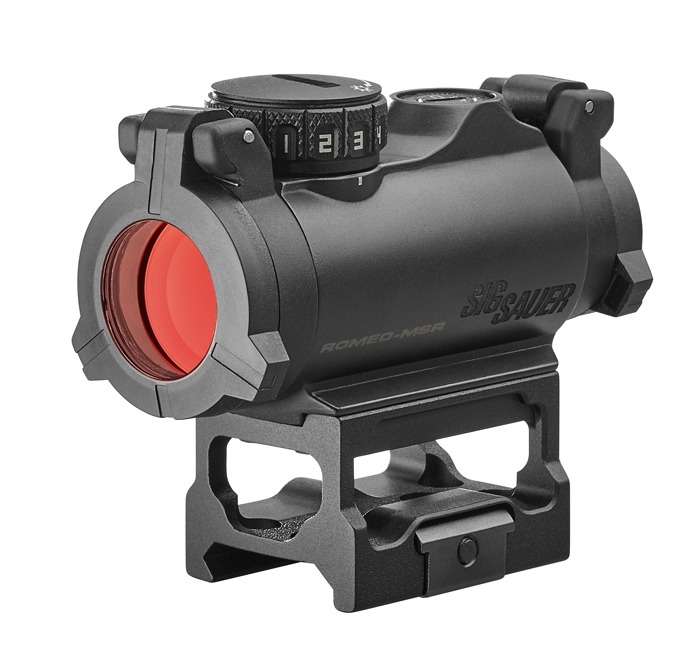
High visibility green dot sights use an illuminated green aiming point to give the shooter a clear visual reference through an optical window. Unlike a laser sight, a reflex sight presents the dot within the optic rather than projecting it onto the target. Most sights in this category provide an unmagnified view, helping preserve awareness of the surrounding area while keeping the aiming reference easy to locate. Human vision is generally more sensitive to green wavelengths under bright conditions, so some shooters find a green dot easier to distinguish than a red dot in daylight. That advantage is personal, not universal: background colors, brightness settings, corrective lenses, and individual vision all affect how the reticle appears. A green dot may look cleaner to someone with astigmatism, but it does not correct astigmatism or guarantee a perfectly round image. Looking through an optic with the glasses or contacts normally worn for shooting is more useful than choosing by reticle color alone. Dot size matters, too. Reticle measurements commonly use minutes of angle, or MOA; one MOA spans approximately one inch at 100 yards. A smaller dot covers less of a distant target and can suit deliberate aiming, while a larger dot can be easier to recognize during transitions between targets at a supervised range. Neither size automatically produces better results. A sharply defined dot at a comfortable brightness often serves the eye better than an intensely illuminated point that appears to flare across the window. In a bright shooting bay, additional illumination may help the reticle remain visible; against a dim background, a lower setting can preserve definition. High visibility should mean a useful aiming reference, not simply the highest brightness setting. For many shooters, the most comfortable setup supports a target-focused view with both eyes open, though visual needs and shooting technique can influence what feels natural.
Fit is just as important as visibility when selecting a green dot sight for a pistol, rifle, or shotgun. Compact pistol optics can share a similar outline while using different mounting footprints, screw spacing, recoil interfaces, or mounting plates. A footprint name alone may not establish compatibility with every slide cut or adapter. Confirm the firearm manufacturer’s requirements, the optic’s mounting specifications, and the correct screw dimensions before installation. Rifles and shotguns may use a rail-mounted base instead, with mount height affecting cheek position and the relationship between the optic and any backup sights. A setup that feels comfortable from a bench should also allow a repeatable view from the positions used during regular practice. Housing materials, lens protection, and the location of controls influence everyday handling. Aluminum housings are common because they balance weight and structural strength, while protective surface treatments help resist wear from handling and contact with equipment. Housing shape and window placement also matter: an exposed lens edge may need different protection than a window recessed within a substantial frame. Lens coatings can improve light transmission or reduce reflections, although the apparent tint varies by optical design. Open-emitter sights place the light source behind an exposed viewing window; enclosed-emitter designs surround the emitter within a protected optical assembly. The enclosed arrangement helps keep lint and debris away from the emitter path, but exterior lenses still need attention. Neither design removes the need for inspection or careful cleaning. Consider the controls with the firearm safely unloaded: brightness buttons should be understandable and accessible without interfering with normal handling. Battery access deserves similar attention. Depending on the design, replacement may involve a side compartment, a top cover, or removal of the optic from its mount. Published battery-life figures depend on stated settings and operating conditions, and motion activation or automatic brightness functions vary by design. Those features can simplify ownership, but they do not replace a sensible battery-replacement schedule and a function check before use.
Intended use helps bring these details into focus. Someone practicing at an indoor range may value straightforward manual brightness adjustment and a crisp dot against paper targets. A competition shooter might prioritize a generous viewing window, readily accessible controls, and a reticle that remains easy to track through a course of fire. For lawful personal protection or concealed carry, overall dimensions, secure mounting, holster compatibility, and consistent operation warrant particular attention. An optic should fit the complete setup, including the firearm, mount, holster, and any other compatible accessories, without obstructing controls or compromising safe handling. Hunters have additional considerations, including equipment regulations, target identification, and the distances appropriate to their firearm and experience. The selection of Hunting Green Dot Sights offers a related category for shoppers whose primary use is time in the field. A nonmagnifying green dot can provide a distinct aiming reference, but it does not supply magnification, identify a target, or extend a firearm’s effective range by itself. Across these uses, durability comes from an appropriate combination of construction, secure installation, and routine care rather than any single specification. After mounting, confirm the sight’s zero at an appropriate range and follow the manufacturer’s guidance for fastener torque, inspection, and maintenance. Recheck alignment after any work that requires removing the optic. For cleaning, first verify that the firearm is unloaded and follow its handling instructions. Clear loose grit with a lens-safe blower or soft brush before touching the glass, then use cleaning materials approved for the optic. A dry wipe across dusty lenses can scratch coatings, and strong solvents intended for other firearm components may harm seals or finishes. Keep battery contacts and compartment seals clean, inspect mounting hardware periodically, and store the equipment securely. For a gift recipient, confirmed mounting compatibility and known preferences are more valuable than choosing the brightest-looking reticle. A well-matched green dot sight should provide a clear, repeatable view and controls the shooter can use confidently throughout regular practice.