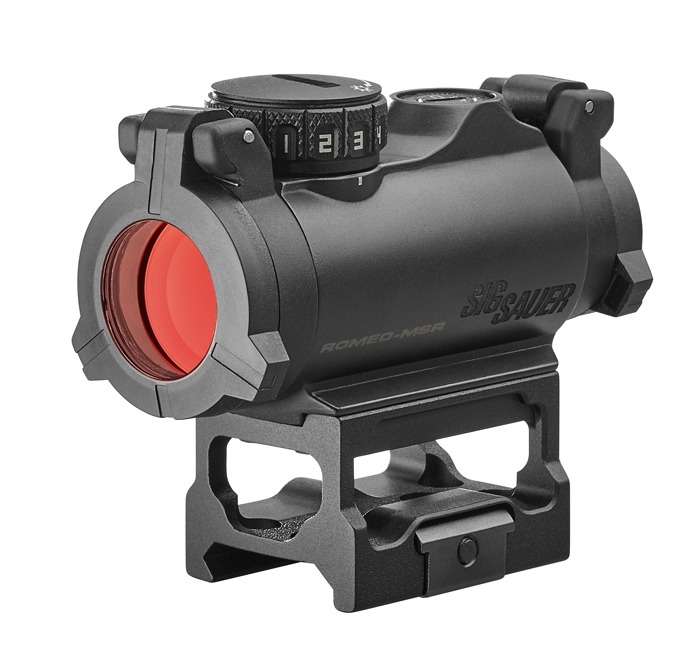
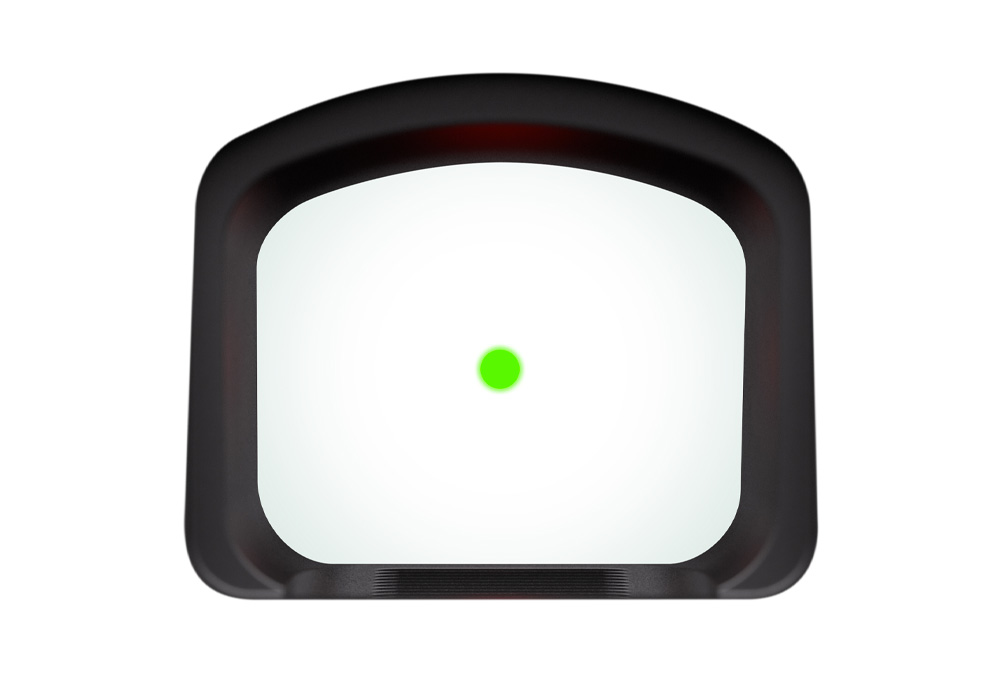
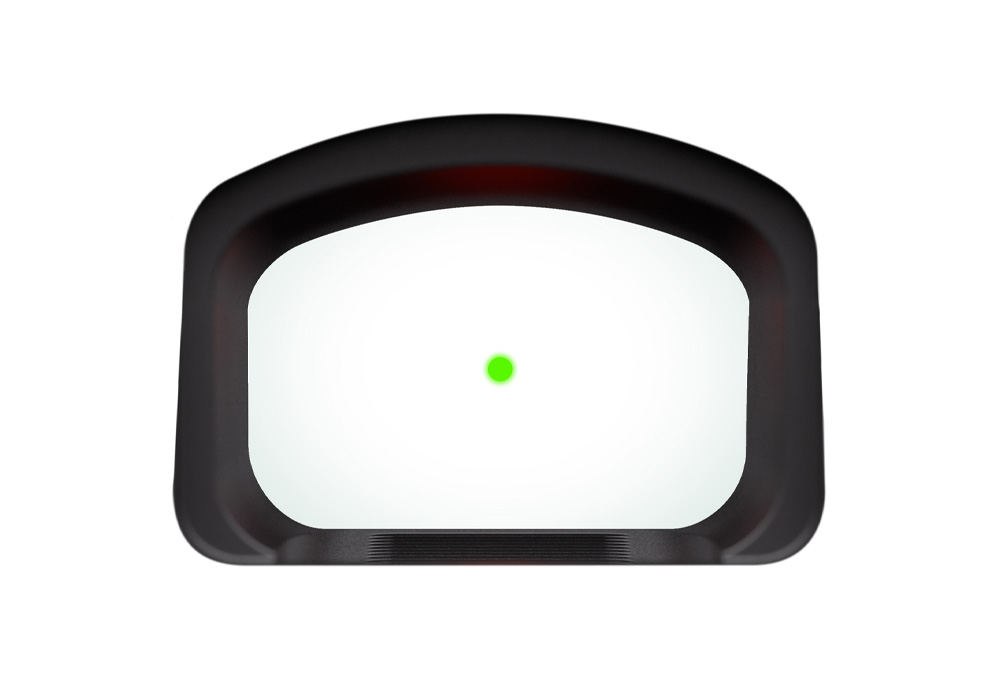
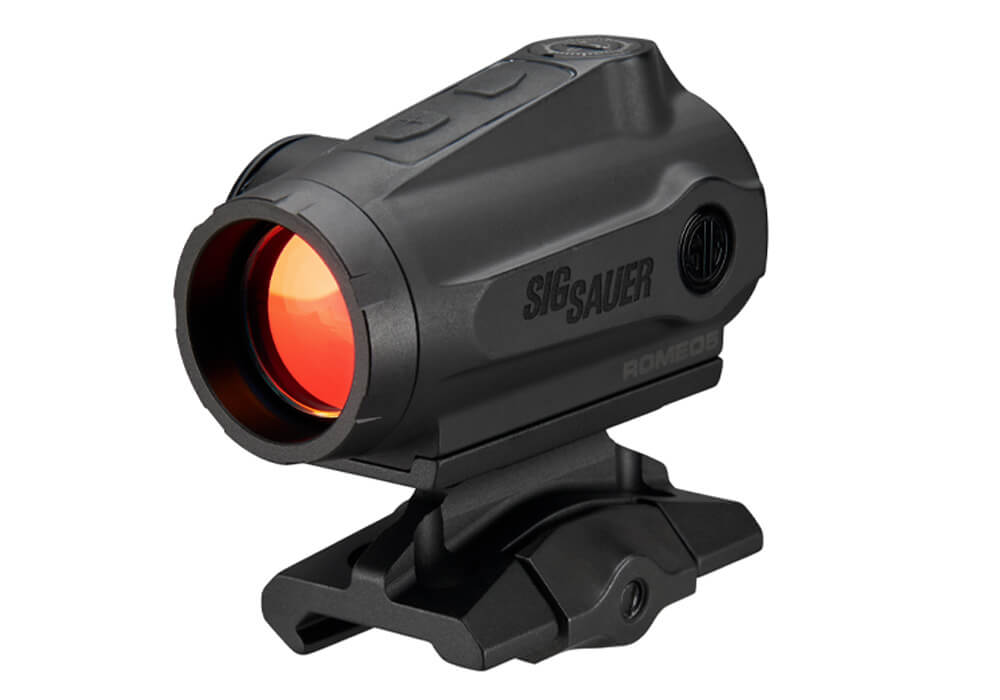
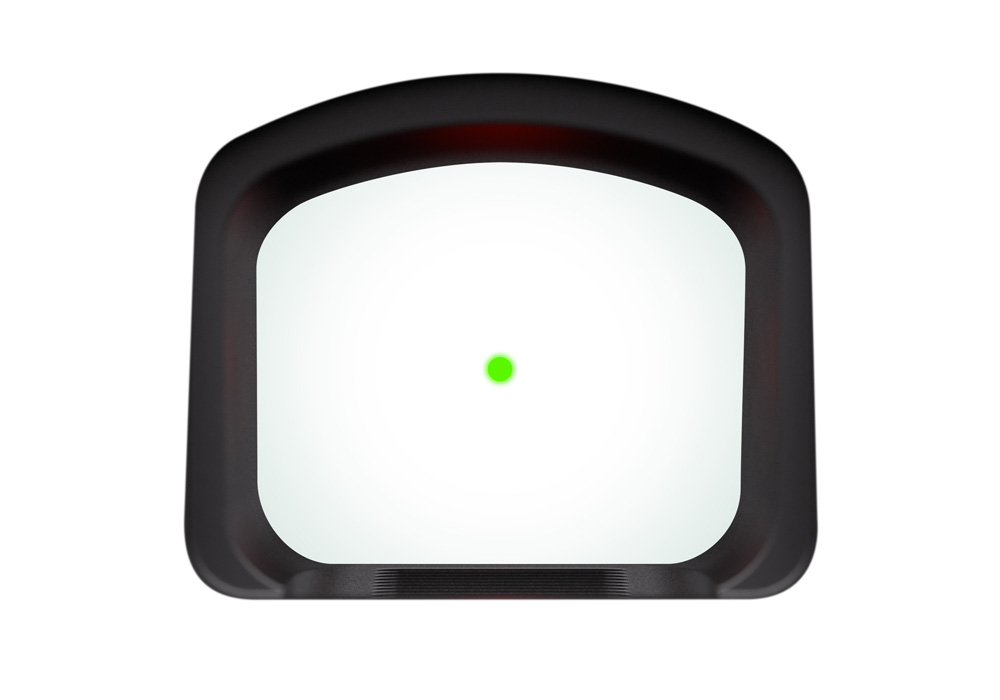
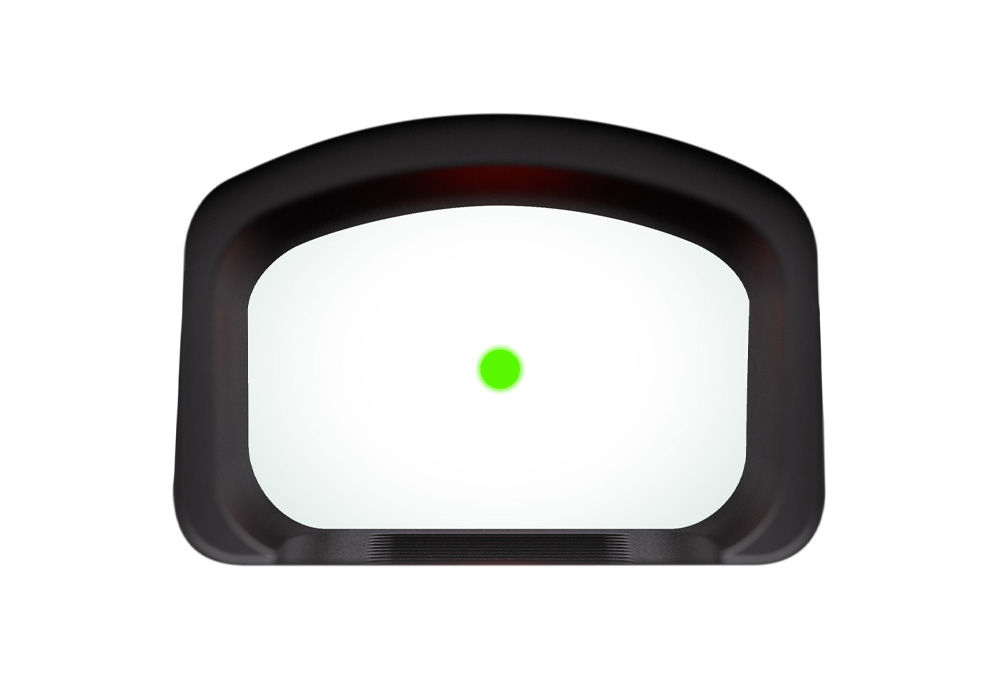
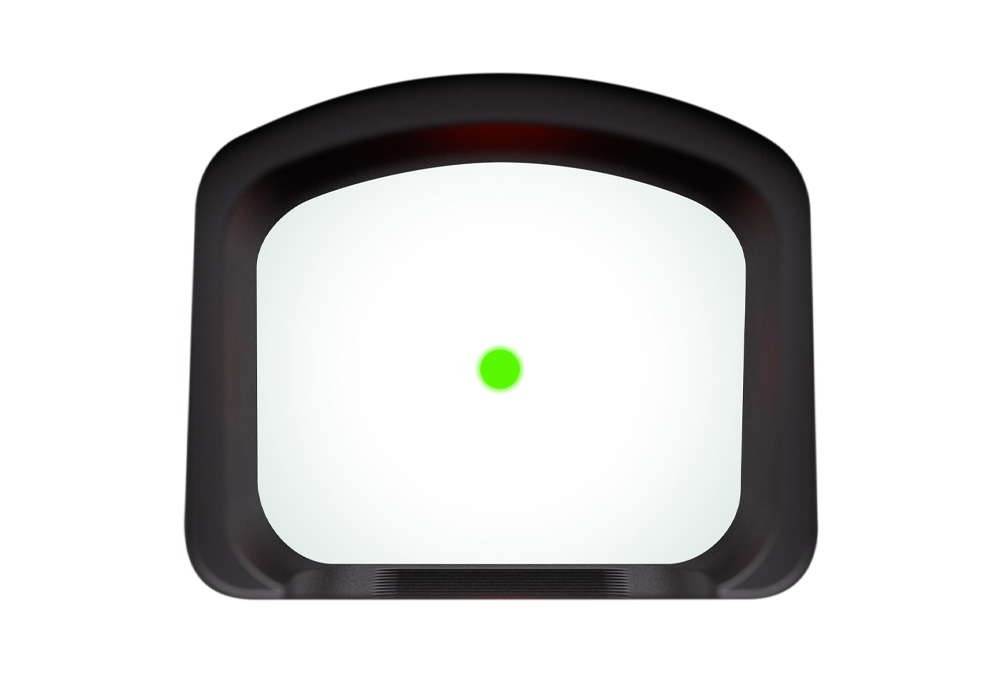
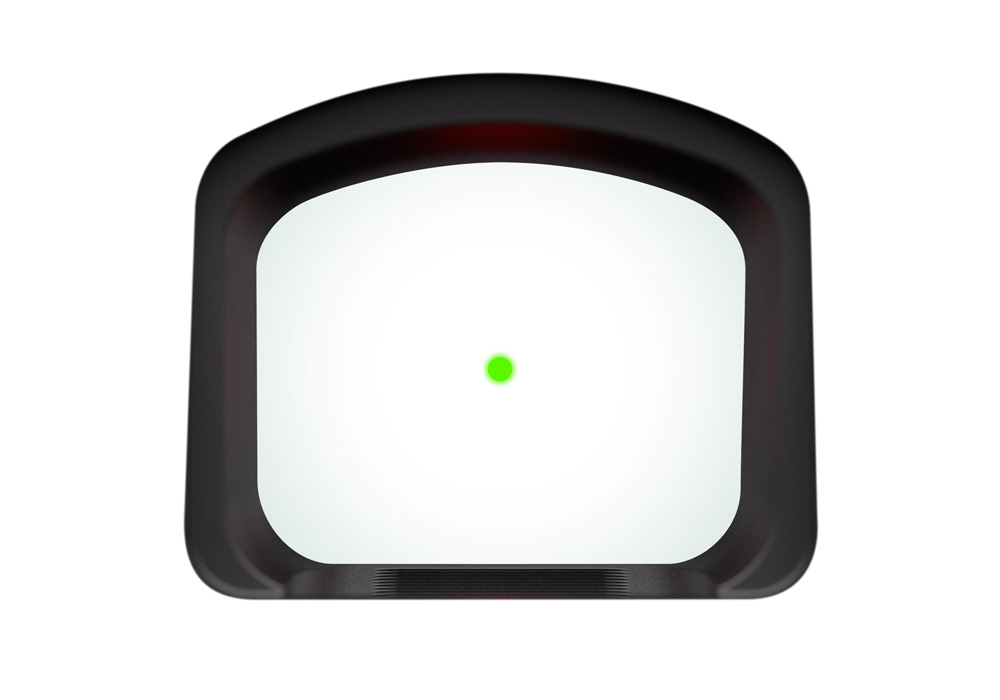
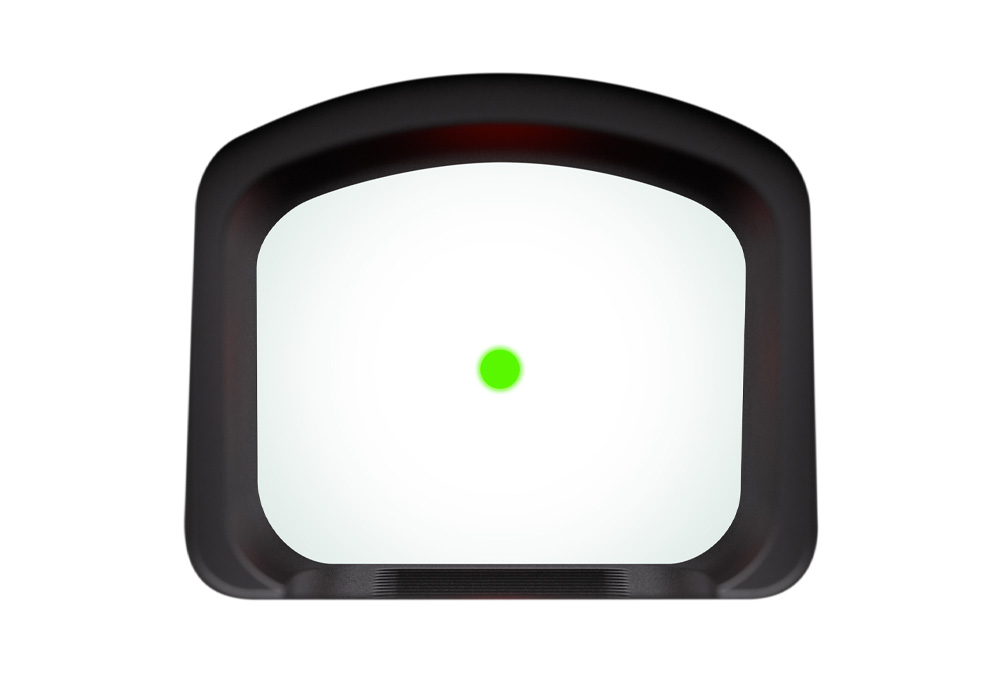
Hunting green dot sights provide an illuminated aiming reference that can be easy to distinguish in bright daylight, helping hunters keep attention on the animal and its surroundings rather than aligning separate front and rear sights. The green dot appears within the optic’s viewing window; it does not project a visible mark onto the target. Many sights in this category have no magnification, offering an open view suited to hunting situations where an animal may appear at a relatively short distance. Green can look especially bright to some eyes, although visibility depends on the background, the optic’s brightness range, and individual vision. Against dense foliage, a green aiming point still needs enough contrast to remain distinct without becoming a distracting glow. More brightness is not always better: an excessively bright dot can appear larger or less defined, obscuring detail that would otherwise remain visible. Some shooters with astigmatism find a green aiming point easier to resolve than a red one, but neither color guarantees a perfectly round image. Optical design, corrective lenses, and the viewer’s eyesight all influence how the dot appears. A smaller aiming point generally covers less of the target, while a larger one may be easier to notice at a glance. Neither size replaces a clear view of the animal or sound judgment about an appropriate shot. Window dimensions and housing shape also affect the experience, particularly when a hunter is looking past nearby branches toward an opening in the timber. A compact housing can feel unobtrusive on a lightweight firearm, while a more generous viewing window may feel less restrictive to another hunter. These differences make hunting green dot sights a category defined by personal fit as much as by illumination color. Their appeal lies in a readily visible reference and a relatively uncluttered view, not in adding magnification or revealing details that the unaided eye cannot resolve. Hunters who need to identify fine detail at greater distances may prefer a different optical arrangement suited to that task.
Construction and mounting compatibility determine whether those visual benefits translate into a practical hunting setup. Aluminum housings are common because they balance strength with manageable weight, but the material alone does not establish durability. Housing design, lens protection, internal construction, and the manufacturer’s stated testing all matter. Resistance to dust and moisture can help protect an optic carried along brush-lined trails or transported with other field equipment, although protection ratings should be understood according to their stated limits. An enclosed emitter places the light source behind protective lenses, reducing its exposure to debris; an open-emitter design leaves that light path more exposed. Both arrangements have practical considerations involving size, access for cleaning, and the amount of housing surrounding the viewing window. Lens coatings can influence light transmission, reflections, and the color cast visible through the optic. A noticeable tint is not automatically a defect, but an image that feels comfortable and clear is important during extended observation. Fit begins with the firearm’s mounting interface and the sight’s specified footprint or compatible mounting system. A similar-looking base does not establish compatibility, and recoil suitability should be confirmed for the intended firearm rather than assumed from appearance. Mounting height also affects how naturally the eye meets the window when the firearm rests against the shoulder. On a hunting rifle or shotgun, a comfortable cheek position helps keep the viewing experience consistent without an awkward stretch of the neck. Overall dimensions deserve attention as well, including clearance around controls, access to the battery compartment, and space within a protective case. Battery access varies: some designs allow replacement without removing the optic, while others require removal and a subsequent zero check. Battery-life estimates depend on specified settings and operating conditions, so a headline figure is only part of the picture. Manual brightness controls, automatic adjustment, motion activation, and automatic shutoff are features that may be present, not universal characteristics of every green dot sight. Their usefulness depends on how clearly the controls operate and how well their behavior matches the hunter’s routine.
Everyday care is another part of long-term suitability, especially for an optic that travels between a storage cabinet, a range bag, and the field. Dust, fingerprints, and residue on the viewing window can soften the image or make an illuminated dot appear less distinct. Lens-safe cleaning materials and the manufacturer’s care directions help protect coatings; loose grit should be removed before the glass is wiped. Household cleaners, abrasive fabrics, and improvised solvents may damage surfaces or seals. Protective covers can limit contact with other equipment during transport, while accessible controls make routine checks less cumbersome. A clean exterior does not confirm that mounting hardware is secure or that the sight has retained its zero, so periodic inspection and appropriate verification remain important parts of responsible ownership. Consistent practice also helps a hunter become familiar with the appearance of the dot against different backgrounds and recognize which brightness settings remain comfortable to view. The range provides a controlled setting for evaluating that familiarity, and Green Dot Sights for Target Shooting offers a related category for shoppers whose interests include both hunting and recreational range use. The overlap is useful, but intended use still matters: a sight that feels comfortable during an unhurried range session should also suit the firearm’s balance and the way it is carried in the field. Hunters with established preferences may value compact dimensions, a particular window shape, or straightforward battery access more than an extensive feature list. For a gift recipient, confirmed mounting compatibility and an understanding of those preferences are more useful than choosing by dot color alone. Any hunting optic also belongs within the limits of applicable regulations and responsible field judgment. An illuminated aiming point does not establish target identity, reveal what lies beyond an animal, or turn an uncertain opportunity into an appropriate one. The most suitable hunting green dot sights support a clear view, comfortable handling, and dependable use while leaving those essential decisions with the hunter.