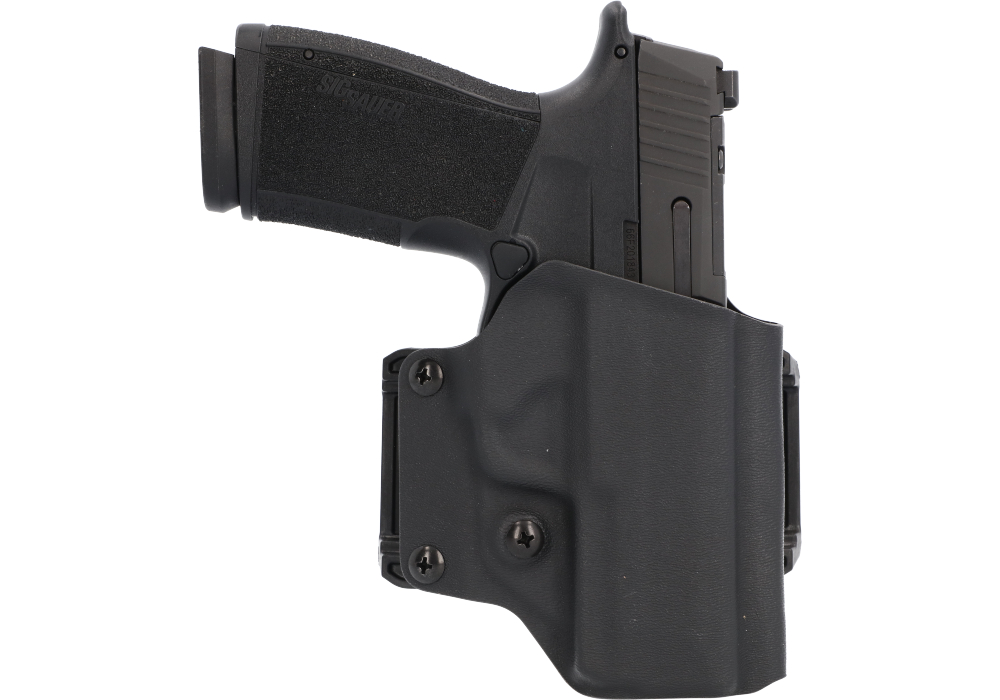
Hip holsters carry a handgun at the waist, with the holster supported by a belt or another compatible attachment near the hip. Their appeal is straightforward: a secure fit, a familiar carry position, and a range of designs suited to everyday wear, range visits, and professional requirements. Outside-the-waistband hip holsters, often called OWB holsters, sit outside the pants and typically provide more space between the firearm and the body. They are common choices for range use and lawful open carry, while some close-fitting designs can also support concealed carry beneath an appropriate garment. Inside-the-waistband holsters, or IWB holsters, sit between the waistband and the body, placing more of the holster beneath clothing. For hip carry, the difference is noticeable in ordinary moments: sitting at a desk, fastening a seat belt, or spending several hours on foot. A comfortable setup depends on the relationship between the holster, the handgun, the belt, and the wearer rather than any single feature. A slim profile may reduce bulk, but smooth edges, well-positioned hardware, and a stable attachment matter just as much. Ride height describes how high the holster sits relative to the belt, while cant describes its angle. Both influence how the holster rests against the body and how the handgun’s grip sits beneath clothing. Some designs offer adjustment; others keep those dimensions fixed for a simpler configuration. Hip holsters also differ in handedness, so a right-hand and left-hand version are not interchangeable merely because they fit the same firearm. Within the broader selection of Carry Holsters, hip-mounted styles suit shoppers who prefer waist-level support and want to compare concealment, comfort, and retention without moving to a different carry location. The most useful distinctions are practical ones: where the holster sits, how securely it attaches, and whether its shape works with the clothing and activities that fill a typical day.
Material gives a hip holster much of its character, but construction determines how that material performs. Rigid molded polymer and thermoplastic shells hold a defined shape and are often contoured for a particular handgun model. Their firm walls can help keep the holster opening from collapsing when empty, and their surfaces generally wipe clean with little effort. Some molded designs provide passive retention through a precise fit around specific areas of the firearm; others incorporate additional retention mechanisms. An audible click may accompany seating on certain designs, but sound alone does not establish correct fit or secure retention. Leather has a different feel, with a traditional appearance and a surface that can become more supple through normal use. Quality stitching, finished edges, and reinforcement around the opening are important details, especially where repeated movement places stress on the holster. Leather can develop visible wear and character, but excessive stretching, cracking, or softening that affects security is a reason to stop using it. Nylon and other woven textiles offer lighter, more flexible constructions, sometimes with padding or adjustable closures. These designs vary considerably in structure and firearm compatibility, so a broad fit description should never substitute for confirmed suitability. Hybrid holsters combine a rigid shell with a separate backing intended to spread contact across a larger area of the body. That combination can change the feel against the hip, although overall thickness and backing flexibility still deserve attention. Across all materials, a suitable handgun holster should fully cover the trigger guard, prevent access to the trigger while the firearm is holstered, and retain the firearm securely during normal activity. Exact compatibility includes more than a general size category. Model, generation, barrel length, frame dimensions, and installed accessories can all affect fit. An optic, weapon-mounted light, threaded barrel, or taller sights may require a holster specifically designed to accommodate that configuration. Two handguns that appear nearly identical can have meaningful differences at the points where a holster holds them. Manufacturer fit information is therefore more reliable than visual similarity, and a holster should not require forcing the firearm into place or improvising modifications to work.
Durability is easiest to understand by looking at the parts that bear weight and experience repeated contact. Belt loops, clips, mounting screws, seams, and retention components all contribute to how securely a hip holster stays positioned over time. A compatible belt provides a stable foundation; a flexible belt that twists under the handgun’s weight can undermine the comfort of an otherwise well-fitting holster. Loop and clip dimensions should match the belt’s width and thickness, with hardware that remains secure according to the manufacturer’s specifications. For someone who spends much of the day seated, bulky attachments or a pronounced edge may become more noticeable than they are during a brief fitting. For a range visitor, a structured OWB design may offer a practical balance of support and easy inspection. Those carrying for professional purposes may have requirements for retention mechanisms or approved equipment that take precedence over personal preference. Responsible ownership also includes routine care. With the firearm safely removed and handled according to established safety practices, the holster can be checked for grit, lint, loose hardware, damaged stitching, cracks, or changes in shape. Cleaning methods should suit the material: polymer generally needs gentle surface cleaning, leather requires compatible care products used sparingly, and textiles should follow the maker’s cleaning and drying directions. Excess oil, aggressive solvents, and unapproved treatments can affect finishes or material integrity. Any cleaning product should be appropriate for both the holster and surfaces it contacts. Wear that compromises trigger coverage, attachment strength, or retention calls for replacement rather than continued use. A hip holster can also be a thoughtful gift for an experienced firearm owner, but it is a fit-dependent accessory, not a one-size-fits-all choice. Knowing the recipient’s exact handgun configuration, preferred carry style, handedness, and belt setup matters more than selecting by appearance. Whether intended for regular carry or scheduled range time, lasting satisfaction comes from a holster whose fit and construction remain dependable through repeated use, supported by appropriate training, careful handling, and compliance with applicable laws.