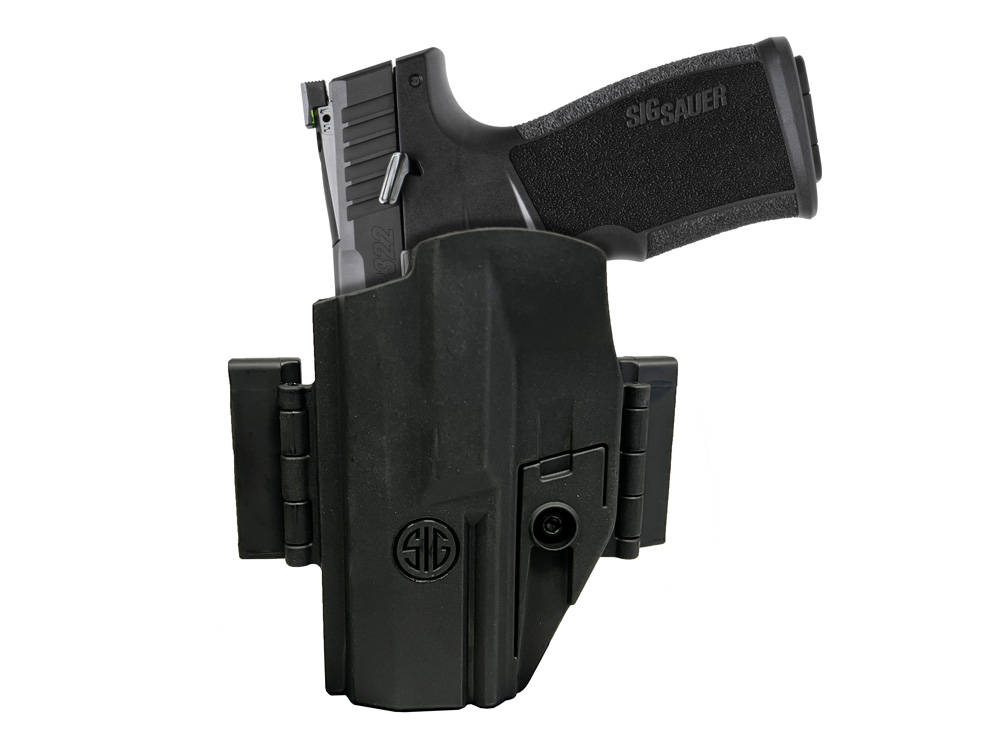
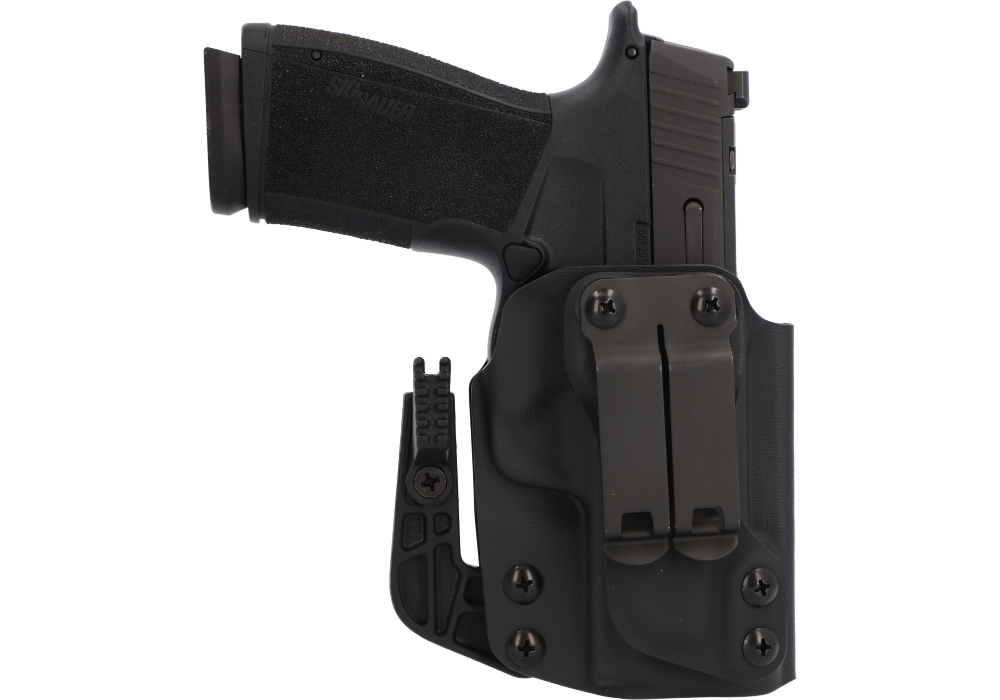
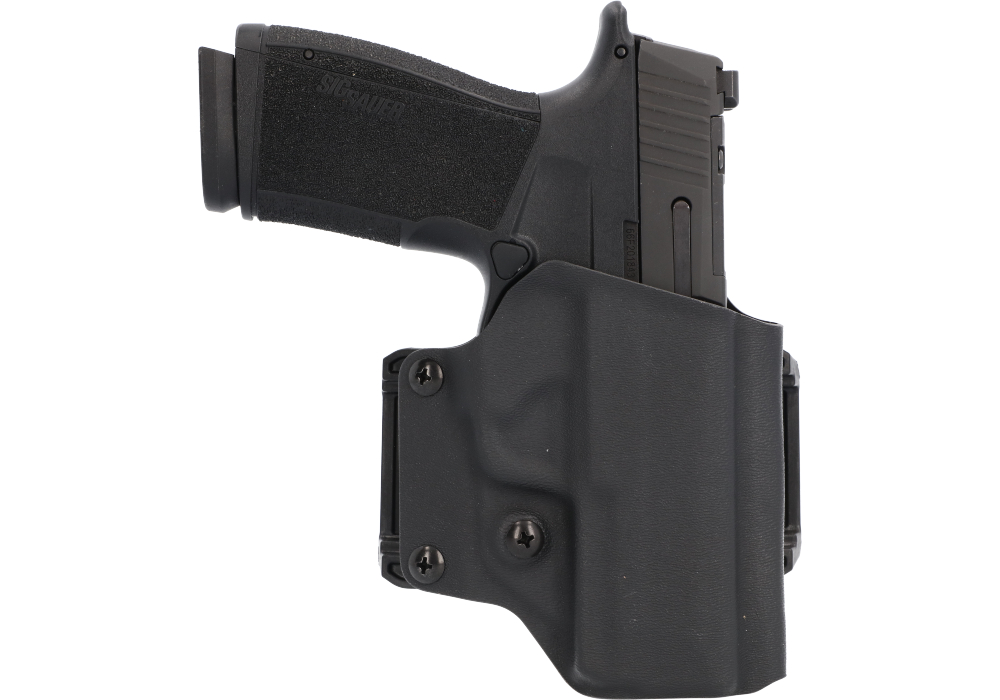
Holsters and accessories form the connection between a handgun, the person carrying it, and the clothing or equipment supporting it. A well-matched setup holds the firearm securely, shields the trigger from contact, and keeps its position consistent through ordinary movement. For someone who carries regularly, that can mean a holster that stays settled while sitting at a desk or walking across a parking lot. For a range visitor, it may mean an outside-the-waistband design that works comfortably with a sturdy belt and the facility’s rules. Inside-the-waistband, or IWB, holsters sit inside the waistband, helping conceal the firearm beneath clothing. Outside-the-waistband, or OWB, holsters attach outside the waistband and can suit range practice, permitted open carry, or concealment beneath an appropriate cover garment. Appendix inside-the-waistband, often called AIWB, describes a placement near the front of the waist rather than a separate construction material or retention system. Belly bands and ankle holsters offer other placement options, although their suitability depends on firearm size, secure trigger coverage, clothing, and the wearer’s activities. Within this broader selection, Carry Holsters provide a starting point for comparing designs intended for everyday carry. Fit is more specific than whether a handgun seems to slide into a shell. The firearm model, barrel and slide dimensions, trigger guard shape, and any attached equipment all affect compatibility. A holster intended for a handgun with a mounted light generally requires the specified light as part of that combination; a similar-looking accessory is not necessarily interchangeable. Likewise, clearance for an optic needs to accommodate its position and profile without interference. Hand orientation, mounting hardware, and intended carry position matter just as much. Secure seating, appropriate retention, and protected trigger coverage are essential considerations, while comfort depends on how the entire setup rests against the body. A compact profile alone does not establish a good fit, and a holster’s stated compatibility is more useful than a general resemblance between firearms.
Materials and construction influence how holsters feel, hold their shape, and respond to repeated use. Rigid molded polymers offer a defined shape and a surface that is generally straightforward to clean. Their structure can help keep the holster mouth open when empty, although safe handling still depends on attention, technique, and appropriate training. Leather offers a different feel, with texture and flexibility that can change through use. Its long-term suitability depends on sound stitching, structural support, and a shape that continues to protect the trigger area. Hybrid designs combine a rigid shell with a backing material, bringing another balance of support and contact against the body. Textile designs vary widely in reinforcement and construction, so softness should not be mistaken for secure fit or adequate trigger protection. Edges, seams, fasteners, and the placement of attachment points can be as important as the primary material. A smooth edge may be more comfortable during a long seated commute, while a stable mounting pattern can help prevent unwanted rocking along the belt. Retention systems also differ. Passive retention uses the holster’s fit and resistance to help hold the firearm in place; active retention adds a locking mechanism that requires deliberate release. Neither description, by itself, establishes suitability for every activity. Carry requirements, range policies, and the wearer’s training all help determine the appropriate design. Durability also depends on routine care. Dust, lint, perspiration, and repeated friction can affect the shell, lining, hardware, or attachments over time. Material-specific care recommendations are important because a cleaner suitable for one surface may damage another. Leather can require different treatment from polymer or fabric, and excessive oil or unsuitable solvents can alter a material’s condition. Loose hardware, cracked attachment points, frayed stitching, or a distorted opening deserve attention before further use. Inspection and fit checks belong with an unloaded firearm in a safe setting, following the manufacturer’s directions rather than relying on appearance alone.
Accessories help the holster function as part of a stable, comfortable arrangement rather than as an isolated piece of equipment. A reinforced gun belt supports the combined weight of the handgun, holster, and any belt-mounted accessories, reducing the sagging and rotation that can occur with a soft everyday belt. Belt width and thickness need to match the holster’s loops or clips, since an otherwise suitable holster can move unpredictably on an incompatible belt. Attachment style affects convenience and security: loops surround the belt, while clips rely on their shape and engagement to stay attached. Concealment wings or claws use contact with the belt to turn the handgun’s grip closer to the body, which can help reduce its outline beneath clothing. Their effectiveness depends on holster geometry, belt support, and individual fit, rather than the attachment alone. Magazine carriers provide a dedicated place for spare magazines and can help distribute weight along the belt. Compatibility includes magazine dimensions, orientation, and retention, while the carrier’s edges and attachment points influence comfort when seated. Mounting adapters and replacement hardware can offer flexibility, but only when the components are designed to work together. Changing an attachment can alter ride height, angle, clearance, and how securely the setup stays in place. These details matter to frequent range visitors, people who carry where permitted, and those whose professional requirements include approved equipment. A person spending much of the day seated may value a different profile from someone regularly moving between standing and kneeling during supervised practice. Clothing choices, mobility, and personal comfort all influence the arrangement without replacing the need for secure retention and protected trigger coverage. Holsters and related accessories can also be practical gifts for an experienced firearm owner, provided the recipient’s exact firearm configuration, preferred carry style, and equipment requirements are known. Guessing at compatibility can leave even a thoughtfully selected gift unsuitable for its intended use. The most useful setup is one whose components work together predictably, with dependable support, appropriate materials, and a fit suited to the person’s lawful activities.