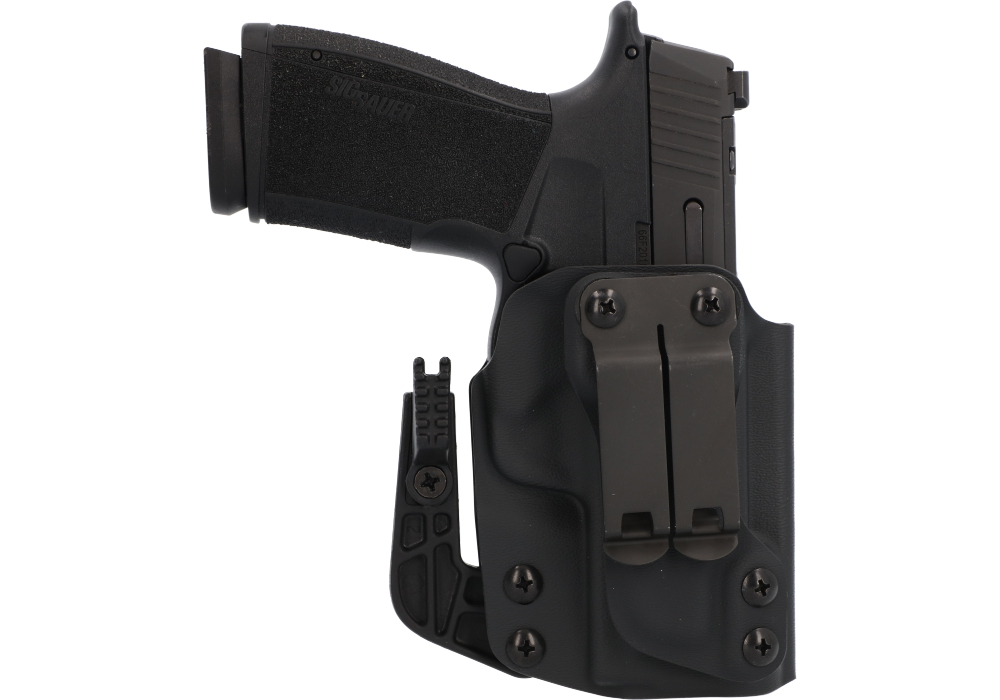
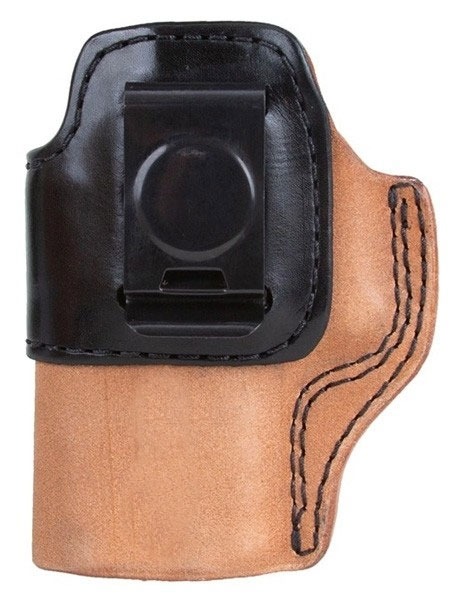
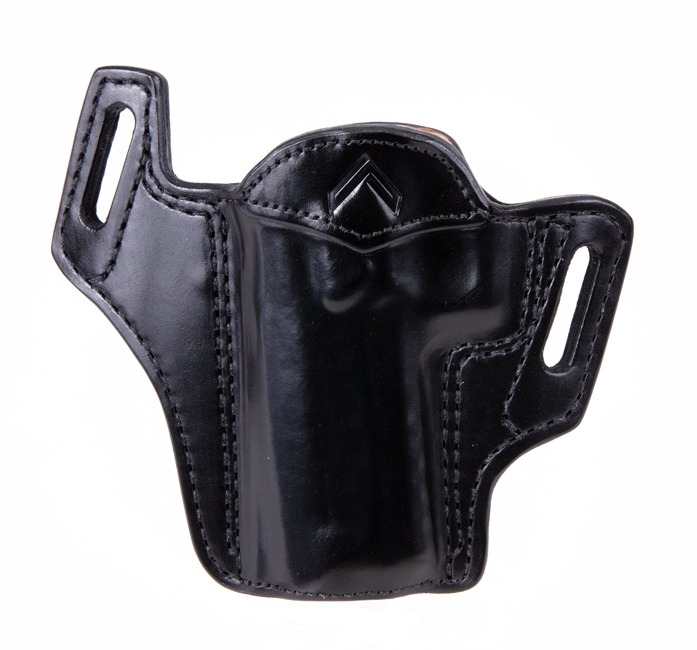
Small holsters are compact carry solutions designed for small-frame handguns, including micro-compact pistols, pocket pistols, and other slim concealed-carry firearms. They are often described as pocket holsters, minimalist holsters, micro holsters, or low-profile IWB holsters, with each style balancing concealment, access, comfort, and retention in a slightly different way. A pocket holster is shaped to keep the firearm upright and enclosed inside a front or back pocket while helping break up the outline of the gun. Many use a textured or friction-based exterior that stays in place as the firearm is drawn, while the holster itself remains in the pocket. Minimalist inside-the-waistband designs typically use a single clip and a molded shell that covers the trigger guard and follows the contours of the handgun, reducing bulk beneath a shirt or light jacket. Appendix-carry versions may add a claw or wing that presses against the belt, helping pull the grip closer to the body and reduce printing. Belly bands and deep-concealment wraps offer another compact option, especially for athletic clothing, drawstring pants, or other garments that do not provide a traditional belt. For every style, the most important starting point is a model-specific fit. A small holster should fully cover the trigger guard, hold the unloaded firearm securely, and prevent the pistol from shifting, falling out, or contacting other objects. Even compact handguns have different slide profiles, sights, controls, and frame dimensions, so a holster that appears close in size may not provide the correct retention or coverage. Confirming compatibility with the exact make, model, and configuration is essential before carrying.
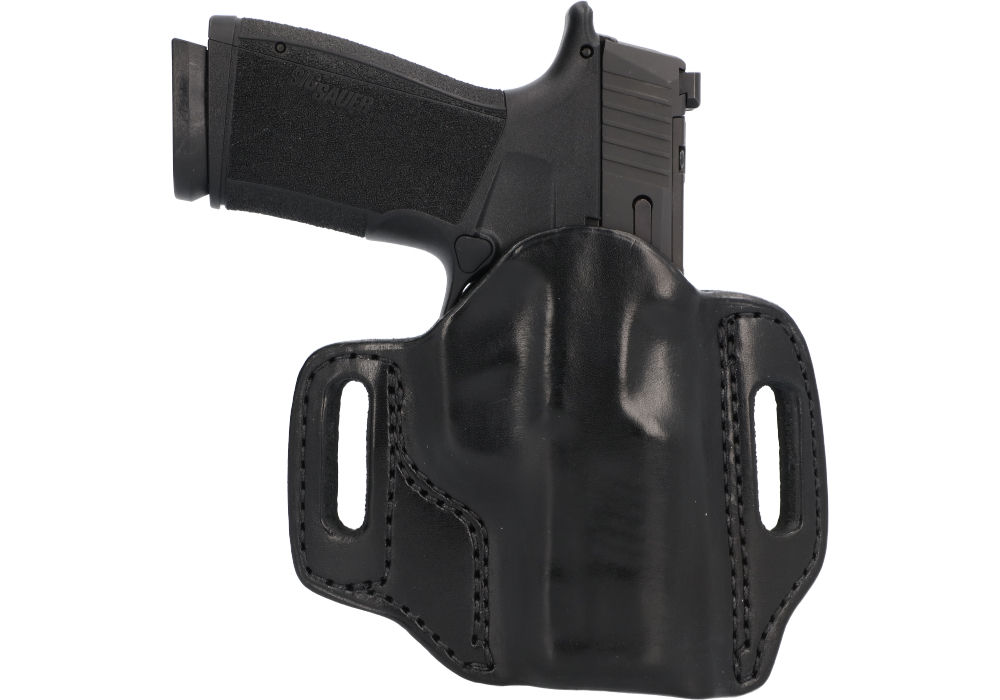
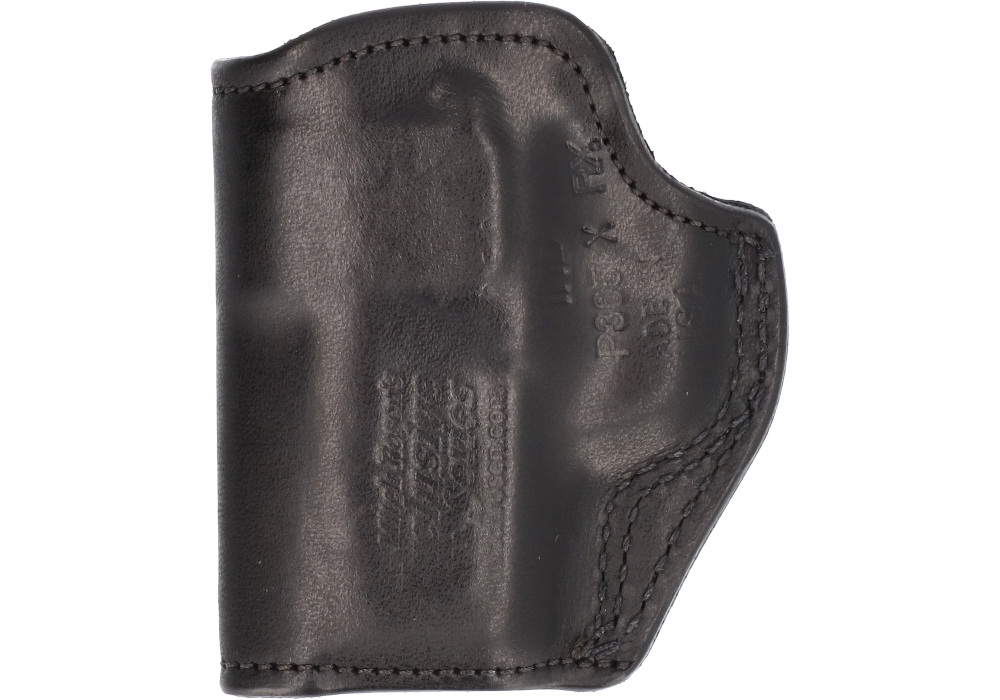
Choosing among small holsters begins with an honest look at daily clothing, movement, and carry environment. Someone who spends the day seated at a desk may prefer a slim IWB design positioned for comfort while sitting, while a person walking, driving, or working outdoors may place greater emphasis on retention and a secure attachment point. Pocket carry can be discreet and convenient, but it requires a dedicated pocket reserved for the holstered firearm; keys, coins, a folding knife, or other loose items should never share that space. Belt-mounted designs benefit from a sturdy belt that supports the holster and keeps its position consistent, while belly bands may be useful when a conventional belt is not part of the outfit. Holster material also influences the experience. Molded polymer and Kydex-style shells are generally lightweight, resistant to moisture, and easy to wipe clean. Leather can offer a traditional appearance and a comfortable feel as it breaks in, with options such as Black Leather Holsters appealing to shoppers who value a classic finish. Soft-sided materials may be comfortable against the body, but they still need to maintain their shape and protect the trigger area. Adjustable cant, ride height, clip tension, and retention can make a noticeable difference during everyday wear, particularly under fitted clothing or during the cooler months when layers change how a holster sits. Before carrying, inspect the holster for wear, test the fit with the firearm unloaded, and practice safe placement and removal without touching the trigger. A quality holster should remain attached when the firearm is drawn, should not collapse into the trigger guard, and should allow the firearm to be reholstered without forcing fingers or clothing near the trigger.
Small holsters are commonly selected by licensed concealed carriers who want a discreet setup for everyday use, by experienced owners seeking a lighter option for warm-weather clothing, and by those who carry a compact backup firearm in accordance with local laws and training. They can also be a practical gift for a new firearm owner, a family member preparing for a concealed-carry course, or an experienced carrier whose current holster does not suit a new wardrobe or routine. Because fit is so specific, a thoughtful gift buyer should confirm the exact firearm model, whether it has an optic or other accessory, the recipient’s preferred carry position, and whether a right- or left-hand configuration is needed. A small holster may be used beneath an untucked shirt, under a light overshirt, inside a waistband, in a dedicated pocket, or with clothing designed for deep concealment, but concealment should never come at the expense of safe access or secure retention. The best choice becomes almost unnoticeable during ordinary movement: it stays in place while walking across a parking lot, sitting through a long drive, or reaching for a shelf, yet remains protected from accidental contact. Firearm owners should follow the manufacturer’s instructions, use a holster specifically designed for the firearm, keep the trigger protected at all times, and understand the carry and storage requirements that apply in their area. Regularly checking clips, stitching, retention surfaces, and attachment points helps keep a compact setup dependable through changing routines and clothing layers. With the right fit and responsible habits, small holsters provide a streamlined way to carry a small handgun while preserving comfort, discretion, and everyday confidence.