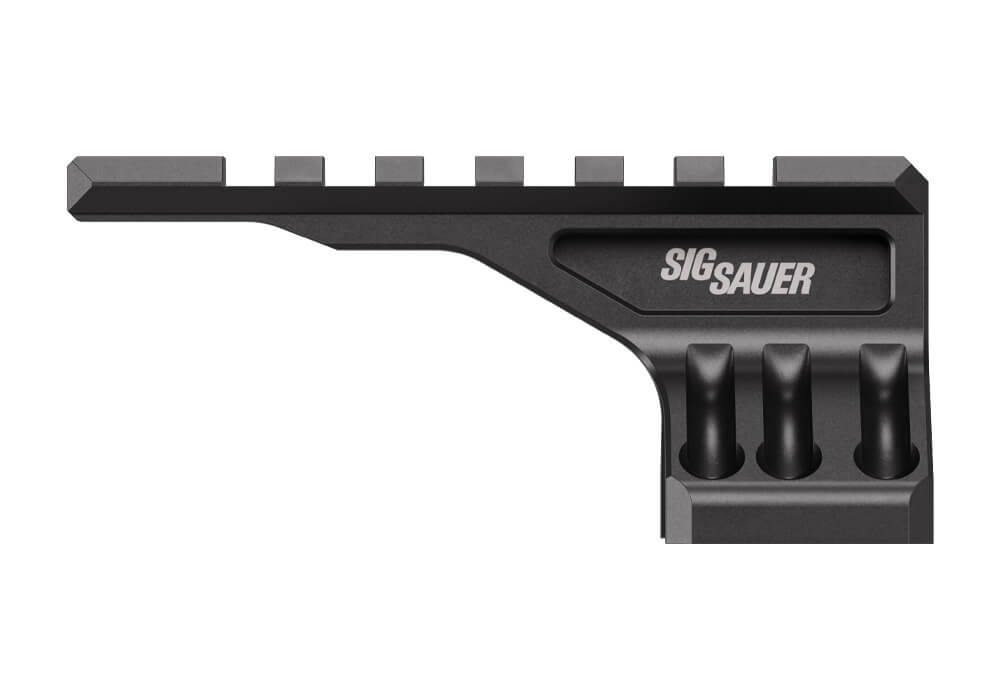
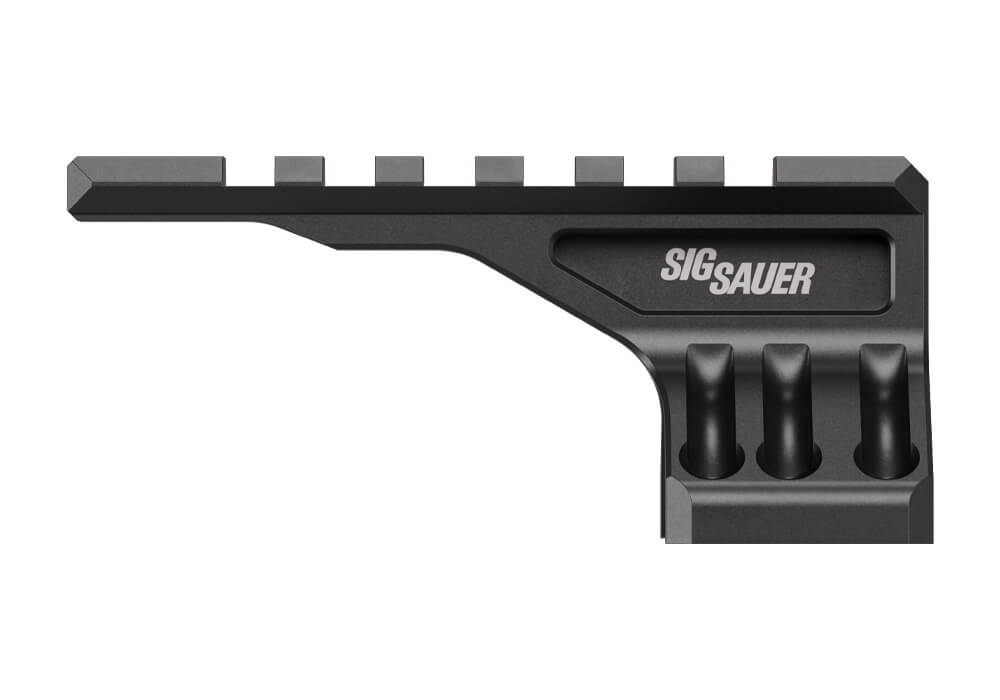
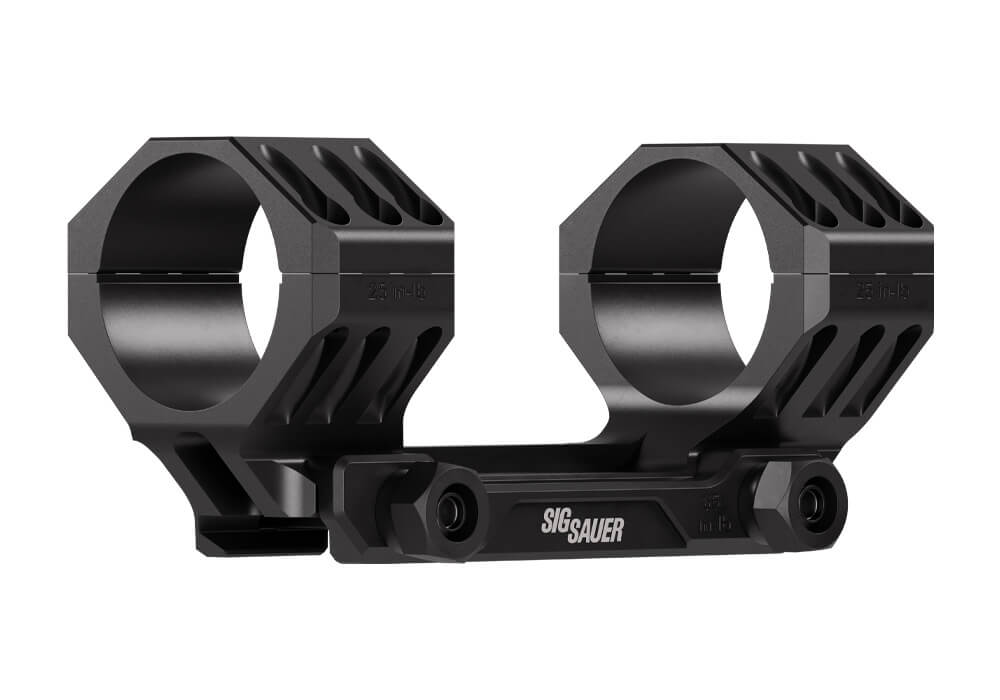
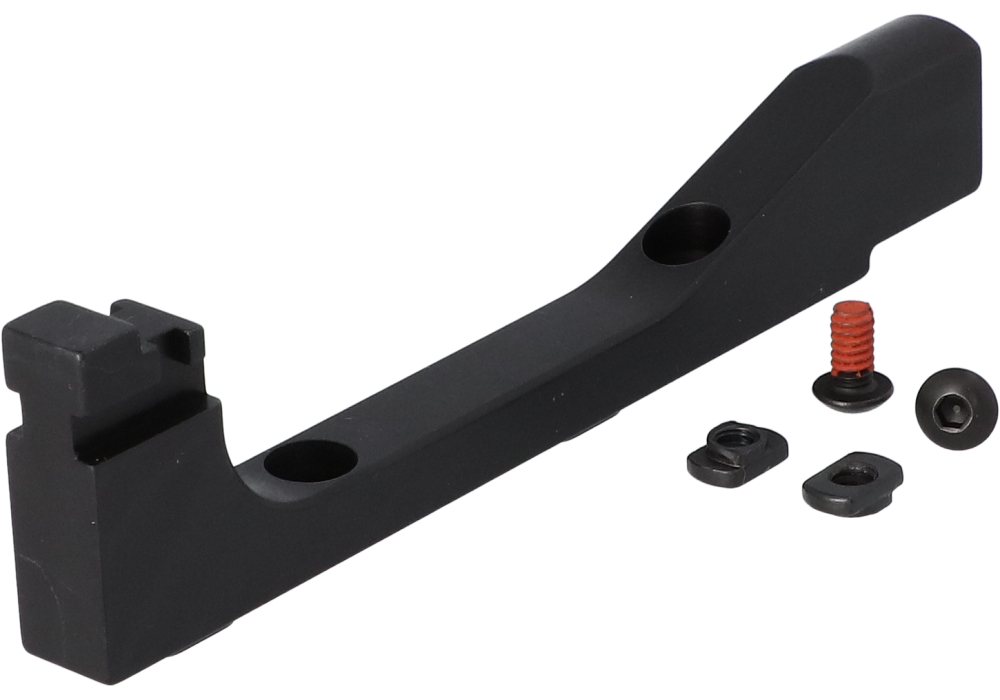
Hunting rail mounts provide the connection between a firearm and the optic or support accessory it carries. Their purpose is straightforward: establish a secure, repeatable attachment point while keeping the complete setup practical to carry and comfortable to use. A receiver rail supports compatible scope rings or an optic mount, while a fore-end rail may provide an attachment point for a bipod or another shooting support. Those locations serve different functions, so the word “rail” alone does not establish compatibility. The firearm’s mounting provisions, the rail interface, and the accessory’s clamping design all matter. Picatinny rails use a standardized cross-slot profile commonly associated with MIL-STD-1913, giving compatible mounts defined engagement surfaces and spacing. The cross slots allow positioning along the rail, although usable placement still depends on the optic, ring arrangement, and clearance around the firearm’s controls. The interface represented by Picatinny Rail Mounts is particularly relevant when matching a cross-slot accessory to its supporting base. Weaver-pattern bases have a similar appearance but different slot dimensions and spacing; some compatible mounts can cross between these patterns, but interchangeability should never be assumed. Arca-style dovetail rails serve a different role, often connecting a hunting rifle’s fore-end to a compatible tripod clamp. Hybrid arrangements can combine separate attachment interfaces, but each connection still requires its own fit check. For a hunter settling into a supported position beside a tree or setting a rifle on a tripod overlooking open ground, these distinctions have practical consequences. A secure connection should support the intended accessory without interfering with a comfortable hold, access to controls, or normal firearm operation. Smooth edges and restrained profiles also matter on a rifle carried close to the body, where protruding hardware can catch a sling or press against a pack. The most useful hunting rail mounts balance secure attachment with the way the firearm is actually carried and used.
Materials and construction influence that balance as much as the mounting pattern. Aluminum rails can help limit the weight carried over long distances, while steel can offer substantial strength and wear resistance in compact attachment components. Neither material alone establishes quality: machining accuracy, sound design, appropriate fasteners, and a suitable protective finish all contribute to durability. Anodized aluminum and coated steel surfaces can resist everyday wear, but contact points and exposed edges still deserve attention over time. A broad rail with poorly matched contact surfaces is not necessarily a better foundation than a smaller, correctly fitted base. Receiver contour, screw spacing, thread specifications, and fastener length are essential details because hunting rifles do not share one universal mounting arrangement. A base that resembles the correct pattern may still be unsuitable for a particular action or receiver configuration. One-piece rails provide a continuous mounting surface and can offer greater flexibility in ring placement, while separate bases may leave more room around the receiver opening. The practical difference often becomes clear when loading, operating the bolt, or finding a comfortable grip around the action. Mount height deserves similar attention. Rail thickness and ring height work together to determine the optic’s final position, influencing objective-bell clearance, eye alignment, and cheek contact with the stock. Lower is not automatically better if it creates interference or an awkward viewing position. Rail inclination is another distinct specification: a zero-MOA base has no built-in angular offset, while an inclined base changes the scope’s alignment relative to the bore. That inclination can help allocate more usable elevation adjustment toward longer-distance shooting, but suitability depends on the scope’s adjustment range and the complete setup. Fixed and detachable mounting arrangements involve different priorities as well. Detachable designs can simplify certain transport or accessory changes, yet repeatable positioning depends on the entire interface and does not eliminate the need to confirm zero after changes. Precise fit remains more important than any single feature in isolation.
Intended use gives these technical details their context. A hunter walking substantial distances may place a premium on modest weight and a clean profile, while someone using a tripod for extended observation may care more about a stable fore-end connection and a useful range of balance adjustment. A rifle carried into a stand benefits from hardware that stays clear of the sling and allows normal handling in a confined space. For a firearm that also spends time at the range, a consistent mounting interface can make the transition between practice and hunting less complicated, provided every attached component remains compatible. Accessories should complement the firearm rather than crowd its working surfaces or add unnecessary bulk. Rail length, clamp placement, and access around the action can affect whether the setup feels natural when carried and brought into position. Durability also extends beyond recoil resistance. Routine handling, vehicle transport, contact with brush, and repeated attachment cycles can expose rough edges, looseness, or wear at clamping surfaces. Care generally centers on keeping engagement surfaces free of grit, inspecting visible hardware, and following the relevant manufacturer’s cleaning and fastening specifications. Excess lubricant or debris between mating surfaces can compromise consistent contact, while aggressive cleaning methods can damage protective finishes. A properly fitted case helps protect exposed rails and attached optics from impacts during transport. When fit is uncertain, qualified professional assessment is more useful than trying to compensate with extra tightening or improvised hardware. Hunting rail mounts can also be a thoughtful gift for an experienced hunter building a familiar setup, but exact compatibility matters more than a general preference for shooting accessories. Knowing the firearm configuration and intended attachment avoids a gift that looks appropriate yet cannot serve its purpose. Across these uses, a well-matched rail mount is a supporting component rather than the center of attention: it holds the chosen equipment securely, preserves access where needed, and helps the firearm remain manageable throughout a full day afield.