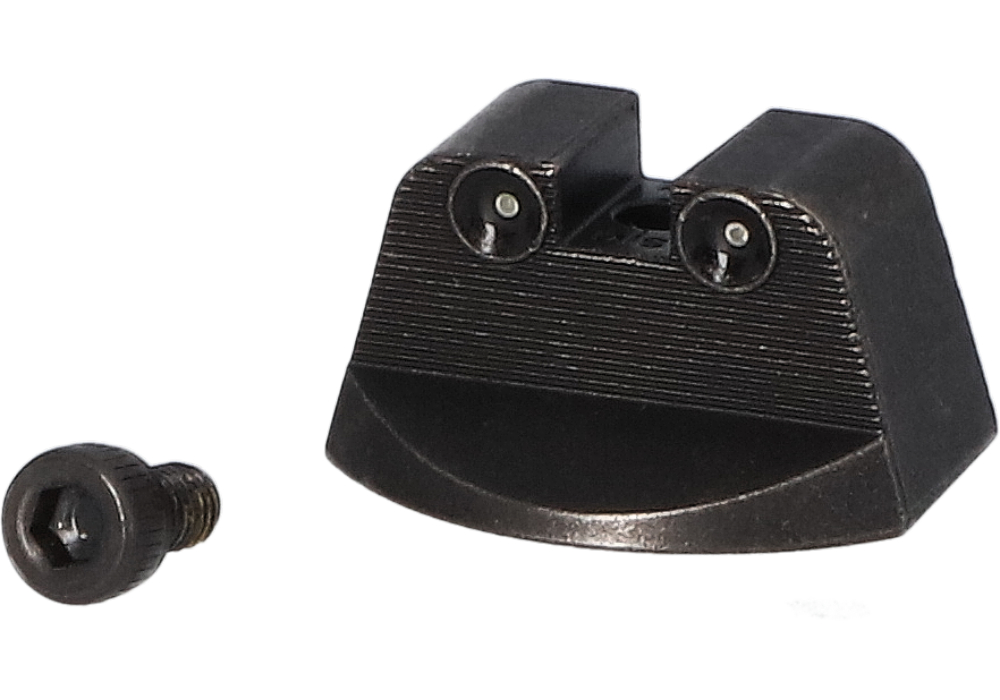
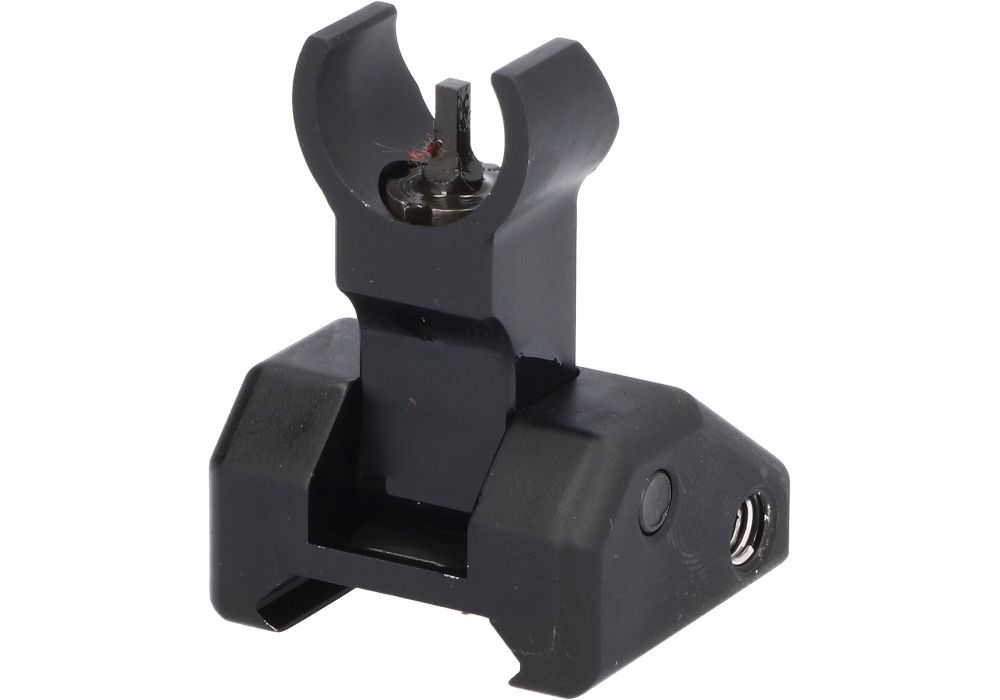
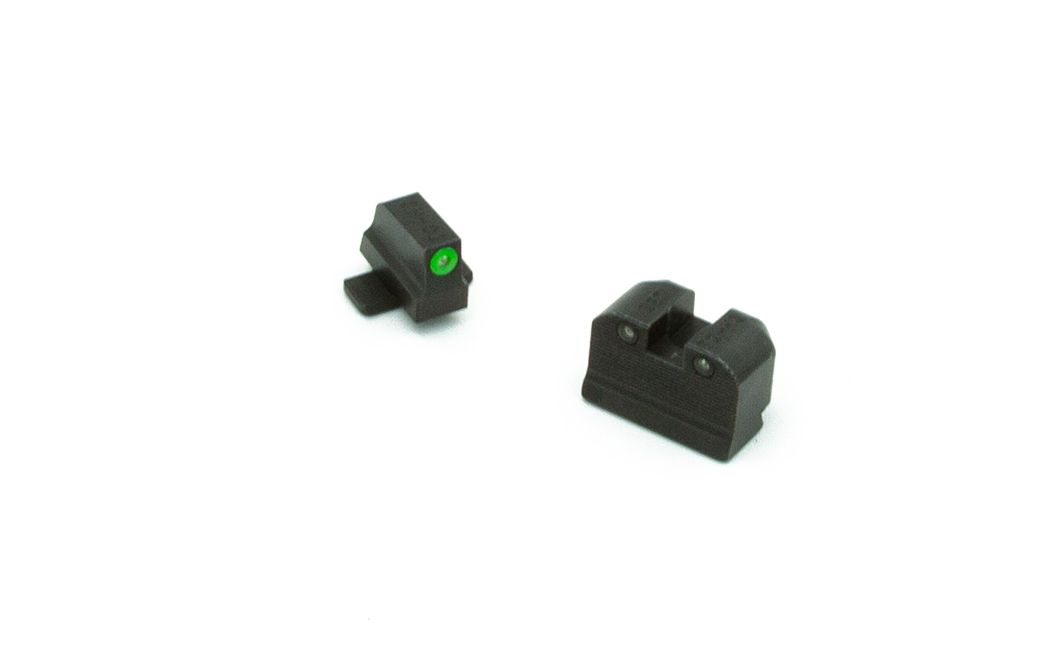
Iron sight optics, including fiber optic iron sights, combine the familiar alignment of a front sight and rear sight with a light-gathering fiber rod that creates a bright aiming point. The translucent rod collects available ambient light and concentrates it at the tip of the front sight, helping it stand out against a variety of backgrounds without batteries, wiring, or electronic controls. This design preserves the straightforward operation of traditional iron sights while making the front reference point easier to see in daylight and other well-lit conditions. For many shooters, the benefit is most noticeable when moving between a dark interior and a bright outdoor range, when targets are set against uneven foliage, or when quick sight acquisition matters more than a finely adjustable aiming system. Fiber optic colors are often selected according to personal preference and the environments in which the firearm is used; some shooters find one color contrasts better with a bright outdoor scene, while another may be easier to distinguish against darker targets or range backstops. Because the aiming point is produced by ambient light rather than a powered emitter, these sights remain ready when a battery is depleted or an electronic optic is turned off. They can serve as a primary sighting system on a pistol or rifle, and many configurations are also selected as backup iron sights, commonly called BUIS, for firearms equipped with a red dot or another Optical Sights setup. In that role, the iron sights provide a mechanical alternative that can be used if the primary optic becomes unavailable, while a co-witnessing arrangement allows the shooter to confirm alignment through the optic window when the firearm and sight heights are properly matched.
Choosing the right iron sight optics starts with identifying the firearm platform, mounting pattern, and intended use. Pistol sights typically fit a specific slide cut or dovetail, and the front and rear components must be compatible with one another in height and design. Rifle sights may attach to a rail, gas block, handguard, or another dedicated mounting surface, depending on the firearm’s configuration. Sight height is especially important when installing backup sights alongside a red dot, since the optic and iron sights must occupy compatible vertical planes for a clear sight picture. A low-profile folding set may be preferred when the primary optic should remain unobstructed, while a fixed set can offer a permanently visible reference point with fewer moving parts. Consider whether the firearm will be used for informal range practice, defensive training, competition, field use, or a combination of these activities. A compact pistol carried in a holster may call for a snag-resistant profile, while a rifle used outdoors may benefit from durable construction, protective sight wings, or folding mechanisms that accommodate other equipment. The rear sight’s notch or aperture also affects how quickly the eye centers the front fiber, and different widths can favor speed, precision, or a balance of both. When comparing options, look at the sight’s material, finish, adjustment method, replacement fiber availability, and compatibility with the firearm’s existing hardware. Fiber rods are designed to be useful rather than delicate, but they can collect dust, mud, or residue, and a tube may become damaged if the sight receives a hard impact. A soft brush, clean cloth, and careful inspection are usually enough for routine upkeep; replacement fiber can restore visibility when needed. Installation should be performed with the firearm completely unloaded and according to the sight and firearm manufacturer’s instructions. For press-fit or tightly fitted components, a qualified gunsmith can help prevent damage to the slide, dovetail, rail, or sight itself and can confirm that the finished installation holds zero.
These sights appeal to a wide range of shooters because they offer a practical combination of visibility, simplicity, and dependable operation. A new shooter may appreciate a bright front reference that is easier to find during basic sight-alignment practice, while an experienced shooter may choose fiber optic iron sights after learning which sight picture works best for their eyes and lighting conditions. They are also a thoughtful gift for a range partner, hunter, service member, or firearm owner who enjoys maintaining and refining equipment. A set can be especially useful for someone preparing a training pistol, refreshing an older rifle, or adding a non-electronic aiming option to a firearm used during travel and outdoor practice. Before purchasing a gift, confirm the exact firearm model and mounting pattern, since sights that appear similar may not interchange across platforms. During the cooler months, many shooters alternate between indoor practice and outdoor sessions, making adaptable sight visibility particularly valuable as lighting changes from one setting to another. At an outdoor range, the fiber point can draw the eye quickly against a paper target or natural backstop; in a structured drill, the same sight can support a consistent front-sight focus without requiring a powered system. Shooters should still confirm zero after installation and recheck it after transport, hard use, or any adjustment. It is also wise to practice with the actual sight picture before relying on the setup, learning how the front fiber appears in bright sun, shade, and indoor lighting. With the correct fit, a clear rear reference, and regular inspection, iron sight optics can provide a durable, low-maintenance aiming solution for everyday training, recreational shooting, and backup use alongside an electronic optic.