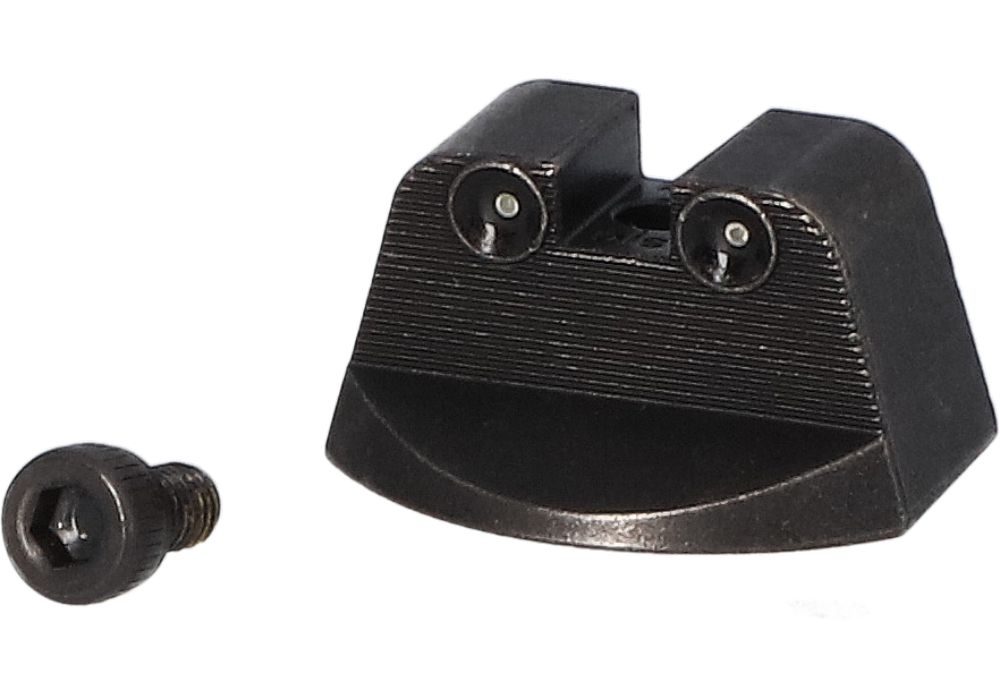
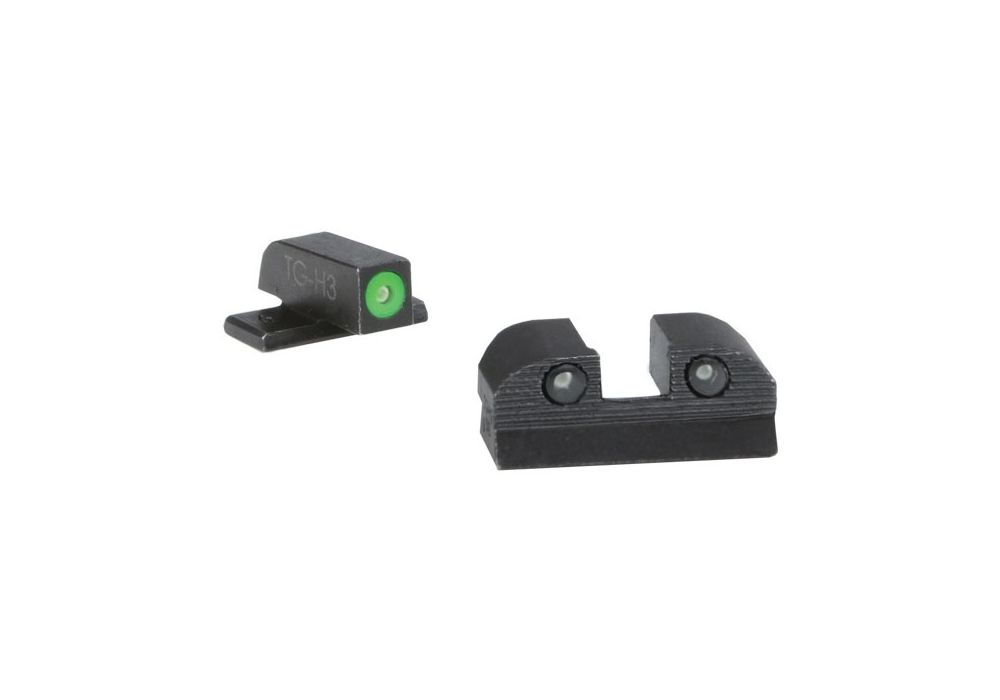
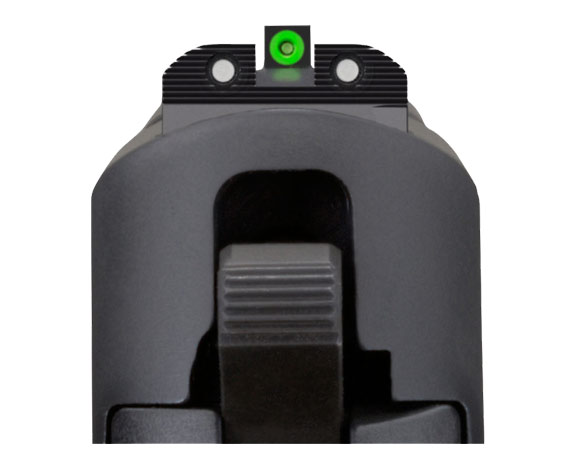
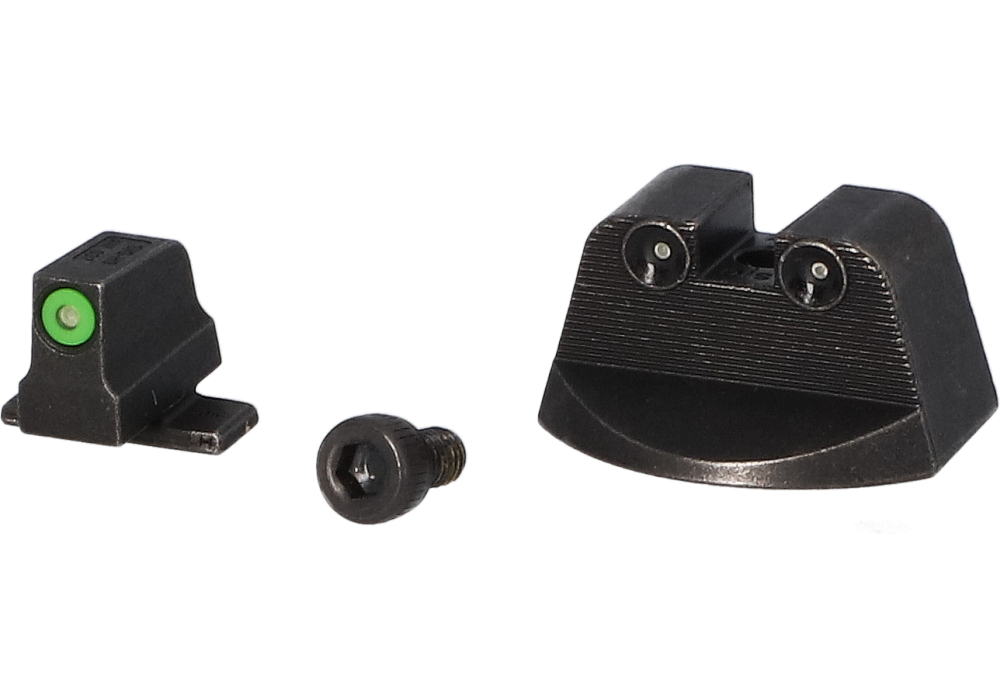
Iron sights are a mechanical sighting system that uses a front post or blade and a rear notch or aperture to provide a visual aiming reference without batteries or electronic displays. Found on many handguns and long guns, they range from simple, low-profile arrangements to adjustable systems with distinct visual references. Their appeal is straightforward: a compact form, a familiar sight picture, and little equipment between the shooter and the target. Although the name suggests a single material, iron sights can feature steel, aluminum, and other materials selected for strength, weight, and the intended application. The rear sight generally takes one of two forms. An open rear sight uses a notch, while an aperture sight uses an opening through which the front sight is viewed. The relationship between the front and rear references is known as sight alignment; the appearance of those references in relation to the target is the sight picture. Those terms help explain why two sight sets can feel quite different even when both fit the same firearm. A wider rear notch may create a less crowded view, while a narrower opening can appeal to someone who prefers a more precise-looking reference. A plain black sight offers a clean silhouette against a bright target, while contrasting dots or outlines can help distinguish the front sight from its surroundings. Fiber-optic elements gather available light to create a bright visual reference, while tritium-equipped sights provide a self-illuminated reference in dim conditions. Neither feature replaces adequate visibility or positive target identification. For shoppers, the useful distinction is not simply which sight looks brightest in a photograph. It is how the sight’s shape, contrast, and proportions suit their eyesight, firearm, and usual shooting environment. A crisp black blade against a pale paper target and a bright front reference against a shaded backdrop offer different visual experiences, and personal preference matters.
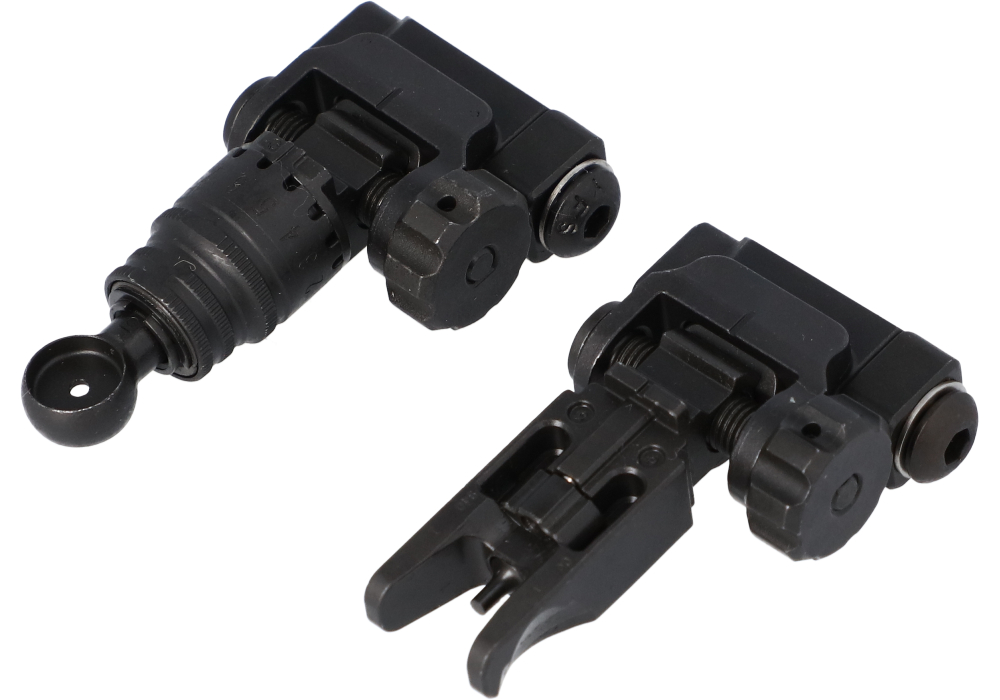
Choosing iron sights starts with fit, not appearance. Compatibility can depend on the firearm platform, model, slide or barrel configuration, mounting interface, and the dimensions of the existing sight arrangement. Two sights that look nearly identical may use different dovetail profiles, mounting hardware, or height relationships. A front sight and rear sight also need to function as a compatible pair; choosing them independently on looks alone can create problems that are not apparent until the firearm reaches the range. Review the stated fitment and installation requirements, and consider professional installation when specialized tools or fitting are required. From there, think about what you want to see and what you want to adjust. Fixed sights typically favor simplicity and a compact profile, while adjustable sights allow changes to elevation, windage, or both, depending on the design. Adjustment features may appeal to recreational target shooters who use different ammunition loads or want greater flexibility in matching their equipment to their preferred range activity. Sight width, notch shape, and the amount of visible space around the front reference deserve as much attention as finish or styling. Someone who finds small dots difficult to distinguish may prefer a bolder front reference, while another shooter may appreciate an uncluttered rear sight. Low-profile contours can be useful when holster compatibility and comfortable everyday handling are priorities. Taller sights may be relevant to certain optic-equipped configurations, but compatibility requires more than a height label: the complete mounting arrangement determines whether the iron sights remain visible and useful. For compatible rail-equipped firearms, Flip Sights provide a folding format that can sit out of the viewing area when not in use. Compare mounting height, folded dimensions, deployment design, and available clearance rather than assuming every folding set works with every rail or optic. Materials and protective finishes also matter, particularly for equipment that sees frequent transport, moisture, or repeated outdoor use. A sturdy construction is valuable, but secure fit and appropriate dimensions are just as important to a satisfying purchase.
Iron sights suit a broad range of lawful sporting and recreational uses, from a first supervised range session to familiar weekends spent shooting paper targets. New shooters may appreciate their uncomplicated mechanical layout, while experienced enthusiasts often value having a consistent visual reference that does not depend on an electronic power source. Some prefer irons as their primary sights; others choose a compatible set as a secondary sighting option alongside an optic. Competitive shooters may look closely at adjustment features and visual definition, while hunters may prioritize a durable profile and a sight picture that remains distinguishable in changing outdoor light. Any selection should reflect the activity’s rules, local requirements, and the firearm’s intended configuration. During the cooler months, an indoor lane, an overcast outdoor range, and a low afternoon sun can each reveal different preferences in contrast and visibility. That is why examining a sight in person, when possible, can be more informative than comparing photographs alone. The front reference that looks striking on a screen may feel too busy to one person and comfortably visible to another. For a gift, iron sights are best suited to someone whose firearm details and preferences you know well. Confirm the exact fitment and whether the recipient favors plain, contrasting, fiber-optic, or self-illuminated references before choosing; a thoughtful match is more useful than an impressive feature list. Ownership also involves a modest amount of care. Follow the manufacturer’s cleaning guidance, keep sight surfaces and any light-gathering elements free of buildup, and have loose, damaged, or visibly shifted components evaluated before further use. After installation or service, proper verification at an appropriate range helps confirm that the sight arrangement performs as expected. No sight removes the need for safe firearm handling, suitable eye and hearing protection, or competent instruction. The strongest reason to choose a particular set is ultimately practical: it fits correctly, presents a visual reference you can distinguish comfortably, and complements the way you use your firearm. Those qualities give iron sights their lasting place in a well-considered range setup.