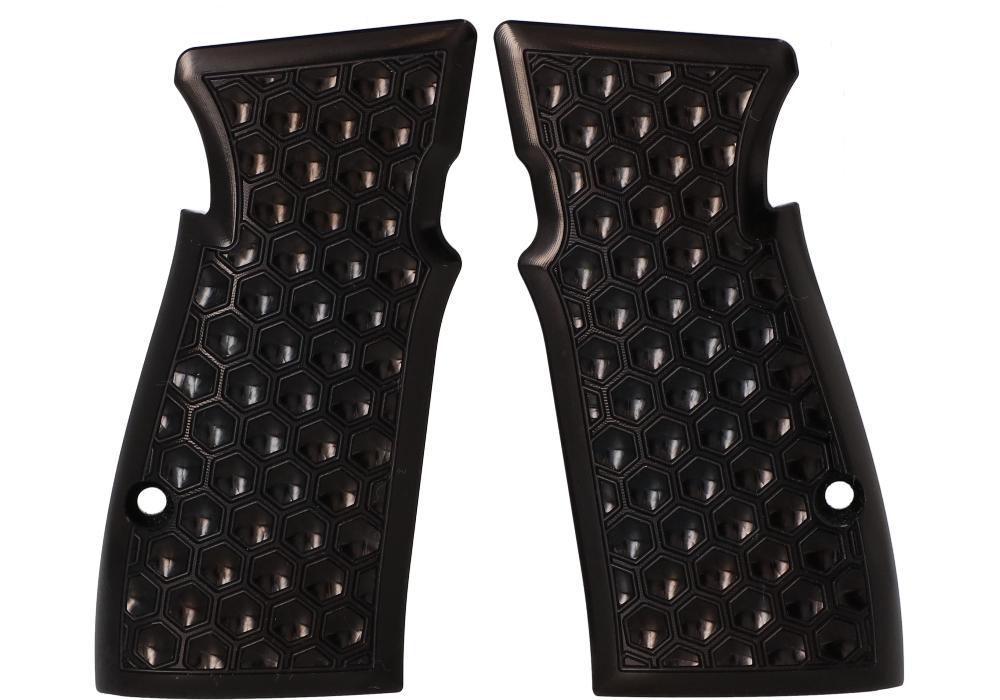
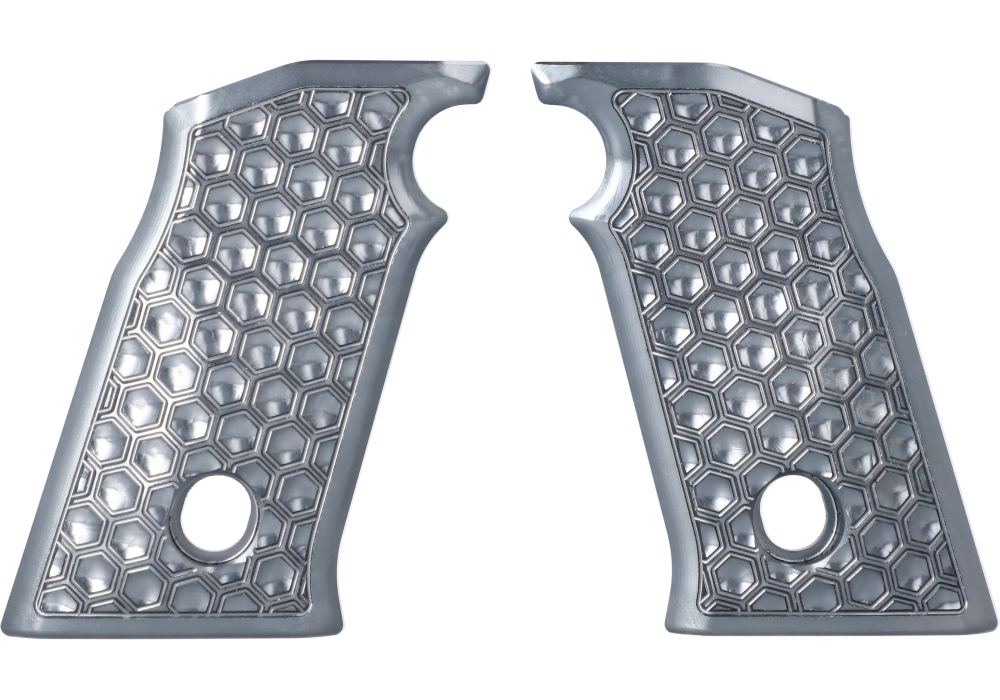
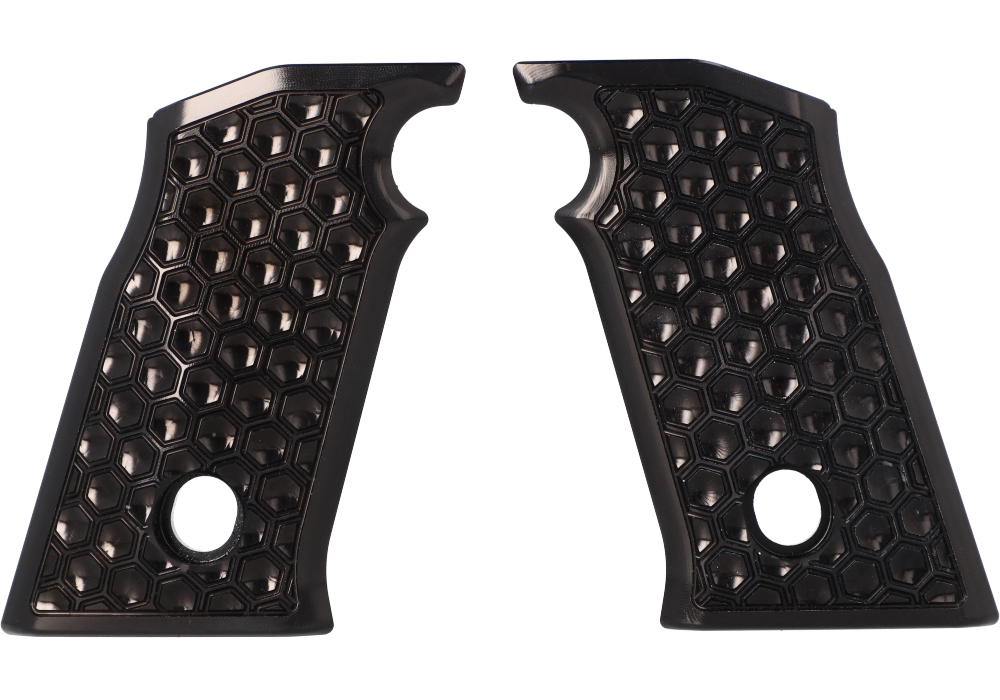
Laser Sculpted Grip Modules are a practical way to refine the feel and handling of a compatible modular handgun without replacing the firearm’s internal serialized chassis. These polymer grip shells are shaped around the hand and finished with precision laser-etched texture that can provide a more secure purchase than a smooth or lightly textured factory surface. Depending on the design, the pattern may extend across the sides, front strap, backstrap, and other contact areas so the shooter can maintain consistent control during presentation, recoil recovery, and one-handed handling. The laser process creates a defined surface with a deliberate balance between traction and comfort, helping the grip stay planted without relying on excessive pressure. Many shooters choose a laser sculpted grip module for everyday carry, range practice, duty use, or competition because the right texture can make the handgun feel more predictable in changing conditions, including warm weather, perspiration, gloves, or extended practice sessions. A well-designed module may also use smoother borders or carefully controlled transitions around high-contact areas to reduce snagging on clothing and limit unnecessary abrasion during inside-the-waistband carry. Color, contour, and texture vary from one module to another, making it possible to select a setup that suits both personal preferences and the intended role. For those comparing visual upgrades, Colorful Handgun Grip Modules can offer another way to personalize a compatible handgun while keeping attention on fit and function. Laser sculpting can also create subtle variation in the appearance of the polymer, so each finished surface may have its own character under different lighting. The result is an upgrade that feels purposeful in the hand while adding a distinctive visual detail to a modular platform.
Selecting the right grip module begins with confirming exact compatibility. Modular handgun systems may use different frame sizes, rail dimensions, magazine-well shapes, and grip circumferences, and a module intended for one configuration may not fit another even when the firearms appear similar. Check the manufacturer’s fitment information, generation or series designation, and compatibility with the installed fire-control chassis before ordering. It is also important to account for hand size and the way the handgun is normally carried. A slimmer module can be useful for concealed carry, particularly when the grip rests against the body for long periods, while a fuller profile may give larger hands more surface area and help distribute pressure during recoil. Texture should be evaluated with the same care. A more aggressive pattern can provide confident control for range work, competition, or use with gloves, but a moderate pattern may be more comfortable for daily carry and repeated contact with bare skin. Look for a design that supports a high, consistent grip while allowing the trigger finger to reach the trigger naturally and the support hand to settle into the same position each time. Features such as an undercut trigger guard, a defined beavertail, a rounded heel, and a usable magazine-release area can influence both speed and comfort. Buyers should also consider whether the module must accommodate an existing light, laser, holster, magazine, or other accessory. Even a small change in rail geometry or exterior contour can affect holster fit, so verify accessory compatibility rather than assuming the original equipment will transfer unchanged. Before installation, unload the firearm completely, remove the magazine, confirm the chamber is empty, and follow the applicable owner’s manual and local requirements. After fitting the module, perform a careful function check and test it at a safe range with the intended magazines and accessories. A short practice session can reveal pressure points, changes in reach, or clothing interaction before the setup is carried or used in a more demanding setting.
These grip modules can be a thoughtful choice for firearm owners who appreciate hands-on customization and want an upgrade that is both visible and functional. They may suit a new handgun owner building confidence through structured practice, an experienced carrier refining daily comfort, or a range shooter looking for a steadier grip during longer sessions. They can also make a useful gift for a knowledgeable enthusiast, especially when the recipient already owns a compatible modular handgun and has expressed a preference for a particular size, color, or texture. Because fitment is specific, gift buyers should confirm the exact firearm configuration discreetly or choose a gift card or other flexible option when details are uncertain. A laser sculpted grip module is not a substitute for training, safe storage, or sound handling habits, but it can support those habits by giving the shooter a repeatable point of contact. During the warmer season, enhanced texture may help maintain control when hands are damp or clothing is lighter; during cooler months, the same module can offer a reliable purchase when wearing gloves or additional layers. At the range, shooters can compare grip pressure, draw consistency, and recoil management with the new module, paying attention to whether the texture helps the support hand stay engaged without creating discomfort. For concealed carry, inspect the setup periodically for wear, confirm that the holster fully accommodates the modified frame, and make sure the grip does not interfere with a secure, consistent draw. Cleaning should follow the firearm and module manufacturer’s recommendations, using only appropriate materials and avoiding aggressive solvents that could affect polymer surfaces or the appearance of the laser-etched pattern. With the correct fit, a texture suited to the intended use, and careful attention to training and storage, a laser sculpted grip module can bring a more controlled, personalized feel to a compatible modular handgun.