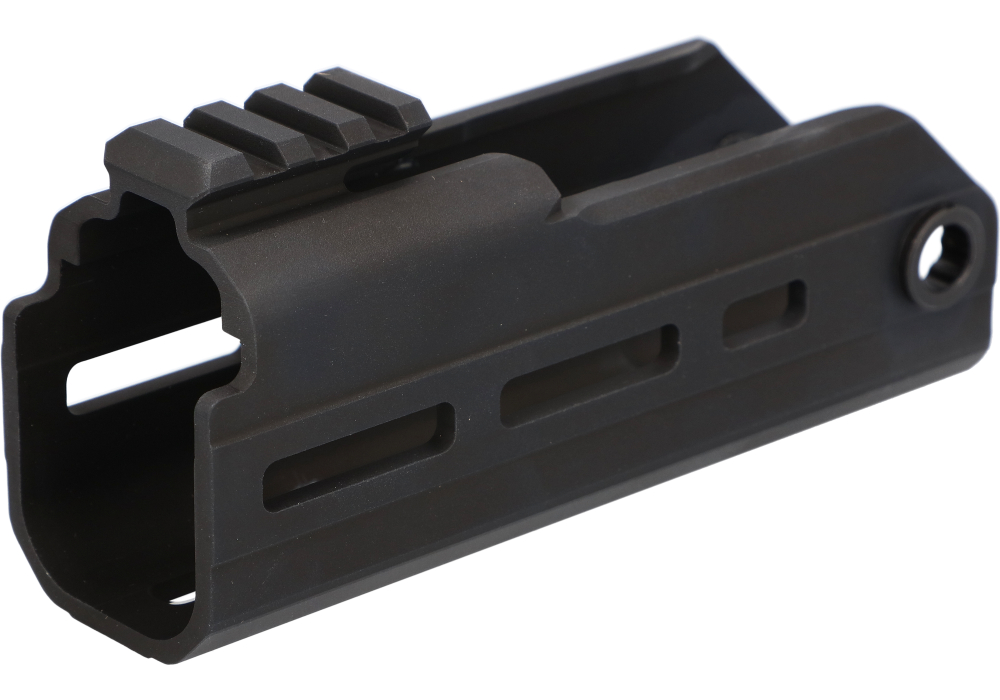
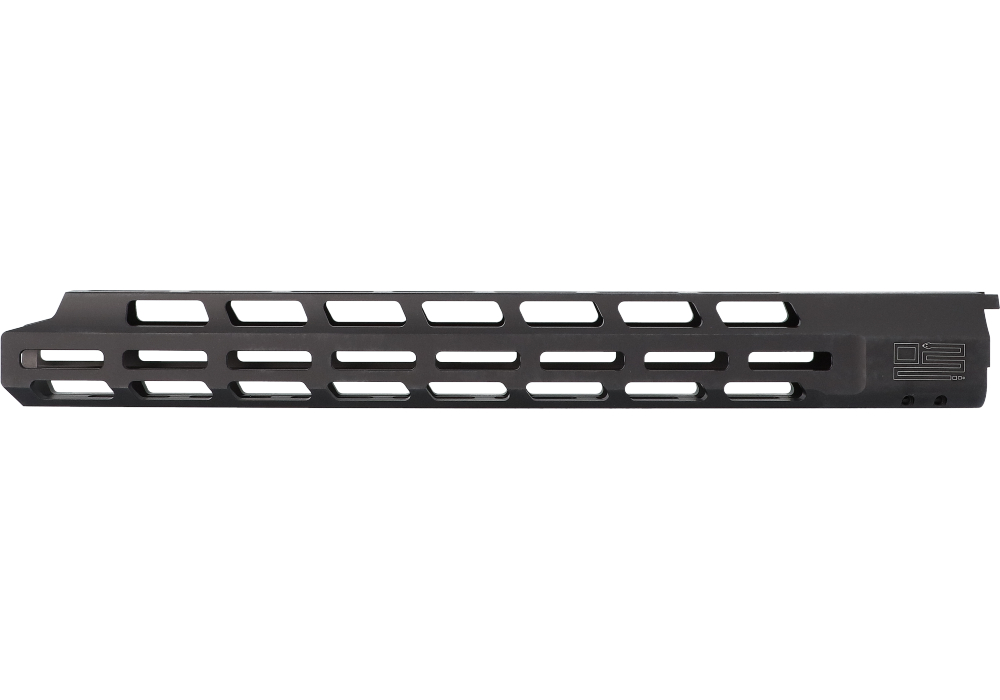
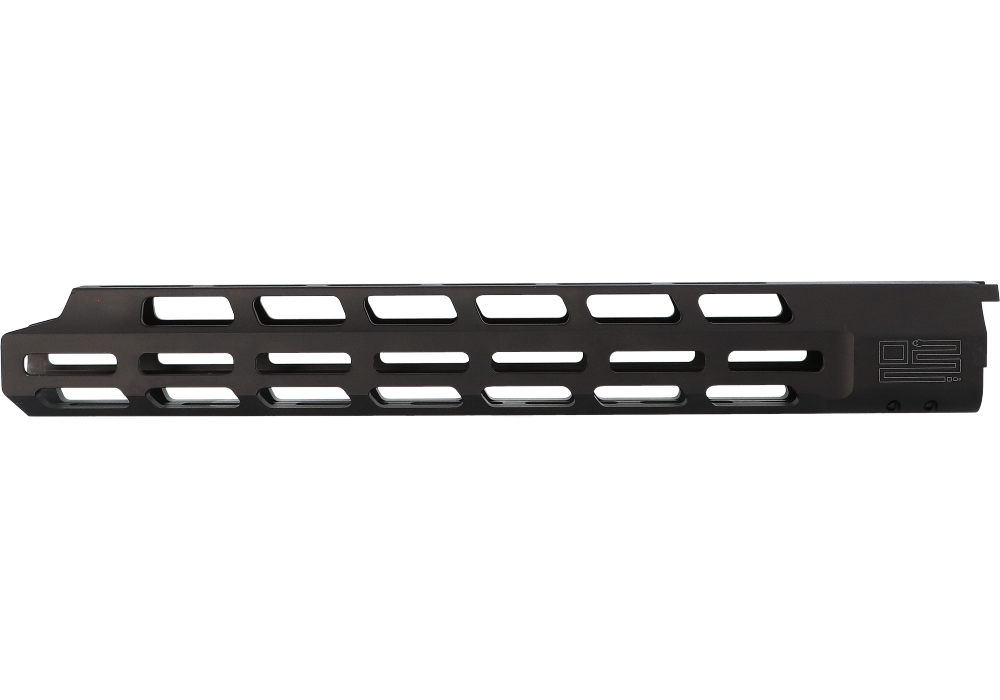
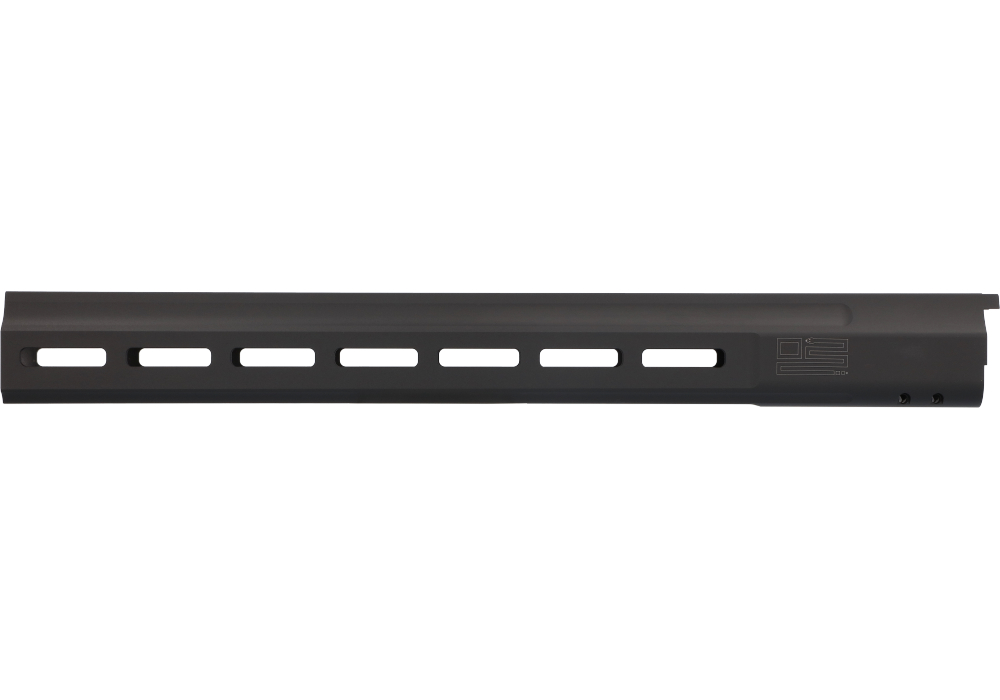
Lightweight black handguards are a practical choice for builders and shooters who want to reduce weight at the front of a rifle without giving up a secure, adaptable mounting surface. Because the handguard sits forward of the receiver, even a modest reduction in ounces can make the rifle feel quicker when moving between targets, settling into a shooting position, or carrying it over uneven ground. A slim black handguard can also give a rifle a clean, understated appearance while helping protect the support hand from the barrel and related components during normal use. Many contemporary options use a free-float design, which keeps the handguard from bearing directly on the barrel and can help preserve consistent barrel performance when accessories, a sling, or a firm support-hand grip are applied. M-LOK slots are common across the sides, bottom, and sometimes the upper surfaces, allowing compatible accessories to be positioned close to the rifle rather than hanging from a continuous rail. That modularity is useful for a range of setups: a shooter might mount a compact light for low-light identification, a short section of rail for an aiming device, or a hand stop to establish a repeatable grip. Others may prefer to keep the handguard nearly bare, using only a sling mount and a small grip surface to maintain the lightest, most streamlined configuration. Black anodized aluminum is especially popular because it offers a durable finish, a neutral appearance, and easy coordination with a wide variety of receivers, stocks, grips, and sights. For shoppers comparing lightweight black handguards, the most important first step is confirming the firearm platform and the handguard’s intended fit. A component designed for one receiver pattern or barrel arrangement may not be suitable for another, and compatibility should never be assumed from appearance alone.
Length is another central consideration. Common handguard lengths range from compact options around 7 inches to extended versions around 15 inches, with many sizes in between. The correct choice depends on the barrel length, gas system, muzzle device, front sight arrangement, and the amount of usable barrel the owner wants exposed. A shorter handguard can keep the front end especially light and leave more of the muzzle device visible, while a longer handguard may offer additional hand-placement options and more room for accessories. The handguard should not interfere with the muzzle device, and its interior dimensions must provide adequate clearance around the gas block and gas tube. Slim profiles are comfortable for many shooters with smaller hands and can make it easier to wrap the support hand around the rifle, but a narrow internal diameter may require a low-profile gas block and careful attention to manufacturer specifications. Weight should be considered together with stiffness, mounting method, and accessory load. A rail that feels exceptionally light by itself can become much heavier after adding a light, pressure switch, sling hardware, hand stop, and other equipment, so it helps to plan the intended configuration before choosing a length or profile. Shoppers may also compare anti-rotation features, barrel-nut systems, indexing methods, finish quality, and the accessibility of the mounting hardware. Installation is best handled with the correct tools, proper torque procedures, and the instructions supplied for the selected handguard. If the rifle’s existing barrel nut, gas system, or upper receiver configuration is uncertain, a qualified gunsmith can help verify fit and complete the work safely. After installation, check that the handguard is secure, accessories are firmly mounted, controls remain accessible, and no component contacts the barrel or gas system in a way that could affect operation.
These products can appeal to recreational range shooters, competitive participants, hunters who value a manageable rifle, and builders assembling a purpose-specific platform for training or field use. A lightweight black handguard may also be a thoughtful gift for an experienced firearm owner, but compatibility makes it a more technical present than a general accessory. Before purchasing one for someone else, confirm the platform, barrel length, gas-system length, preferred mounting standard, and whether the recipient favors a compact or extended setup. When those details are unknown, a gift card or an openly discussed selection is often safer than guessing; the wrong length or mounting interface can turn an otherwise useful gift into a return or exchange. For anyone comparing a lightweight design with other finishes or styles, the selection of Black Anodized Handguards can provide another way to evaluate appearance, construction, and compatibility. During the cooler months, a well-balanced rifle is comfortable to carry through a range session or outdoor practice, especially when layered clothing and gloves make bulky equipment more noticeable. The same balanced feel remains valuable indoors, where quick transitions and controlled movement depend on a secure support-hand position rather than unnecessary front-end mass. As accessories are added, keep the setup intentional: place only the equipment needed for the rifle’s role, maintain clear access to controls, and confirm that every attachment is compatible with the handguard’s slot pattern. Follow all firearm safety rules, observe applicable federal, state, and local laws, and unload the firearm before inspecting, installing, or adjusting any handguard or accessory. When properly matched to the rifle and installed with care, a lightweight black handguard can provide a comfortable grip, useful mounting flexibility, and a refined foundation for a dependable personal setup.