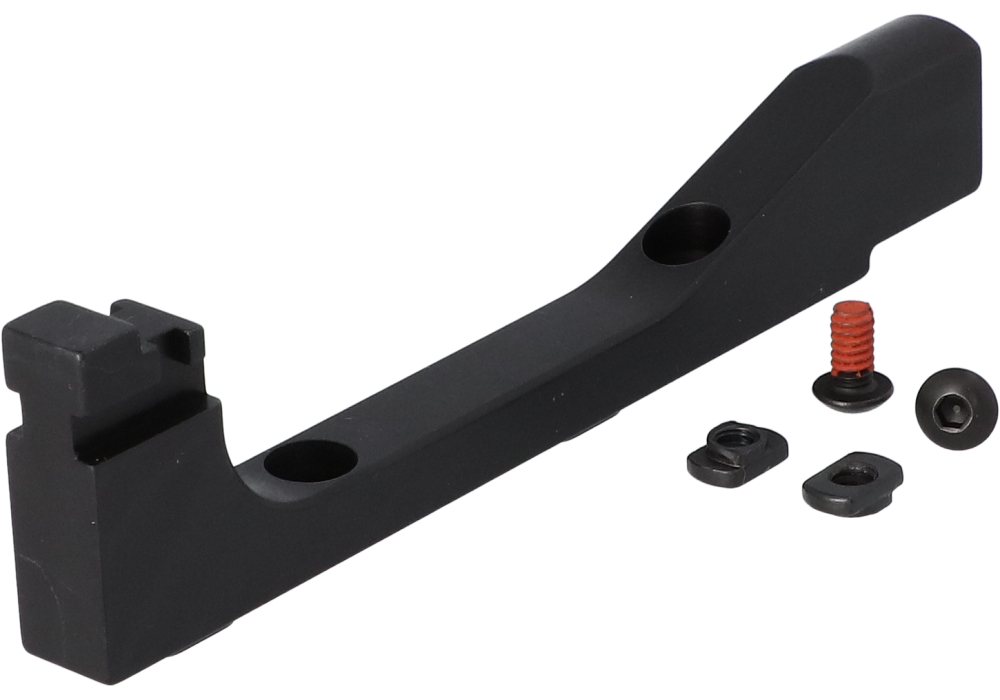
Mounting systems are the hardware assemblies that securely connect an optic or compatible accessory to its supporting platform. For shooting equipment, that connection brings together the firearm’s mounting interface, the optic’s attachment pattern, and the hardware that holds them in alignment. Bases, rings, one-piece mounts, and adapter plates serve different roles within that connection, so their value depends on how well they match the equipment they support. A mounting system should provide a stable foundation without creating unnecessary bulk, obstructing controls, or placing the optic in an uncomfortable viewing position. For a magnified optic, ring dimensions and mounting height influence clearance around the scope body and the position of the eyepiece. For a compact electronic sight, the attachment footprint and overall interface height are often central considerations. These differences matter at the shooting bench, on a competition course, and during lawful hunting, where equipment needs to feel familiar and remain secure through routine handling. A scope that looks neatly positioned above a receiver may still need additional clearance around its objective housing, while a small sight can appear to match a mounting surface yet require a different attachment pattern. Appearance alone cannot establish compatibility. The most useful starting point is the documented relationship between the firearm, optic, and mount, including any limitations identified by their manufacturers. Mounting systems also influence how easily equipment fits into a case, whether protective covers have adequate space, and how accessible nearby controls remain. A low-profile arrangement may suit one setup, while another needs additional height to provide an appropriate viewing position. Neither approach is universally better. The right choice balances a secure connection, comfortable alignment, and practical clearance for the complete setup rather than treating the mount as an isolated accessory. This makes mounting hardware relevant to new equipment purchases as well as replacements, especially when a change in optic size or interface means an existing arrangement no longer fits as intended. Even a familiar-looking replacement deserves the same compatibility review as an entirely new configuration.
Compatibility is more specific than a general description such as rail mount or optic mount. Attachment surfaces can differ in dimensions, spacing, geometry, and hardware requirements, and similar-looking components are not necessarily interchangeable. Scope rings must correspond to the optic’s tube diameter, while a mounting base needs to match the supporting platform’s designated attachment points. For optics that use an intermediate adapter, compatible mounting plates connect a specified sight footprint with a corresponding mounting interface. The plate’s dimensions, fastener requirements, and supported equipment all matter; a close visual match is not a substitute for documented fit. Complete systems may combine several of these elements, while other arrangements use a more direct connection with fewer separate components. Both approaches can be appropriate when the components are designed to work together. Materials bring another set of practical distinctions. Aluminum alloys are common where reduced weight is important, while steel can be useful where a design calls for particular strength or wear characteristics. Material alone does not establish overall quality, however. Machining consistency, surface contact, fastener quality, and the design of the complete assembly all contribute to its suitability. Protective finishes can help resist corrosion and surface wear, although the level of protection depends on the material, treatment, and care the hardware receives. Smooth edges and a clean finish can also make equipment easier to handle and less likely to catch on case linings or cleaning cloths. For equipment carried over longer distances, even modest differences in mount weight can become noticeable as part of the complete setup. For equipment used primarily from a supported position, other priorities may take precedence, including clearance, rigidity, and access to adjustments. Fixed mounts generally emphasize a straightforward, stable attachment, while removable designs may suit equipment that needs periodic separation for transport or maintenance. Any claim about preserving alignment after removal should come from the manufacturer’s documentation, not from the release mechanism alone. A mount’s operating style describes how it attaches; it does not, by itself, establish how consistently the entire setup will perform.
Durability is best considered as a combination of sound design, correct fit, and ongoing care. Recoil, repeated handling, and contact with cases or other equipment can place demands on mounting hardware, even when the exterior shows little wear. Accessible surfaces should be kept free of accumulated debris, and cleaning products should be compatible with the mount’s finish as well as nearby optical components. Residue around attachment areas can make inspection more difficult, while inappropriate chemicals or abrasive cleaning tools may damage protective treatments. Routine checks should follow the equipment manufacturers’ recommendations, with attention to visible damage, corrosion, missing hardware, or signs that components have shifted. Loose or damaged parts call for evaluation rather than continued use, and a qualified professional can help resolve uncertain fit or installation requirements. Hardware substitutions also deserve care: a fastener with a similar appearance may differ in length, thread specification, or intended application. Keeping the original documentation and a record of the supported equipment can simplify future maintenance or replacement decisions. For a recreational shooter, the best mounting system may be one that supports a comfortable, uncomplicated range setup. A competition participant may place greater emphasis on consistent positioning and unobstructed access to controls, while a hunter may prioritize manageable weight and a profile that travels comfortably with the rest of the equipment. Someone selecting mounting hardware as a gift needs the recipient’s exact equipment details; a general preference for a particular optic style is rarely enough to establish fit. Across these uses, the strongest choice is not necessarily the largest or most elaborate assembly. It is the system whose dimensions, materials, attachment method, and intended application suit the equipment as a whole. A well-matched mount works quietly in the background, keeping the optic properly supported without adding avoidable complexity to handling, storage, or routine care.