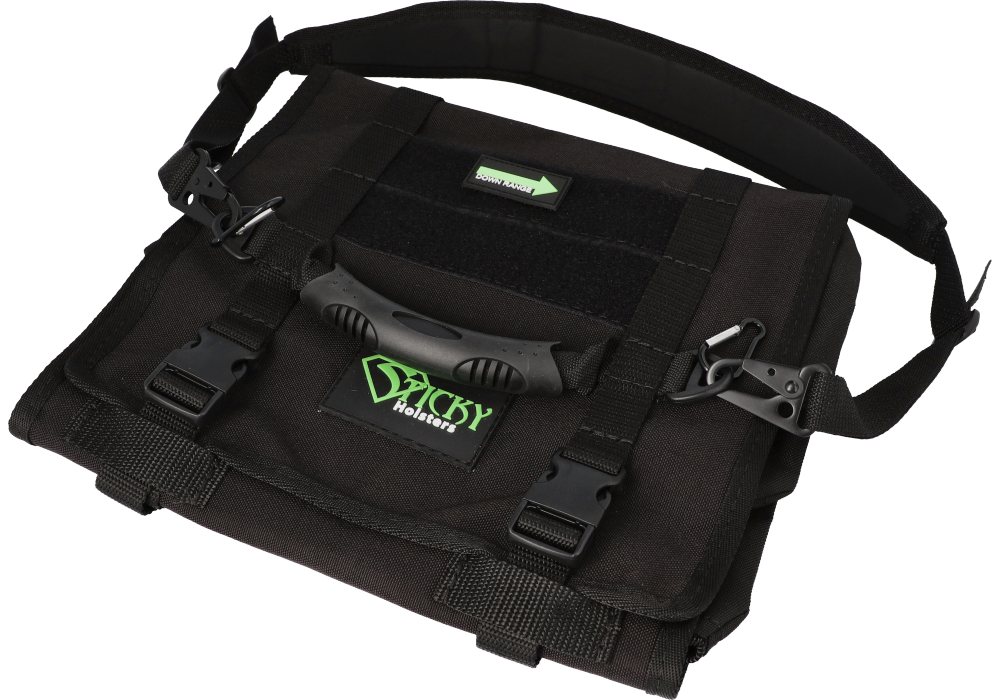
Range bags are purpose-built bags for organizing and transporting firearms, ammunition, eye and ear protection, and other shooting essentials between home and the range. Their distinguishing features often include padded compartments, reinforced handles, structured bases, and pockets that keep smaller accessories from disappearing beneath heavier gear. Unlike an everyday gym bag, a shooting range bag gives each part of a range setup a more deliberate place: protective eyewear stays away from abrasive tools, hearing protection remains easy to reach, and magazines can be separated from cleaning supplies. That organization matters at a busy indoor lane, where bench space may be limited, or on an outdoor firing line, where equipment needs to stay together between shooting sessions. Compact designs suit a short practice session with a modest amount of equipment, while larger duffel-style layouts provide room for a broader setup or supplies shared with a shooting partner. Backpack-style range bags offer a different carrying experience, distributing the load across both shoulders and keeping hands free for other equipment. The best fit depends less on exterior size alone than on how the interior works with the equipment being carried. A bag may look generous from the outside yet have narrow openings or fixed compartments that leave little flexibility for bulky earmuffs or a separate firearm case. Interior dimensions, divider placement, pocket depth, and the shape of the main opening all influence everyday usability. A wide opening can make the contents easier to see without unpacking everything, while a lighter-colored lining can help distinguish dark accessories inside a deep compartment. For occasional recreational shooters, a straightforward layout may provide all the organization needed. Frequent range visitors, instructors, and competitors may appreciate more defined spaces that support a repeatable packing routine. In either setting, a useful range bag keeps essential equipment accessible without turning every trip into a search through an unstructured pile.
Materials and construction affect how a range bag feels in the hand, rides on the shoulder, and holds up to repeated loading. Woven nylon and polyester are common choices for soft-sided shooting bags, with fabric weight, weave, coatings, and reinforcement contributing to their performance. A fabric specification tells only part of the story; seams, attachment points, zipper construction, and the support beneath the main compartment are equally important to long-term durability. Reinforced stitching around handles and shoulder-strap anchors is particularly relevant when a bag carries dense equipment such as ammunition. A structured bottom helps the bag maintain its shape, while padding and internal dividers help limit contact between stored contents during ordinary transport. Padding is useful for cushioning, but it does not turn a soft bag into a rigid protective case. Likewise, an exterior fabric that resists scuffs does not necessarily offer the same protection as the lining against a delicate finish. Smooth compartment interiors and separate protective sleeves can help keep hard edges, tools, and firearm surfaces apart. Carrying comfort also depends on more than the presence of a shoulder strap. Strap width, padding, adjustment range, and the position of attachment points influence how the load sits against the body. Handles that meet comfortably over the center of the bag can make a noticeable difference on the walk from a parking area to a shooting bench. A compact bag packed heavily may feel less balanced than a slightly larger design with better weight distribution. Care is generally straightforward when it follows the manufacturer’s directions: loose debris can be removed from an empty bag, and suitable surfaces can be wiped or spot-cleaned before the bag is allowed to dry fully. Harsh cleaners, machine washing, or prolonged soaking may affect fabrics, coatings, padding, or hardware unless the care instructions specifically permit them. Regular attention to zipper tracks, seam wear, and strap connections helps identify developing problems before the next range visit.
The details inside a range bag often determine whether its organization remains useful after the first few trips. Adjustable dividers allow the layout to change as equipment changes, while removable pouches can keep related accessories together without requiring an entire bag to come onto the bench. Dedicated pockets for eye protection and hearing protection support a simple arrival routine, especially when those items need to be accessible before entering a shooting area. Separate compartments for cleaning tools help keep oily cloths and maintenance supplies away from eyewear, personal belongings, and clean fabric surfaces. A place for keys, identification, and range paperwork can be just as valuable as another equipment pocket. For shooters who prefer an additional protective layer within a larger bag, Small Gun Cases can complement an organized transport setup, provided the dimensions fit the intended compartment. Firearms should be unloaded for transport, and storage arrangements, locks, and ammunition separation should follow applicable laws and range requirements. A range bag is not a substitute for secure firearm storage, and a zipper that accepts a lock does not by itself establish compliance with transport rules. Practical ownership also includes keeping the bag away from food preparation areas, washing hands after handling range equipment, and storing maintenance chemicals according to their labels. For a new shooter, a manageable bag with clear, uncomplicated storage can be more useful than an elaborate layout with pockets that never get used. For an experienced enthusiast, room for the equipment used most often may matter more than extra compartments. Range bags can also be thoughtful gifts for recreational shooters, training partners, or family members who spend time practicing, particularly when the recipient’s preferred carrying style and equipment dimensions are known. Across these uses, the lasting value comes from a combination of dependable construction, comfortable handling, and organization that reflects an actual day at the range. A bag that fits the routine helps keep the focus on the session rather than on finding a missing accessory.