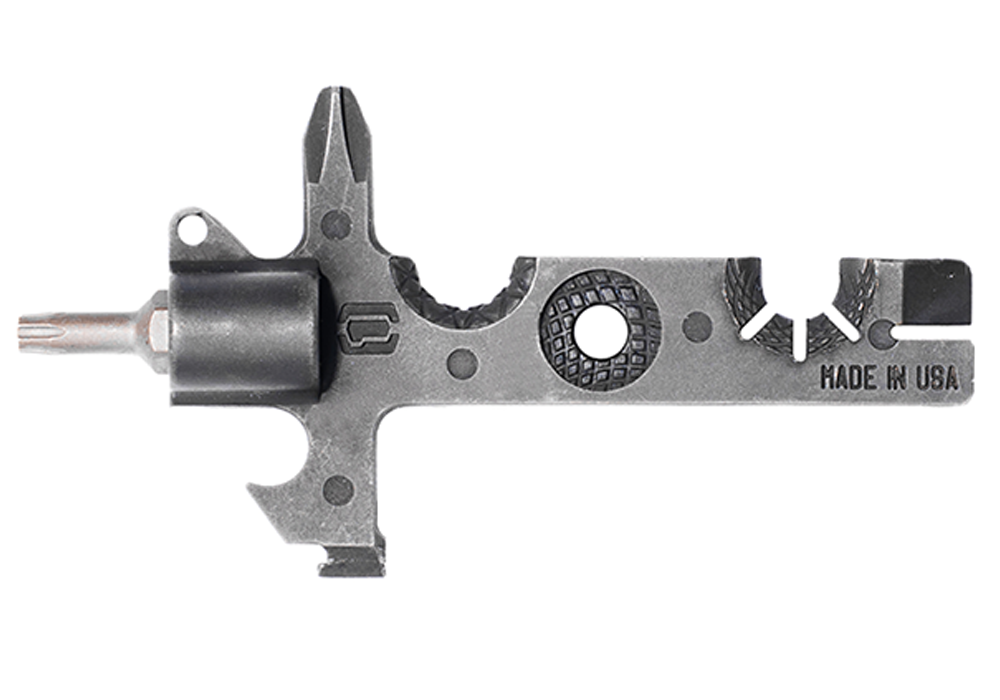
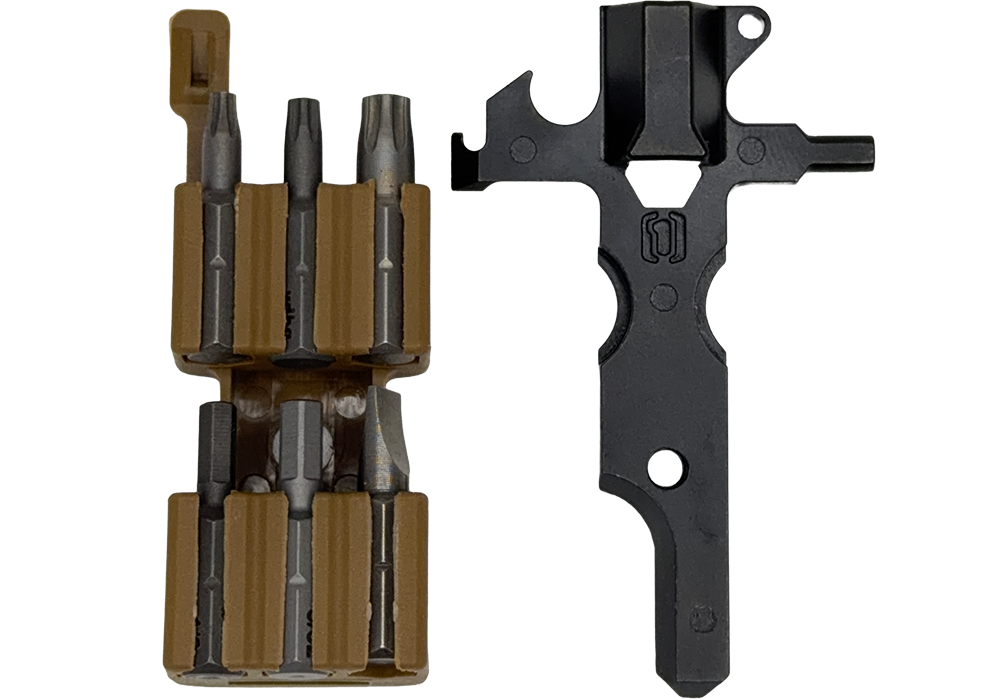
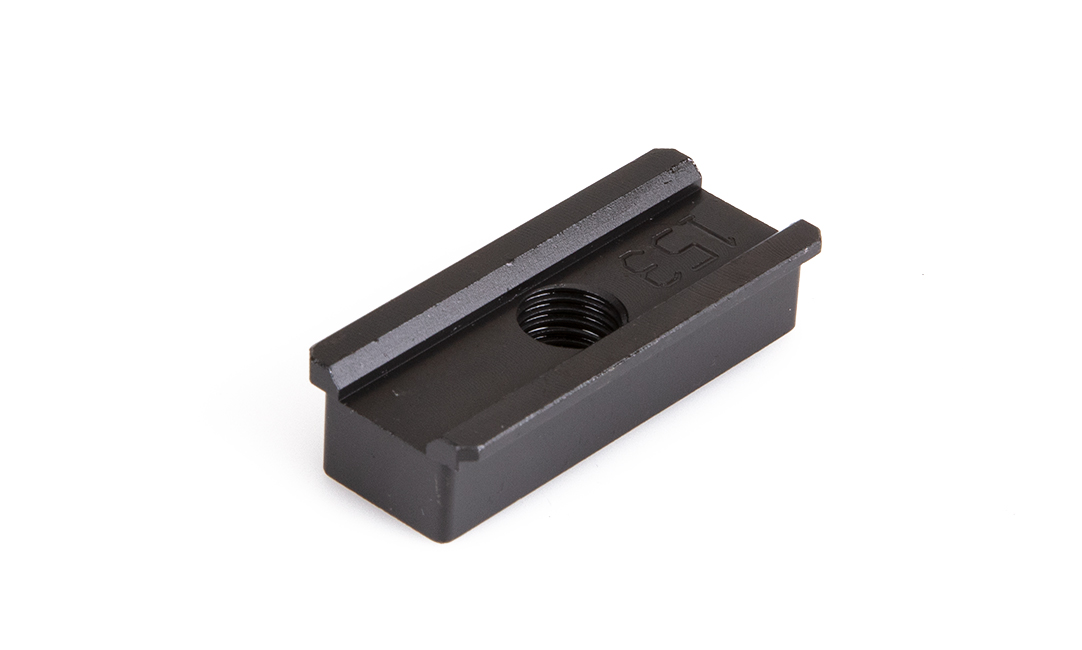
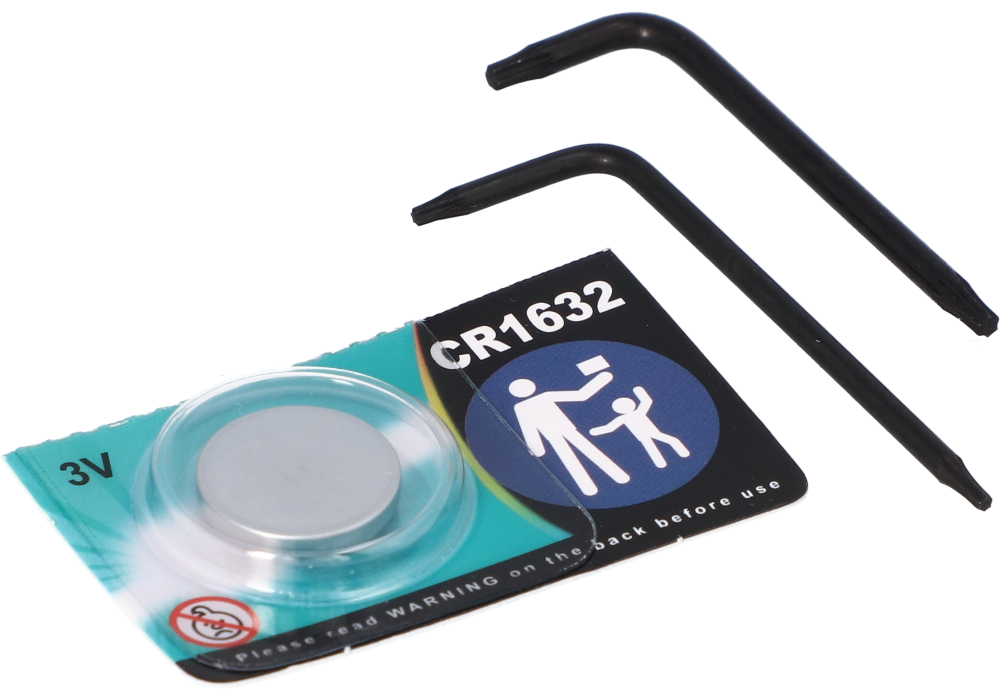
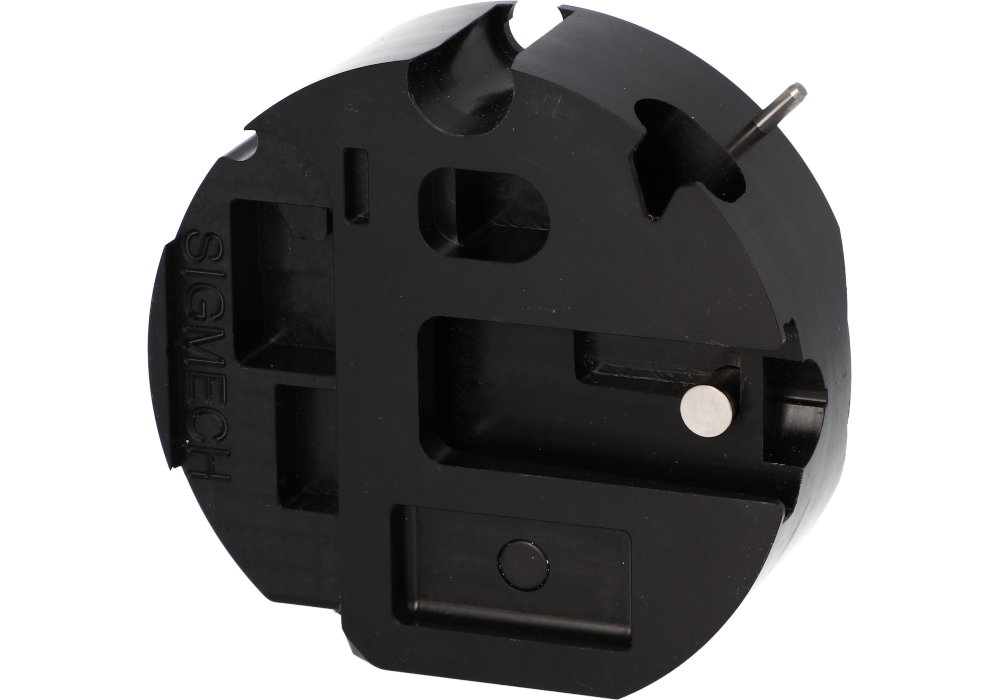
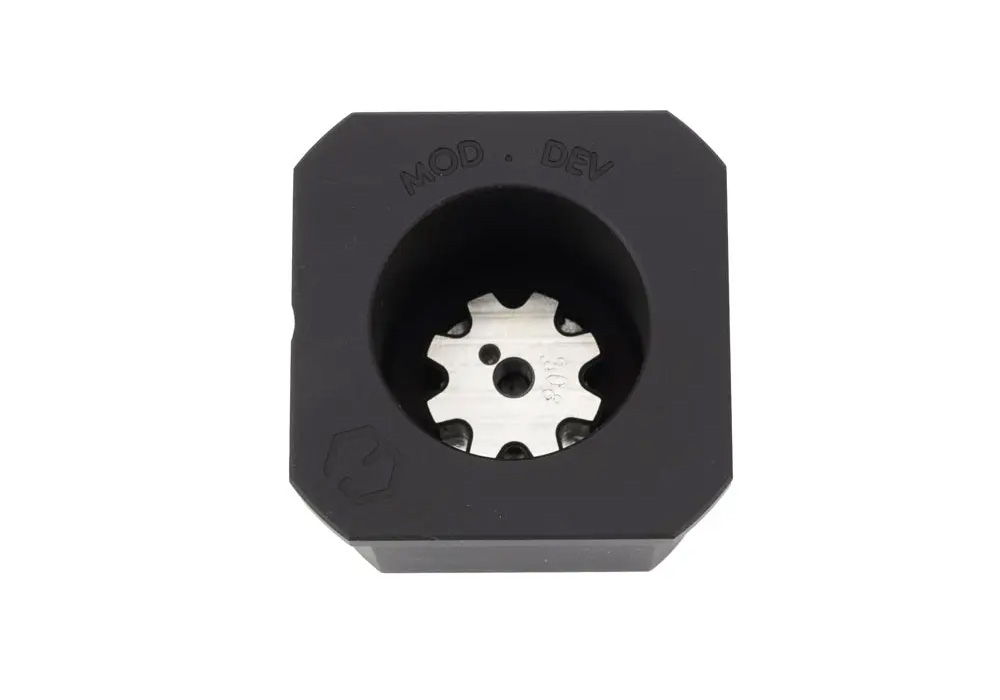
Removal tools give firearm owners, maintenance professionals, and careful hobbyists a controlled way to separate components during inspection, cleaning, repair, and customization. Rather than relying on improvised objects that can slip, scratch a finish, or deform a small part, the right tool provides a stable contact point and better leverage where it is needed. A well-chosen assortment may include non-marring wedges, compact pry tools, punches, hooked picks, fine pliers, driver handles, and specialty implements for working with pins, springs, clips, covers, and small fasteners. Each style serves a different purpose: a polymer wedge can help lift a panel or cover while protecting finished surfaces, while a punch with the correct diameter can help align or move a retaining pin with measured taps. Slim picks are useful around tight seams and recessed components, and purpose-built pliers can grip small parts without crushing or twisting them. These tools are especially useful for routine maintenance on handguns, rifles, and other sporting firearms, as well as for armorers, gunsmiths, range staff, and anyone who prefers to handle detailed work at a properly equipped bench. Before beginning, remove all ammunition from the work area, verify that the firearm is unloaded according to its instructions, and keep the muzzle pointed in a safe direction. A clear bench, good lighting, and a tray for pins and springs can turn a frustrating teardown into an orderly process.
Selection begins with the part being removed and the surface surrounding it. For polymer frames, coated components, wood stocks, and finished metal, tools with smooth edges and non-marring contact surfaces can help reduce the chance of cosmetic damage. For stubborn pins or tightly seated fasteners, look for durable steel construction, comfortable handles, and tips sized to fit the component rather than forcing a tool that is too narrow or too large. Precision is more important than brute force; a tool that fits correctly lets steady hand pressure do the work while reducing the risk of bending a pin, rounding a screw head, or sending a small spring across the room. Consider the scale of the projects you handle as well. A compact set may suit occasional cleaning and basic maintenance, while a broader assortment can be valuable for a workshop that sees several firearm platforms or frequent repairs. Storage matters, too. Organized cases, labeled slots, and secure pouches keep small implements together and make it easier to notice when a tool is missing. It can also be helpful to pair removal tools with complementary maintenance accessories, including Adjustment Tools for controlled fine-tuning during setup and service. Keep the intended task in mind, follow the firearm manufacturer’s instructions, and avoid using any tool in a way that requires excessive force or places a hand in line with a part under spring tension.
A dependable removal-tool set can be a thoughtful gift for a new firearm owner, a competitive shooter preparing a maintenance kit, or a seasoned enthusiast who is refreshing a workbench. It is the sort of practical present that earns its place over time: the right wedge protects a finish during a careful inspection, the right punch saves time when a pin fits tightly, and a well-shaped pick can reach the small recess that ordinary household tools cannot. Many owners keep a compact kit in a range bag for basic service and a fuller set at home for more involved work, while professionals may prefer hardened implements and ergonomic handles that remain comfortable through repeated use. During the cooler months, when range sessions may give way to bench work, storage organization, and equipment preparation, removal tools help keep maintenance deliberate and tidy. A soft cloth beneath the firearm can prevent contact with a hard bench, magnetic trays can corral loose steel parts, and a parts diagram or owner’s manual can help identify the correct sequence before anything is separated. Work slowly, preserve the orientation of each component, and stop when a part resists beyond ordinary hand pressure. With suitable tools, a clean workspace, and a patient approach, removal tasks become easier to control, helping protect the firearm’s finish while supporting dependable care for years of use.