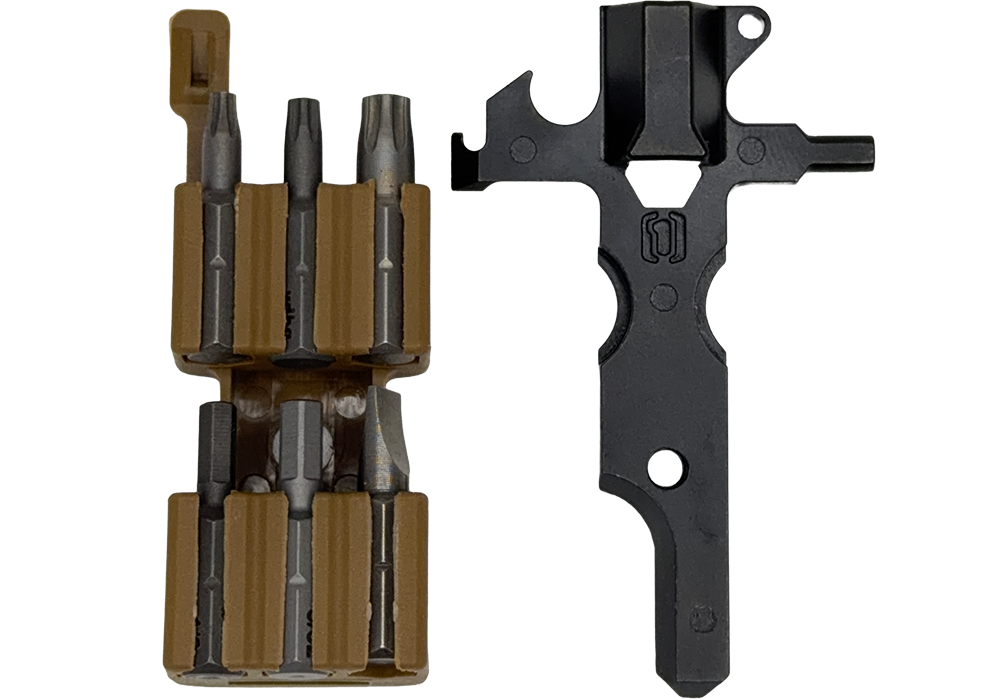
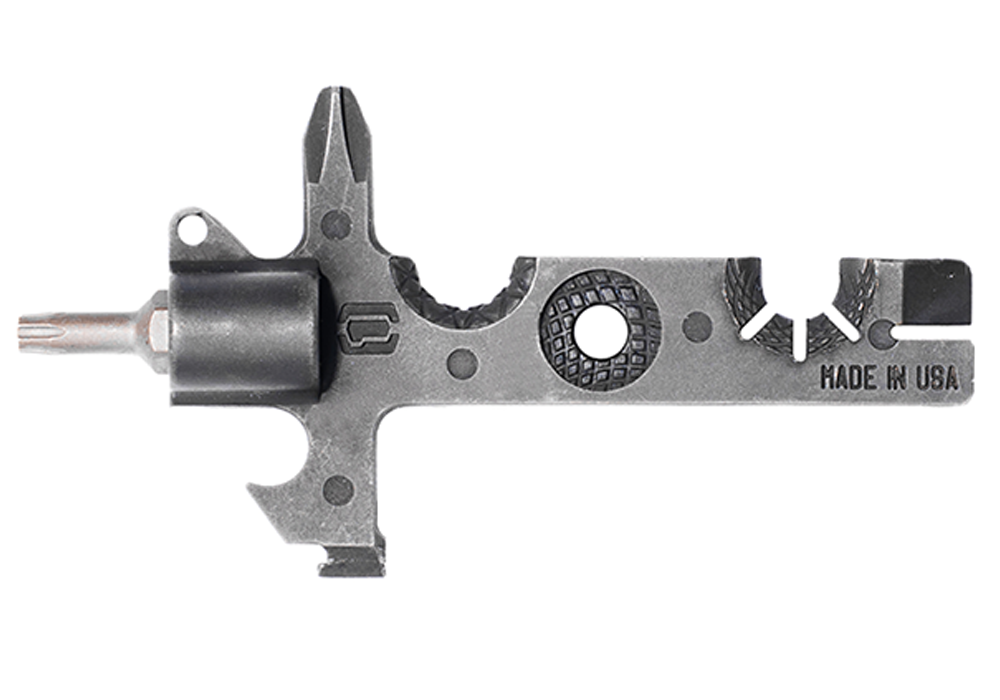
Scope installation tools support the precise fit, alignment, and controlled fastener tension involved in attaching an optic to a rifle. The category includes torque drivers, scope leveling tools, correctly sized driver bits, and padded supports that help keep a firearm steady during bench work. Each serves a different purpose: a torque driver helps control screw tension within the component manufacturer’s specifications, a leveling system helps evaluate optic alignment, and a well-fitting bit reduces the likelihood of damaging a screw head. Together, these tools bring consistency to work that ordinary household drivers cannot always support. For hunters, recreational shooters, competitive shooters, and professional armorers, the value lies in having equipment suited to small fasteners, finished surfaces, and components with specific fit requirements. A scope mounting tool kit can also keep related tools organized, particularly when several rifles or optic configurations share the same workbench. Choosing among tools starts with compatibility rather than the size of the kit. Relevant details include the fastener types used by the rings and base, the specified torque range, the space around the mounting hardware, and the surfaces a leveling tool needs for a useful reference. Inch-pound markings are especially important to distinguish from foot-pound markings; the units are not interchangeable. Clear scales, readable indicators, and handles that remain comfortable during careful work all deserve attention. A compact driver may be easier to position near closely spaced components, while a larger handle may feel more natural at a dedicated bench. Neither replaces the need to follow the instructions supplied with the optic and mounting hardware. For someone preparing a hunting rifle before time in the field or refreshing a familiar range setup, suitable scope installation tools help turn a crowded bench into a more orderly workspace. Their purpose is not to guarantee accuracy or replace sight-in verification, but to support a secure, properly aligned mounting arrangement without unnecessary strain on the hardware or optic.
Materials and construction matter because scope mounting tools interact with both hardened fasteners and surfaces that can scratch or dent. Hardened steel driver bits are useful for resisting wear, but precise sizing is just as important as hardness. A bit that sits loosely in a screw head can damage the fastener even when the tool itself is durable. Hex and six-lobe fasteners require their corresponding bit profiles, with sizing matched to the hardware rather than judged by appearance alone. Tool length also affects fit: access around a scope tube, adjustment housing, or ring assembly may be limited, and extra reach is only helpful when the driver can engage correctly. Torque tools deserve particular scrutiny for their operating range, stated accuracy, calibration requirements, and legibility. A tool whose working range suits the mounting hardware is a more useful choice than one selected simply for its highest setting. Leveling equipment brings a different set of considerations. Readable vials, stable contact surfaces, and compatibility with the rifle and mount geometry matter more than the number of pieces included. A level provides information about its reference surface; it does not establish that every nearby surface is aligned with the reticle. Padded vises and rests likewise vary in how they support different stock shapes and finishes. Broad, stable support and clean, nonmarring contact materials help protect surfaces, while suitable adjustment allows the workspace to accommodate different configurations without forcing a poor fit. Chemical compatibility deserves attention as well. Thread-locking compounds are not universally appropriate for every mounting assembly, and their use should follow the relevant manufacturer’s guidance rather than a general assumption about recoil. Shoppers also comparing Scopes For Professionals can assess installation tools alongside the optic’s mounting requirements, keeping the scope, rings, base, and tooling in view as a complete system. That perspective is especially useful when a new optic has different dimensions or mounting requirements from the one it replaces. A familiar tool set may still be suitable, but its fit and specifications should be confirmed rather than taken for granted.
The most useful scope installation tools are often the ones that remain easy to inspect, protect, and find between projects. A fitted case keeps small bits from collecting at the bottom of a drawer and helps shield measuring tools from knocks during transport. Clearly labeled compartments make a missing component noticeable before the next bench session, while durable hinges and closures matter for equipment that travels between a home workspace and a range facility. Care is straightforward but tool-specific: contact surfaces should remain free of grit, driver tips should be checked for wear, and torque instruments should be stored and serviced according to their manufacturer’s instructions. Protective pads deserve the same attention as metal components because embedded debris can mark a finish even when the padding feels soft. During the cooler months, tools carried between a cold vehicle and a heated workspace may encounter condensation, making dry storage and routine inspection especially worthwhile. For occasional users, a carefully chosen assortment covering the actual hardware may be more practical than an extensive kit with rarely used attachments. For armorers or enthusiasts working with several configurations, a broader selection of bits, accessible replacement components, and documented calibration support may carry greater importance. These tools can also be a thoughtful gift for an experienced hunter, competitive shooter, or meticulous equipment owner who values a well-organized bench. Compatibility remains essential for gifting; knowing the recipient’s existing tools and mounting hardware helps avoid duplication or a mismatch. Good lighting, a stable work surface, and enough room to keep components separated make these tools easier to use responsibly. Any firearm brought to the bench should be unloaded and handled in accordance with its manufacturer’s safety instructions, with ammunition kept away from the work area. When mounting requirements are unclear or hardware shows damage, a qualified gunsmith is the appropriate resource. Whether intended for occasional optic changes or regular equipment maintenance, scope installation tools are best evaluated by how well they fit the task, preserve component condition, and support repeatable work over years of use.