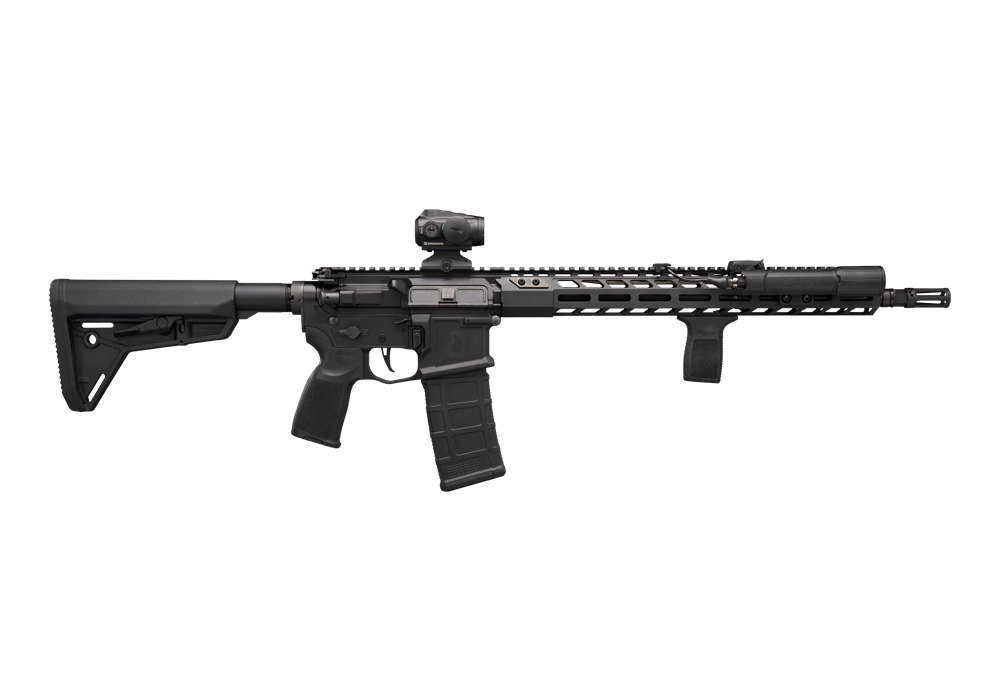
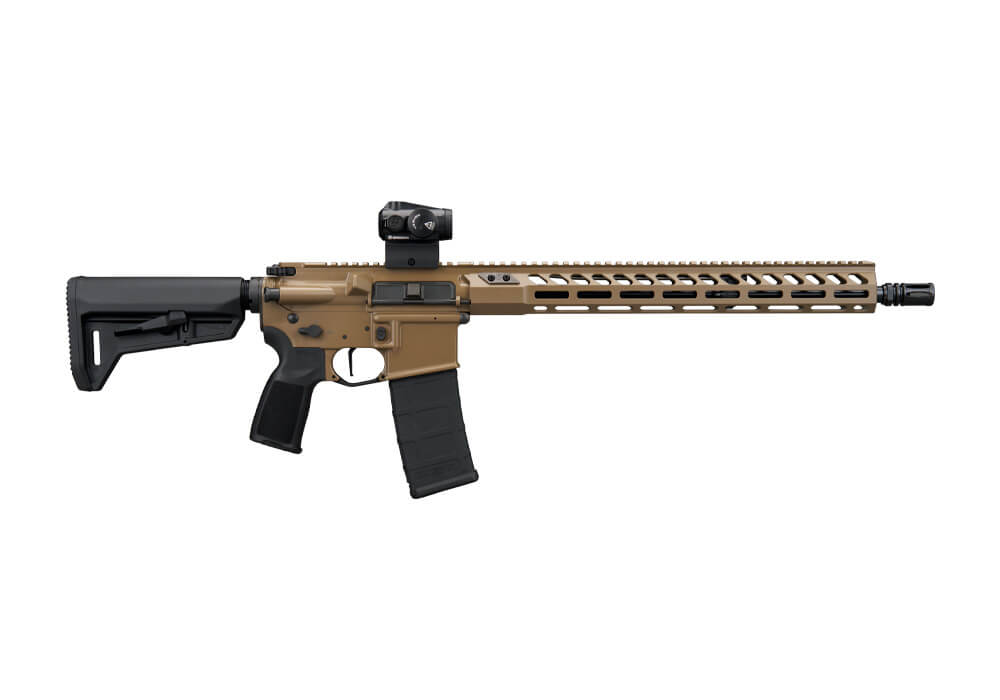
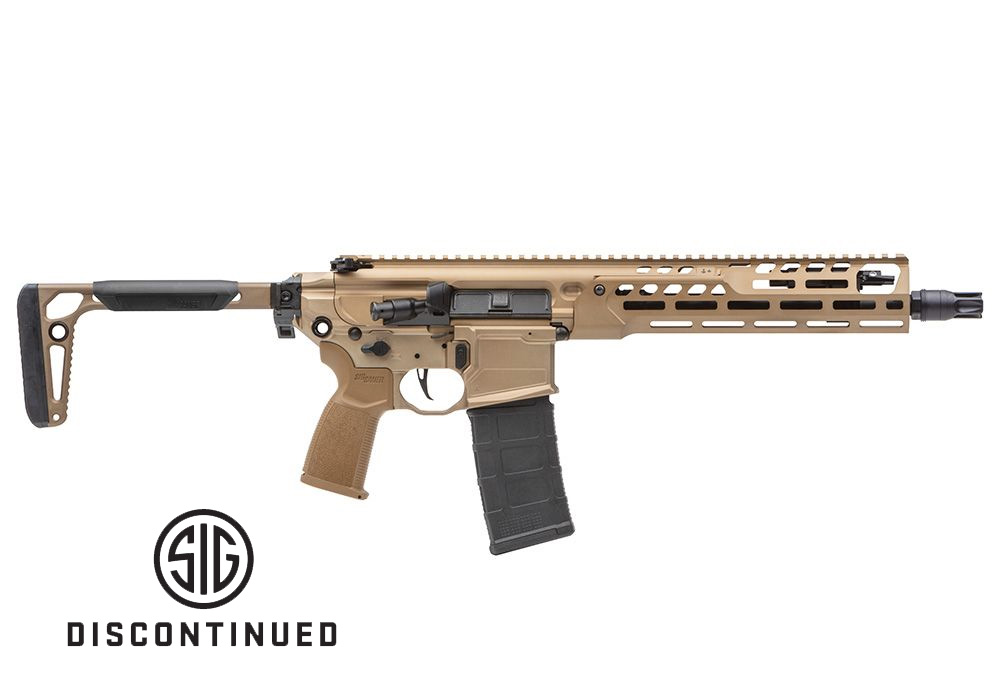
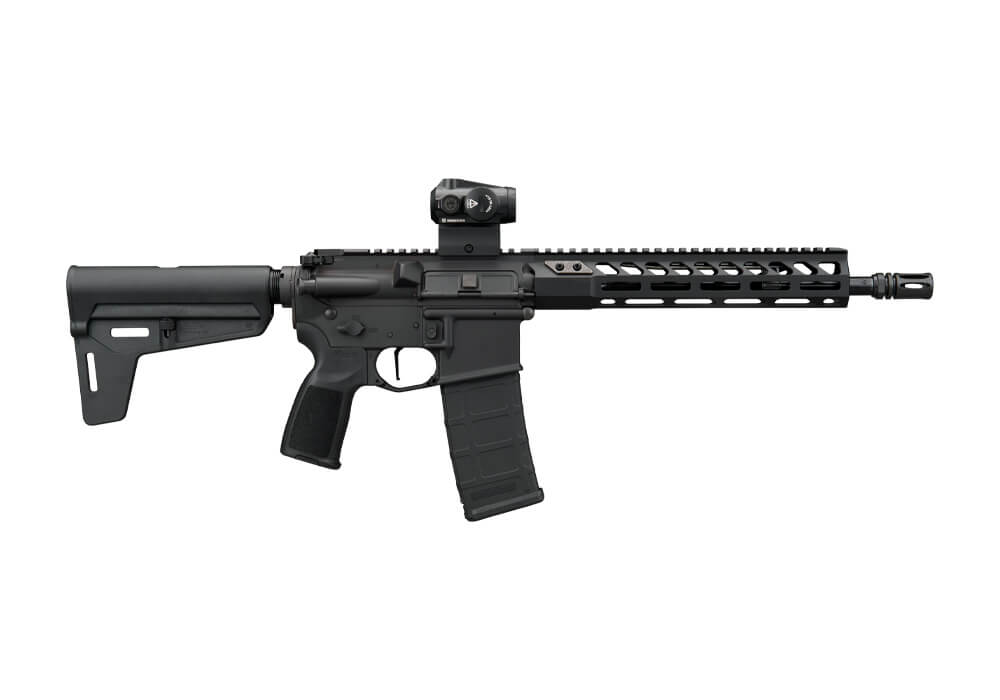
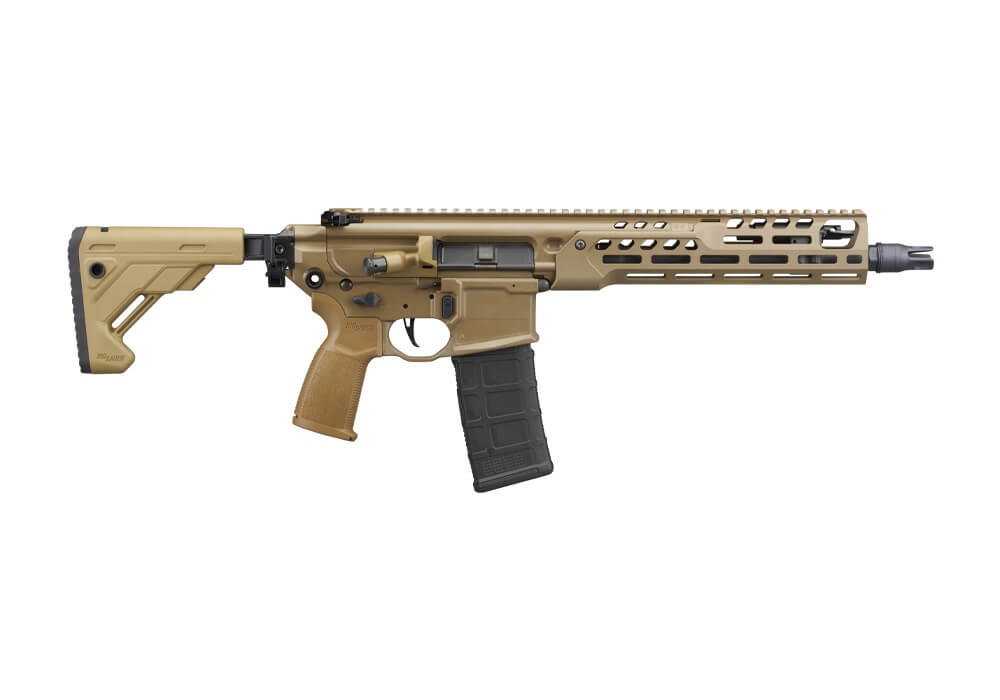
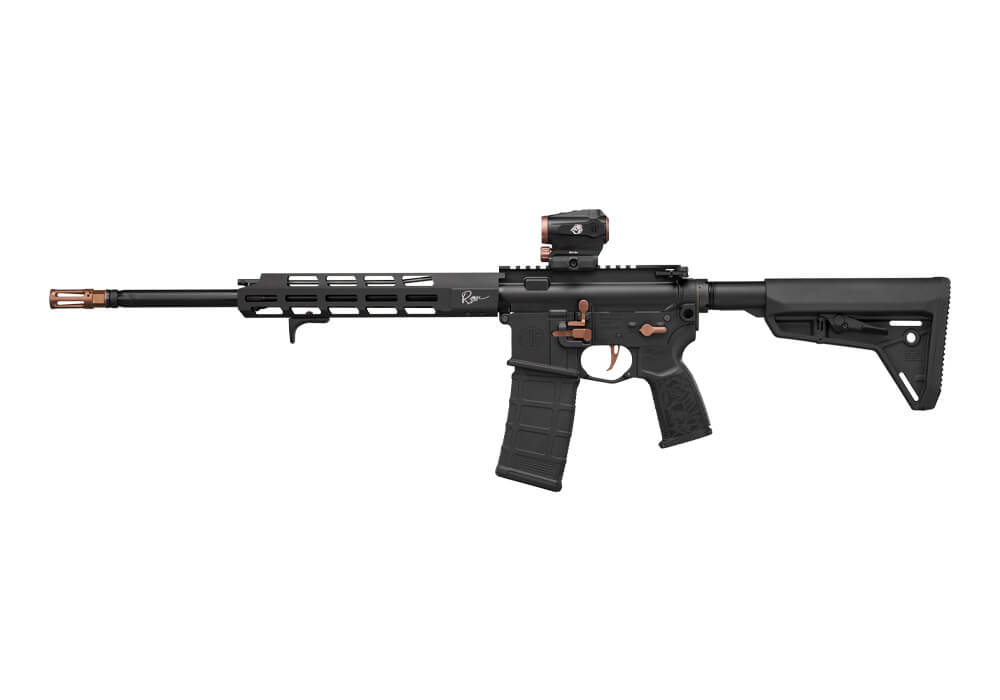
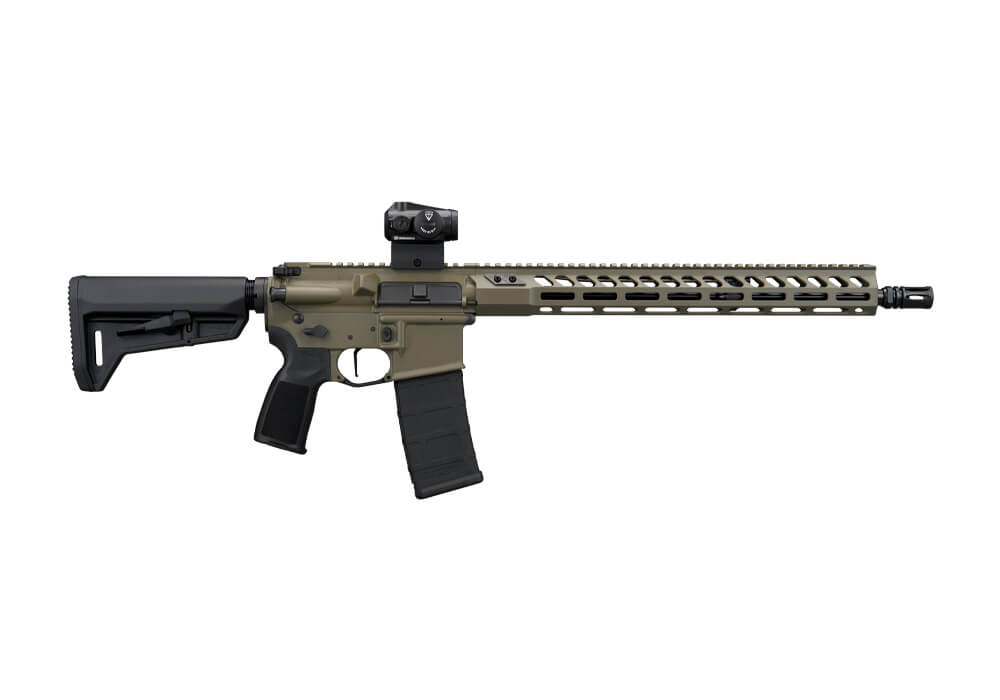
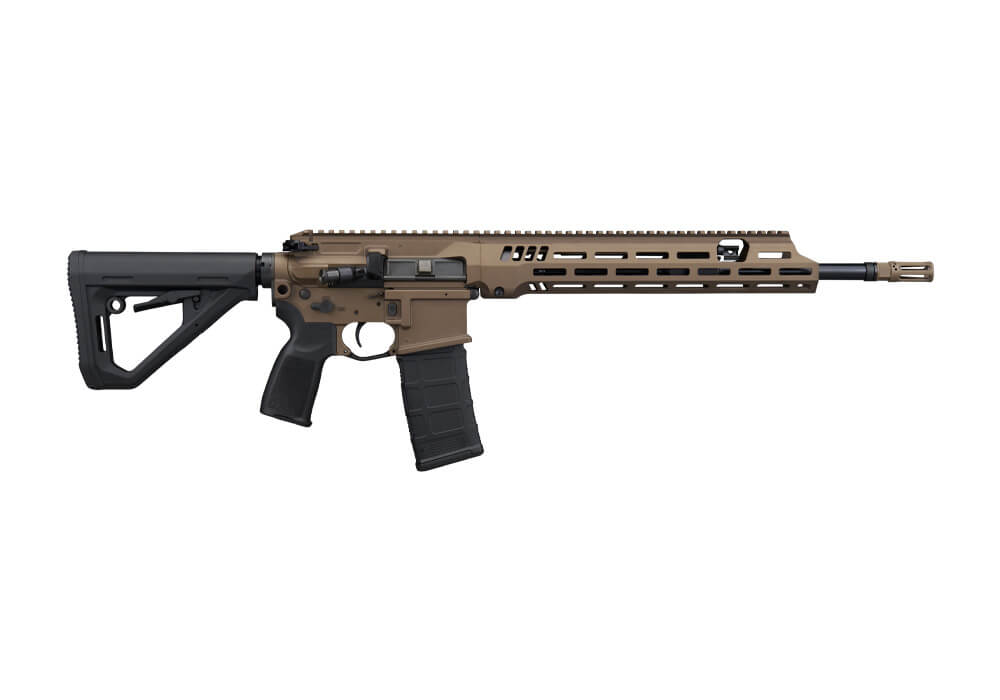
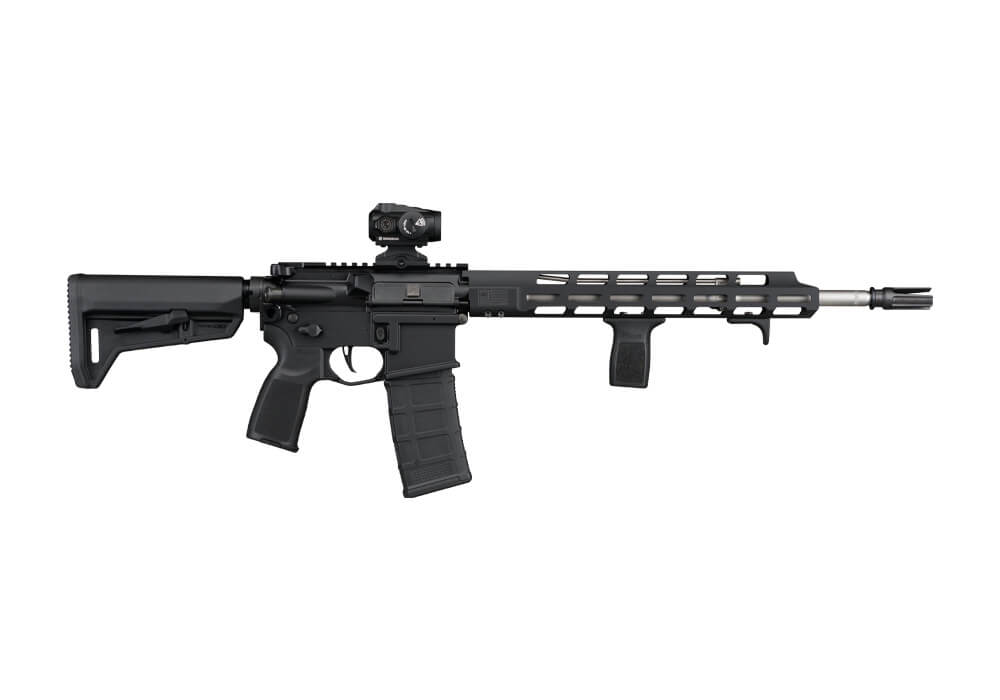
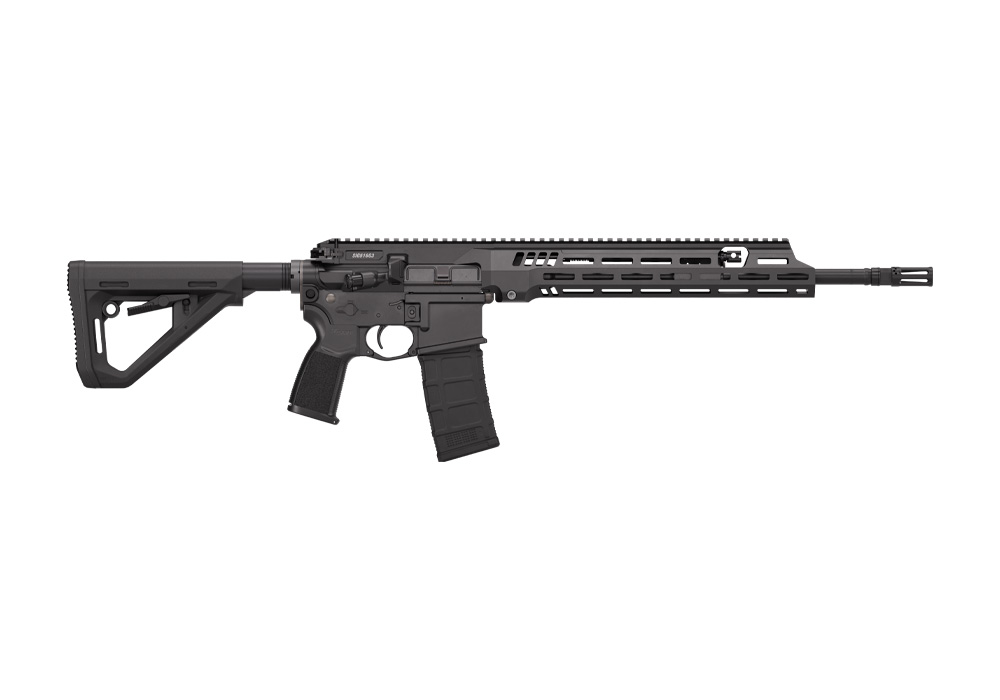
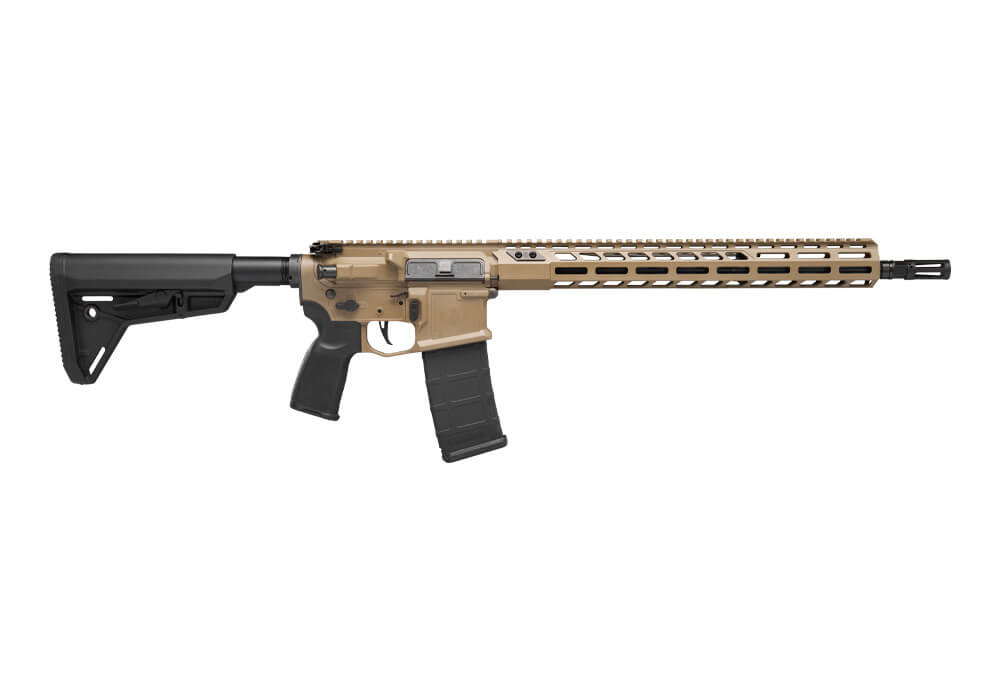
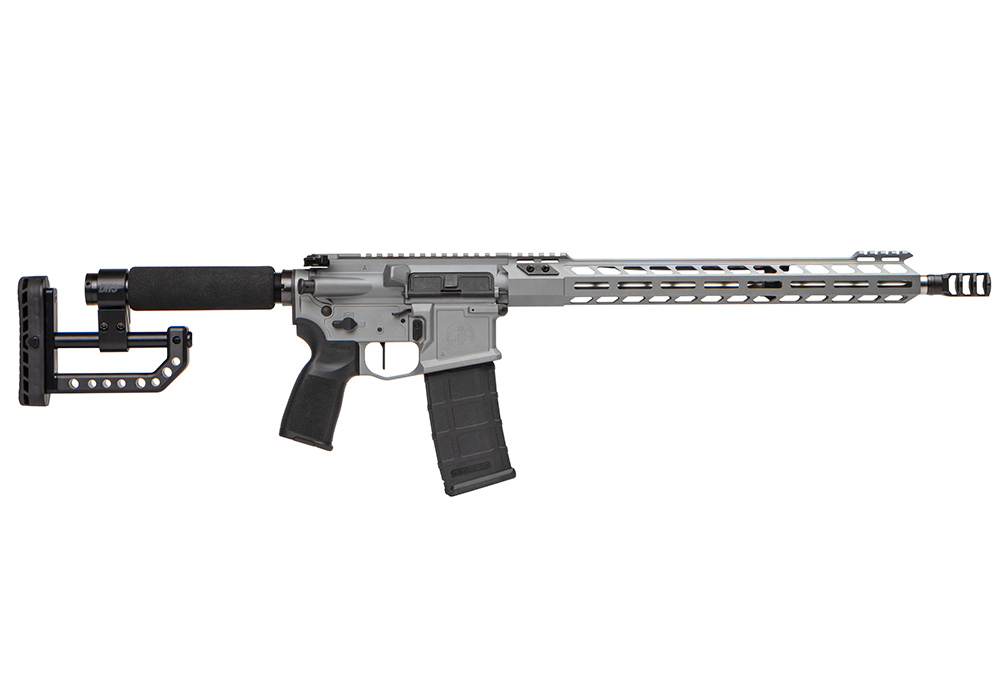
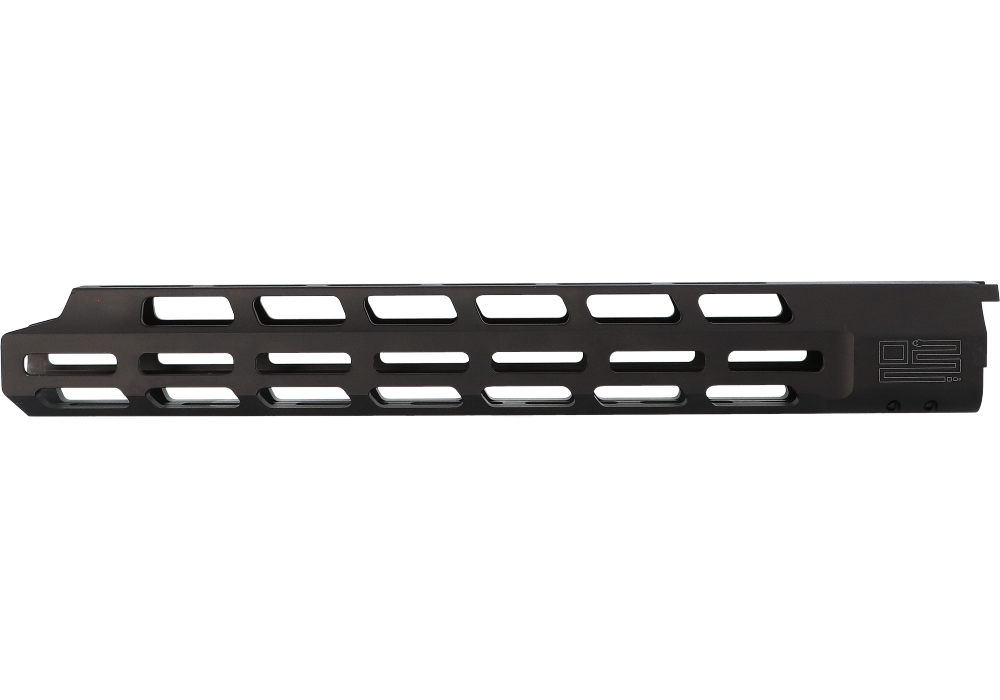
5.56 rifles with aluminum handguards appeal to shooters who value a balanced combination of strength, handling, and accessory flexibility. The aluminum handguard forms a rigid interface around the barrel while keeping the front of the rifle manageable, which can be especially helpful during extended range sessions, practical training, and movement between shooting positions. Many configurations use a free-floating design, meaning the handguard does not rest against the barrel. That separation can help preserve consistent barrel harmonics and support dependable accuracy when the rifle is fired from a rest, supported against a barricade, or used through a series of controlled positions. Aluminum also resists cracking and heavy wear better than basic polymer, while its open structure can help move heat away from the barrel during sustained sessions. Depending on the configuration, M-LOK slots or Picatinny rail sections provide mounting points for an optic, backup sights, a weapon light, a sling attachment, or a forward grip. These features give the shooter room to arrange the rifle around personal reach, stance, and intended use without adding unnecessary bulk. A 5.56 NATO rifle in this category may suit recreational target shooters, competitors, training students, ranch and property owners, or experienced firearm users seeking a versatile rifle for a range bag. It can also be a thoughtful gift for a responsible adult who already owns the required storage equipment and understands local purchasing requirements, though a gift card, accessory, or range experience may be more appropriate when preferences and legal considerations are uncertain.
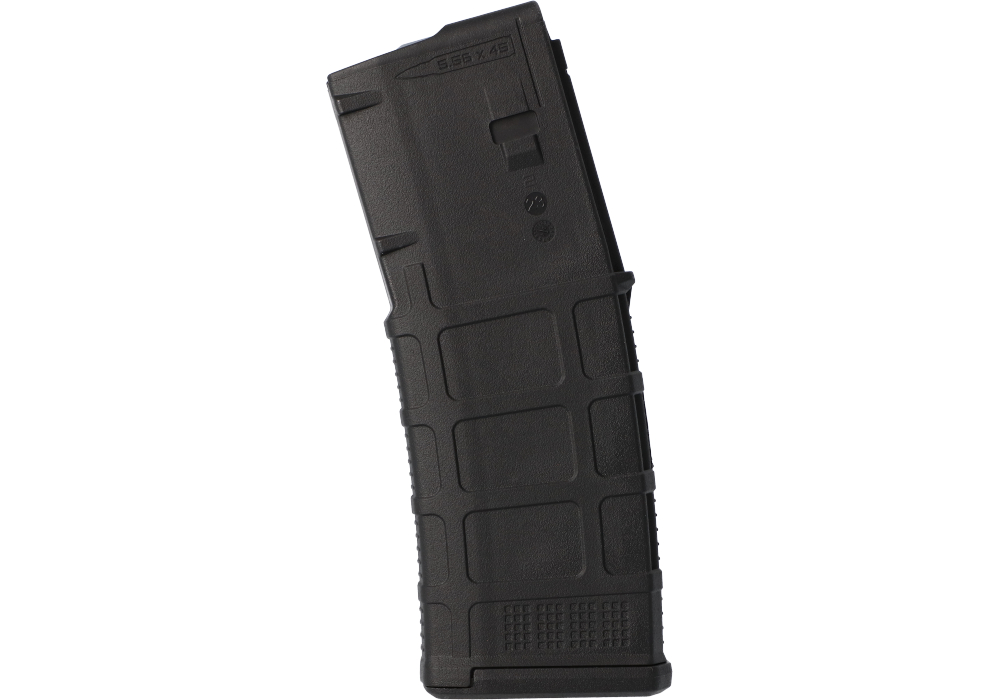
When comparing 5.56 rifles with aluminum handguards, begin with the details that affect fit and daily handling. Overall length and barrel length influence how the rifle moves through a case, vehicle, bench area, or structured course, while a longer handguard may provide additional space for a support hand and accessories. A common 16-inch configuration offers a familiar balance for general range use, while shorter configurations may be easier to maneuver in confined spaces and require careful attention to applicable laws and regulations. Weight matters as well. An aluminum handguard can provide useful rigidity without feeling overly heavy, but the finished rifle becomes heavier as optics, lights, slings, grips, and loaded magazines are added. Handle the unloaded rifle when possible and pay attention to how naturally the controls fall under the hand. Check the location and style of the safety selector, magazine release, charging handle, and stock adjustment points. A comfortable cheek weld and a stock that fits the shooter can make a noticeable difference during a long afternoon on the firing line. Optic compatibility deserves equal attention. A consistent top rail supports a red-dot sight, low-power scope, or backup sight arrangement, while M-LOK slots allow accessories to sit close to the handguard rather than hanging from a full-length rail. Look for a secure, well-finished interface between the upper receiver and handguard, and review the manufacturer’s specifications for barrel profile, muzzle device, twist rate, gas system, and included sights. Magazine compatibility, standard or extended magazine options, ammunition availability, and the cost of practice should also factor into the purchase. These details often matter more over time than appearance alone.
A rifle selected for target practice should feel steady from a bench or prone position, with enough rail space for the chosen optic and a sling that supports comfortable transport. For competition or structured training, a lighter front end, quick sight picture, and carefully arranged controls may help the shooter move efficiently between stages. For home protection, seek qualified instruction, confirm all local requirements, and prioritize secure storage, a dependable light, and a setup that every authorized user can operate safely. The same careful approach applies when choosing related configurations, including Aluminum Handguard 300 Blackout SBRs, where cartridge selection, barrel length, suppressor compatibility, and legal classification may differ from a 5.56 rifle. During the cooler months, an aluminum handguard can feel brisk when first handled outdoors, so gloves with a secure grip may be useful, while the metal’s ability to manage heat becomes more noticeable during longer practice sessions. After each range visit, inspect the handguard, rail sections, sling mounts, optic fasteners, and muzzle area for looseness or unusual wear. Keep the bore clear, use ammunition suited to the rifle, follow the four basic rules of firearm safety, and store the rifle unloaded or in the condition required by your secure-storage plan. With thoughtful selection and consistent maintenance, a 5.56 rifle with an aluminum handguard can serve as a durable, adaptable platform for learning, practice, competition, and responsible ownership.