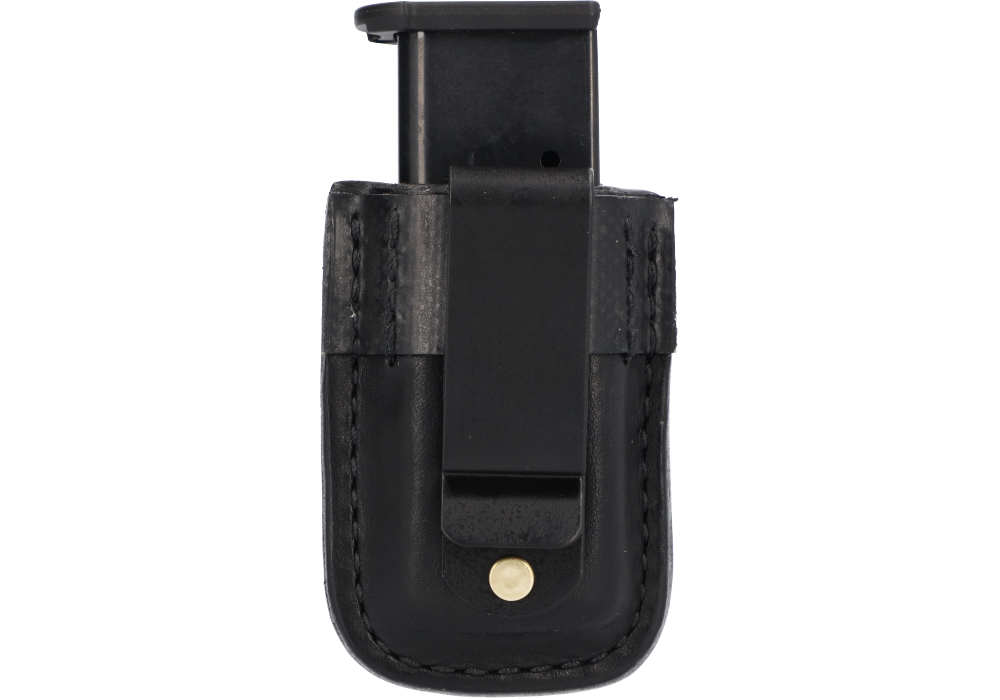
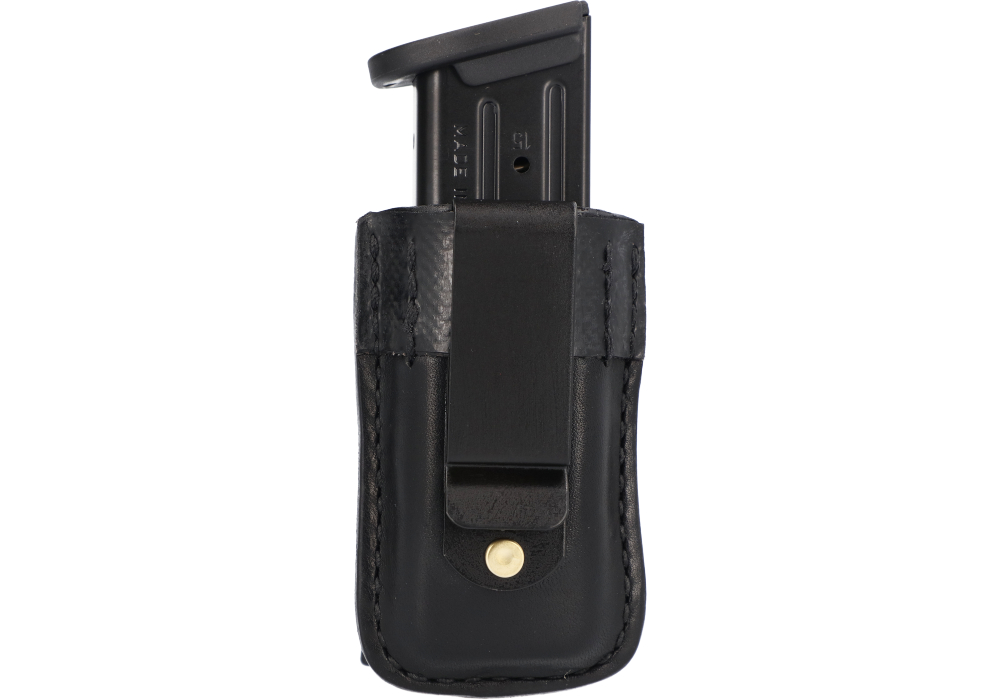
9mm leather magazine pouches hold spare pistol magazines in a shaped carrier that can attach to a belt or sit inside the waistband. Leather offers a traditional look, a comfortable feel against clothing, and a surface that develops character with regular use, but the right match starts with the magazine rather than the finish. A 9mm designation identifies the ammunition a magazine holds; it does not establish a universal magazine size. Single-stack magazines arrange cartridges in one column and generally have a slimmer body, while double-stack magazines use a staggered arrangement and generally need a wider pouch. Some compact magazines have profiles that fall between those broad descriptions, so the stated firearm and magazine compatibility matters more than a general size label. Body width, front-to-back depth, overall length, and the shape of the floorplate can all affect seating and retention. A longer magazine or an extended baseplate may sit differently even when the main body shares the same dimensions. A single magazine pouch carries one magazine, while a double magazine pouch carries two; those terms describe the number of compartments, not whether each magazine is single-stack or double-stack. Molded leather can follow the contours of a particular magazine closely, whereas less structured designs may rely more on a flap or adjustable retention. Neither construction should be treated as universally interchangeable. Product specifications should identify the intended magazine type and any compatibility limits. Look for smooth interior surfaces, even stitching, cleanly finished edges, and reinforcement around belt attachments, where repeated movement places stress on the leather. The magazine should sit securely without distorting the pouch or putting unnecessary pressure on its seams. A closely fitted leather pouch may feel firm initially, but break-in is not a substitute for correct sizing. That distinction matters when two magazines look nearly identical on a counter yet differ enough in thickness or floorplate shape to change the fit.
Carry style determines how a leather magazine pouch interacts with a belt, clothing, and everyday movement. Outside-the-waistband, or OWB, pouches attach to the outside of the belt and keep the pouch body out of the waistband. Inside-the-waistband, or IWB, pouches place the body between the waistband and the wearer, reducing the visible profile while requiring enough room in the clothing for comfortable wear. Neither arrangement is automatically comfortable for everyone. A pouch that feels unobtrusive while standing can press against the hip when seated at a desk or in a vehicle, particularly if its bottom edge is stiff or its hardware sits close to the body. Belt width and thickness deserve equal attention: an attachment designed for a narrow belt may not accommodate a wider one, while an oversized loop can allow unwanted shifting. Fixed belt loops, snap loops, clips, and paddle attachments each have their own fit requirements, and the attachment should match the intended belt rather than merely fit over it. Open-top leather magazine pouches leave the upper portion of the magazine exposed and typically depend on molding, friction, or an adjustable tension feature for retention. Flap designs add coverage over the magazine opening and often secure with a snap. A flap can help shield the magazine from dust and contact with surrounding objects, although it does not create a sealed enclosure. Adjustable retention, where included, allows limited tuning within the manufacturer's specifications; it cannot correct an incompatible magazine shape. For recreational range visits, organized instruction, or lawful everyday carry, useful details include a stable attachment, edges that do not scrape against clothing, and hardware that stays clear of pressure points. A dual-compartment pouch also occupies more belt space than a single-compartment design, which matters when it shares a belt with other equipment. Before choosing a style, account for the whole setup: belt construction, clothing fit, expected wear time, and whether a single or paired magazine arrangement suits the intended use.
Leather quality is best judged through construction and condition, not color or surface decoration alone. Firm leather can help a molded pouch maintain its shape, while a softer leather may flex more readily against the body; thickness, tanning, lining, and construction all influence the result. Plain finishes offer an understated appearance, while basketweave or other embossed textures add visual detail without establishing anything about fit. Natural grain variations and gradual darkening can be normal characteristics of leather. Loose stitching, torn attachment points, damaged snaps, and sharply deformed openings are different matters and deserve inspection before continued use. Routine care is straightforward: remove surface dust with a soft cloth, address dirt before it becomes embedded, and follow the leather-care recommendations supplied for the pouch. Apply cleaners or conditioners only when suitable for that leather and finish, testing an inconspicuous area first when directed. Heavy conditioning can soften a structured pouch and change its retention, so more treatment is not necessarily better. Avoid soaking leather or using heat to force a different shape. If a pouch becomes damp, allow it to air-dry naturally away from direct heat, and avoid storing it while moisture remains trapped against the leather or hardware. Storage should support its shape rather than flatten it beneath other equipment. Inspect belt loops, clips, screws, snaps, and stitching periodically, especially after frequent wear. Comparing leather designs with other Pistol Mag Pouches can help clarify preferences for structure, finish, attachment, and upkeep. As a gift for a recreational shooter or someone who appreciates traditional leather equipment, a magazine pouch is most useful when the recipient's exact magazine fit and preferred carry arrangement are already known. Appearance alone cannot establish compatibility. A well-chosen 9mm leather magazine pouch brings together an appropriate fit, dependable construction, comfortable belt placement, and manageable care, allowing its character to develop through ordinary use without asking the leather to compensate for the wrong dimensions.