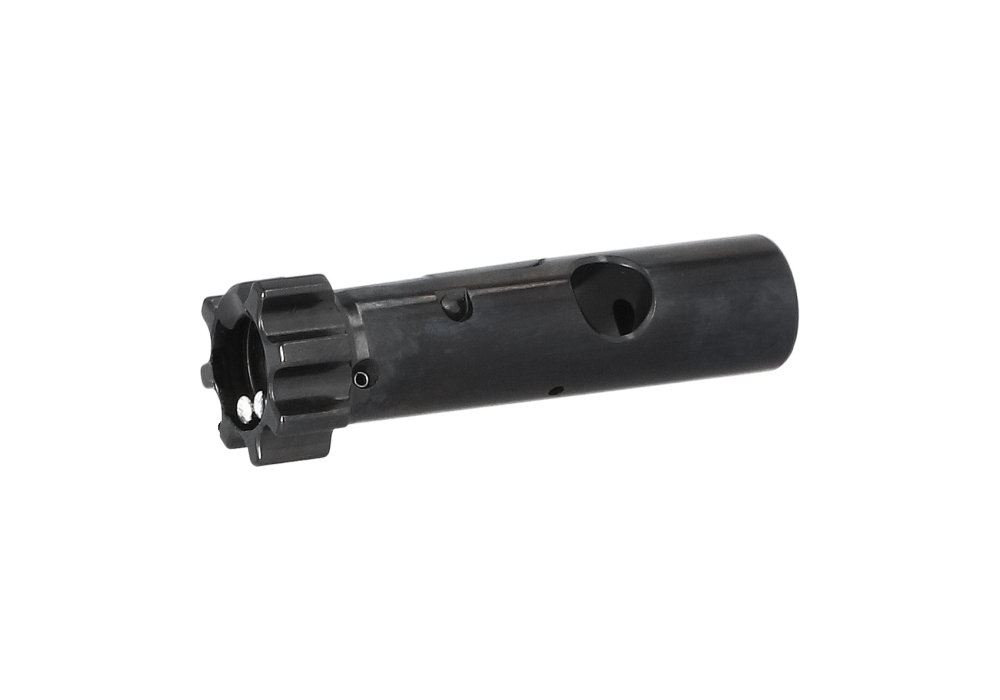
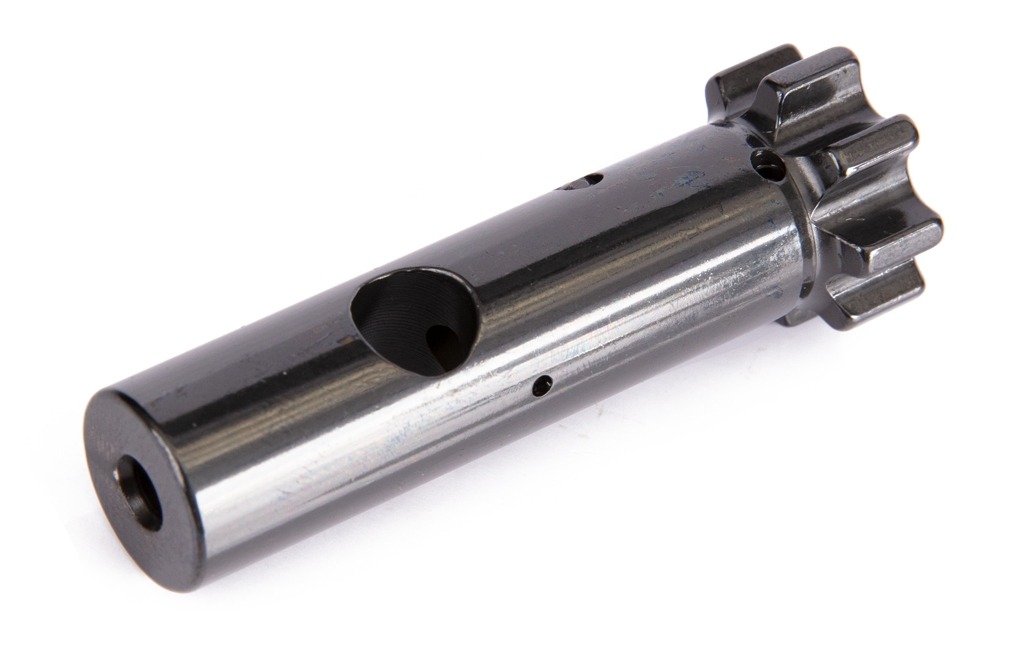
Bolt head assemblies are firearm components that form the forward portion of a bolt, supporting the cartridge at the chamber and contributing to the action’s locking and cycling functions. In designs that use a separate bolt head, this assembly works with other parts of the bolt system rather than serving as a complete bolt on its own. The term refers to a precision firearm component, not the hexagonal or socket-style head of a threaded fastener. Depending on the firearm’s design, a bolt head assembly may incorporate locking features, an extractor, an ejector, or associated small parts; the exact contents should always be confirmed in the component description. Those distinctions matter because similar names do not necessarily describe equivalent assemblies. A bare bolt head, a bolt head with selected internal components, and a complete bolt assembly represent different levels of completeness and different replacement needs. For firearm owners comparing these categories, Bolt Assemblies provides a related category to consider alongside separate bolt head assemblies. The appropriate choice depends on the firearm’s documented configuration and the scope of work identified by its manufacturer or a qualified gunsmith. Within the action, the bolt head operates where precise fit and repeated mechanical loading meet. Its dimensions, contact surfaces, and relationship to the cartridge case are central to its purpose, which is why appearance alone cannot establish suitability. These components are most relevant to owners maintaining a compatible firearm, armorers managing service requirements, and gunsmiths addressing a documented repair. For a recreational shooter or a frequent range visitor, the purchase may be part of preserving a familiar firearm rather than changing its character. For a professional responsible for several firearms, clear identification and maintenance records can be just as important as the component itself. Across these situations, the useful starting point is the same: understanding exactly what the assembly includes and which firearm configuration it is intended to support.
Fit is the primary consideration when evaluating bolt head assemblies. Compatibility can depend on the firearm family, action design, chambering, production revision, and other manufacturer-defined specifications. Two components can share a similar profile yet differ in dimensions or features that prevent interchangeability. A matching cartridge designation is not, by itself, proof that an assembly belongs in a particular firearm, and a part that appears to fit is not necessarily suitable for use. Product descriptions, official compatibility information, and the firearm’s documentation should agree before a replacement is selected. When that information is incomplete or conflicting, confirmation from the manufacturer or a qualified gunsmith is more valuable than an assumption based on photographs. Because bolt components affect locking and headspace, professional assessment may be necessary to establish that a replacement is appropriate and that the firearm is safe to return to service. Materials and surface treatments deserve the same careful reading. Bolt heads commonly use steel selected for demanding mechanical service, with performance influenced by alloy selection, heat treatment, machining, and finishing rather than by appearance alone. A dark finish or bright surface does not independently establish strength, wear resistance, or corrosion protection. Where a coating or treatment is specified, its value should be understood in the context of the manufacturer’s description and recommended care. Durability is also a system-level consideration: the condition of mating components, the firearm’s maintenance history, and its intended operating requirements all affect service life. No assembly should be treated as a universal solution for wear elsewhere in the action. For someone maintaining a firearm used regularly at the range, a clearly documented replacement can help preserve the intended configuration without introducing unnecessary uncertainty. For an armorer reviewing several similar firearms, revision details can prevent confusion between components that look nearly identical. Accurate specifications and traceable documentation offer a firmer basis for selection than broad claims about toughness or performance.
Care for bolt head assemblies centers on following the firearm manufacturer’s maintenance requirements and recognizing when a component needs professional attention. Residue, worn surfaces, and corrosion can complicate an assessment of condition, while an unfamiliar mark may be difficult to distinguish from normal service wear without experience. Routine care should use the methods and materials specified for the firearm, including any guidance relevant to protective finishes and associated small parts. More aggressive cleaning is not automatically better, and polishing, reshaping, or altering contact surfaces is not ordinary maintenance. A qualified gunsmith should evaluate damage, unusual wear, or a suspected change in function rather than relying on cosmetic improvement to resolve the concern. Cleaning and inspection should take place only with an unloaded firearm and in accordance with its safety instructions. For assemblies kept separately, protective storage and clear labeling help preserve both physical condition and identification. Keeping the component’s documentation with it can be especially useful when several similar parts are present, or when time passes between purchase and professional service. Intended use should shape expectations as well. A firearm used for occasional target practice and one maintained through frequent training may have different service histories, but neither benefits from an incompatible replacement or an unsupported promise of longer life. Consistent records of use, inspection, and prior repairs give a service professional better context than appearance alone. If a replacement is being purchased for another firearm owner, exact compatibility should be established beforehand; precision action components are better selected around a confirmed maintenance need than chosen as a surprise gift. The most useful purchase is one that corresponds to a documented requirement, includes the expected components, and supports the firearm’s intended configuration. Evaluating bolt head assemblies with that level of care keeps attention on what matters: verified fit, clearly described construction, appropriate maintenance, and dependable service within the firearm system for which the component was designed.