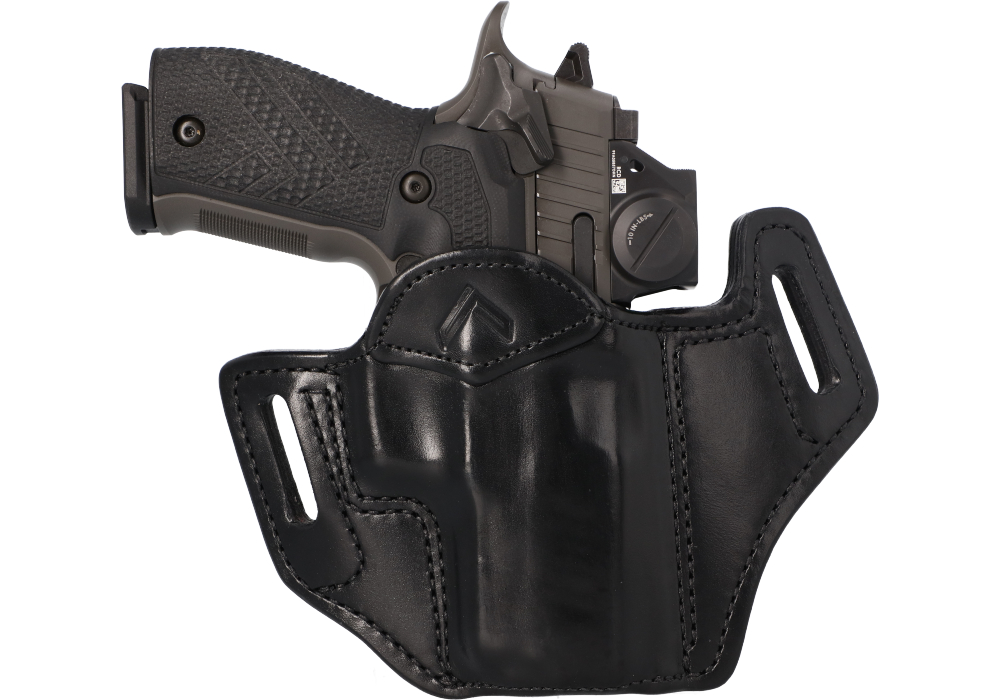
Leather holsters with 1.5-inch belt loops offer a traditional carry platform with the structure, texture, and close-to-body fit many firearm owners value for everyday use. Designed to work with belts measuring 1.5 inches wide, these holsters can provide a dependable connection between the firearm, holster, and belt when properly matched and worn. Leather is often chosen for its firm support and ability to develop a personalized feel over time. A new holster may feel snug at first, particularly around the trigger guard and molded firearm pocket, but that initial firmness can help maintain a secure fit as the leather gradually settles through normal use. The right fit depends on the exact firearm model, barrel length, frame dimensions, and holster design, so shoppers should confirm compatibility before making a purchase. A holster intended for one firearm may not provide the retention or coverage needed for another, even when both appear similar in size. Buyers should also look for complete trigger-guard coverage, a stable belt attachment, and a draw that remains controlled and predictable. These details matter whether the holster is used for regular carry, time spent outdoors, training at the range, or as part of a carefully assembled equipment setup. During warmer weather, breathable clothing and frequent movement can make a slim, close-fitting design especially appealing; during cooler months, layered clothing may provide additional concealment options while still requiring the holster to remain comfortable and accessible throughout the day.
Holsters in this category may use outside-the-waistband or inside-the-waistband configurations, each suited to different preferences and clothing habits. An OWB holster generally rides outside the pants and can offer a straightforward draw, visible belt integration, and a comfortable option for range sessions, outdoor work, or daily wear under a longer shirt, jacket, or overshirt. Belt loops or slots positioned on both sides of the holster can help pull it close to the body and reduce unnecessary movement. An IWB design places the holster inside the waistband and may provide a more discreet profile, especially when paired with an untucked shirt or other casual layers. Some designs use tuckable or snap-style loops, allowing the wearer to tuck a shirt over the holster while keeping the attachment secured to a 1.5-inch belt. Attachment style is worth considering because fixed loops usually require the belt to be threaded through the holster, while snap loops may allow installation or removal without taking off the belt. Carry position also affects comfort and access. A forward cant, sometimes called a negative or angled cant, may be useful for carry positions toward the rear of the hip, commonly around the 3 to 5 o’clock area, because it can place the grip in a more natural orientation for the draw. A neutral cant may suit other positions or personal preferences. Before carrying, users should practice safe handling and verify that the firearm is fully seated, the holster stays in place, and no clothing or equipment interferes with the trigger guard or draw path.
The belt is an equally important part of the system. A 1.5-inch loop is designed around a belt of corresponding width, and a dedicated gun belt is typically a better match than a thin dress belt or soft fashion belt that can flex, twist, or sag under the weight of a holstered firearm. A firm, properly fitted belt helps keep the holster positioned consistently and can improve comfort during long periods of standing, walking, driving, or sitting. Shoppers may also want to consider the belt’s buckle, stiffness, finish, and adjustment range, particularly when pairing it with an IWB holster and everyday clothing. Leather holsters can make thoughtful gifts for responsible firearm owners, new permit holders, range regulars, outdoors enthusiasts, or someone building a practical everyday-carry setup, though the recipient’s exact firearm model, preferred carry position, and belt width should be confirmed first. For a more compact option, shoppers can also explore Small Holsters when a reduced profile better suits their firearm and clothing. Regardless of style, a holster should be treated as safety equipment rather than a decorative accessory. Firearms should remain unloaded while fitting or adjusting a holster, and users should follow all applicable laws, training guidance, and safe-storage practices. A well-matched leather holster with 1.5-inch belt loops can become a familiar part of a daily routine: secure on the belt, comfortable against the body, and ready to support consistent handling through changing clothing, schedules, and seasons.