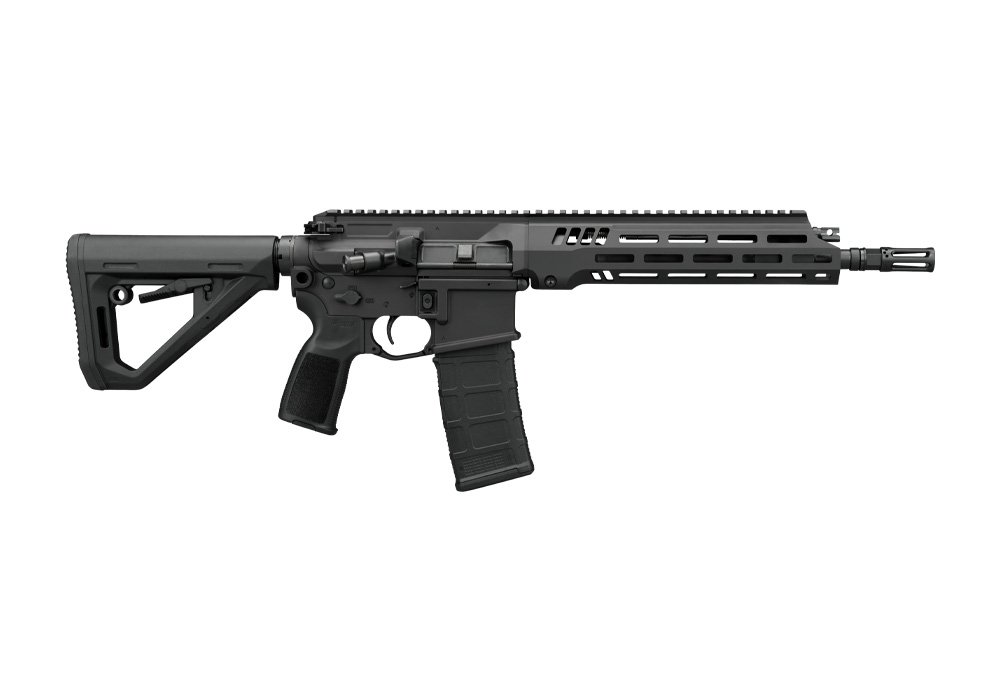
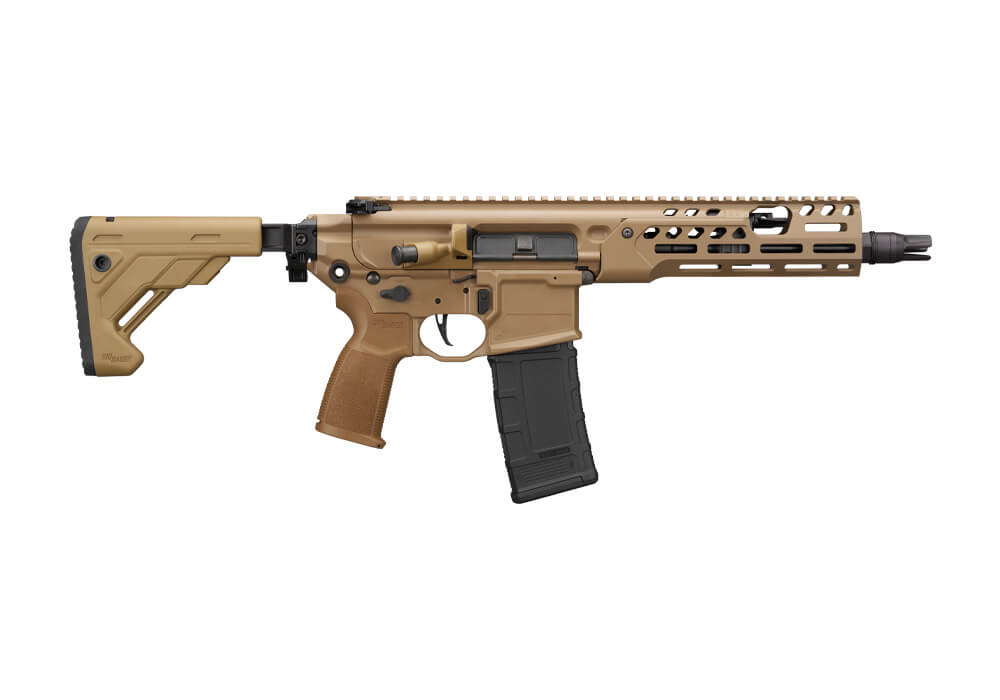
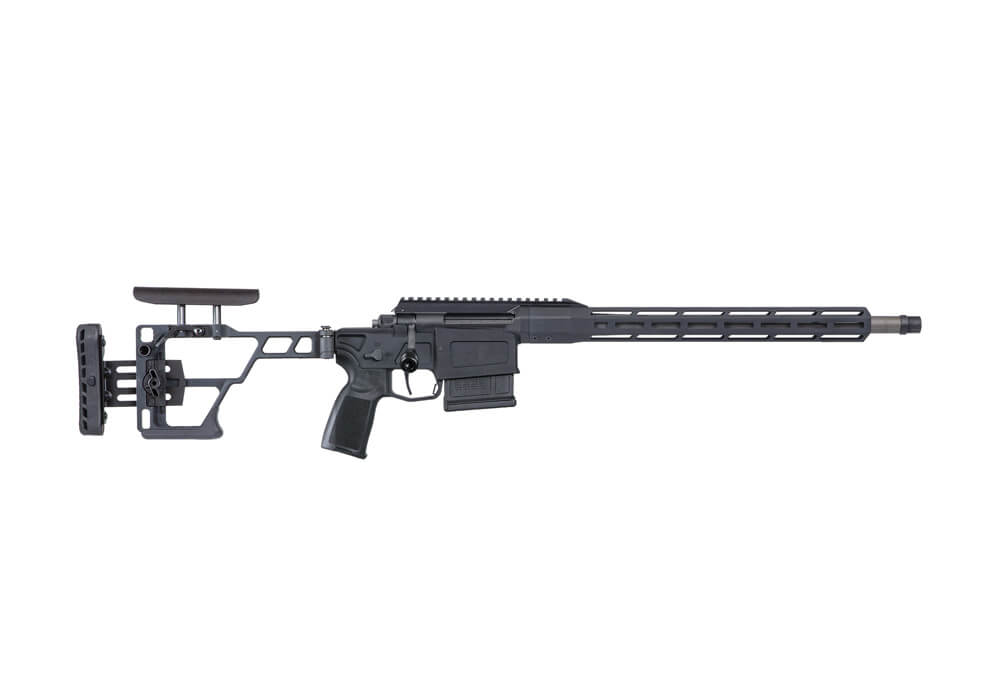
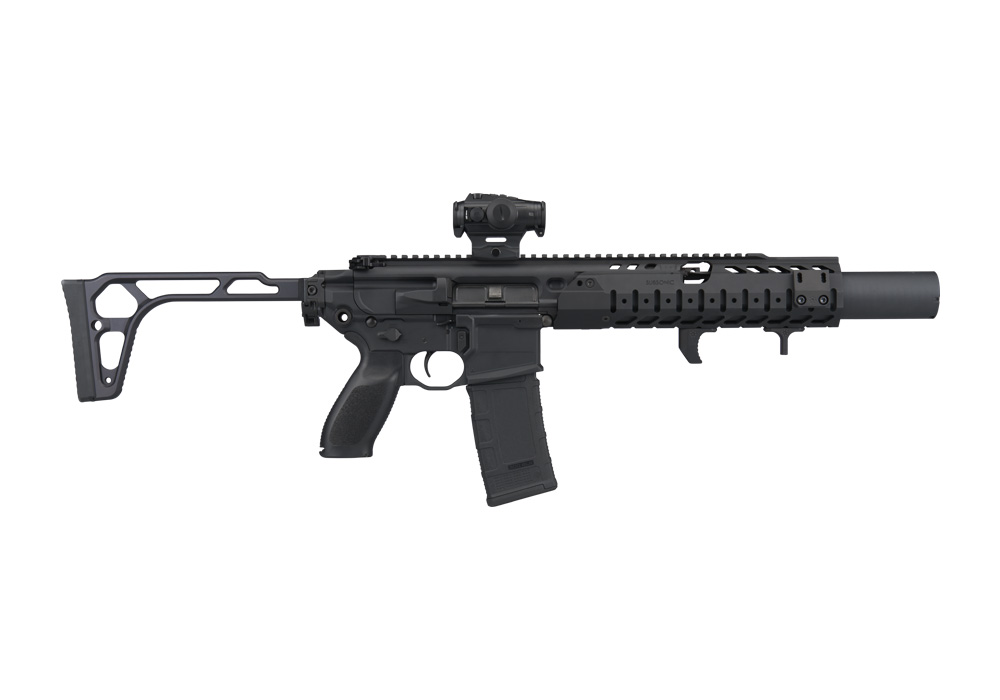
M-LOK rail 300 Blackout SBRs bring together a short-barreled rifle configuration, a recognizable chambering, and a handguard format defined by its elongated attachment slots. Within this category, the rail is more than a visual detail: its shape, length, surface texture, and relationship to the rest of the firearm contribute to the overall feel of the platform. An angular handguard with prominent edges presents a different profile from a rounded design with a comparatively smooth exterior, even when both use the same attachment standard. M-LOK describes an interface rather than a complete firearm specification, so the presence of those slots does not establish the rifle’s materials, dimensions, internal design, or compatibility with every accessory. Depending on the construction, a handguard may use aluminum alloy, while barrels and other components subject to different stresses use steel or other appropriate materials. Those material choices serve distinct purposes, and a durable firearm depends on more than any single component. Surface treatments also deserve attention. Anodized aluminum and coated steel can differ in texture, sheen, and resistance to everyday handling marks; a uniform black appearance does not necessarily mean every surface has the same finish. Across this category, useful comparisons include the published dimensions, overall weight, handguard coverage, and the manufacturer’s stated specifications. A close view of the rail can reveal its contour and attachment pattern, but photographs alone cannot establish fit or construction quality. Clear specifications and accurate descriptions provide a firmer basis for comparison than styling language. The appeal of a compact rifle can be as straightforward as its proportions: a shorter overall profile, a clean arrangement of components, and an appearance that differs noticeably from a full-length sporting rifle. That compact format does not lessen the responsibilities of ownership, change ammunition requirements, or replace the need for secure storage and appropriate handling. It is one defining characteristic within a broader set of construction, legal, and ownership considerations.
Fit is especially important when evaluating .300 Blackout SBRs with M-LOK handguards because several different forms of compatibility exist within the same platform. Accessory compatibility at the rail does not establish compatibility with the receiver, barrel assembly, or other firearm components. Likewise, two handguards with a similar exterior can have different mounting arrangements, internal clearances, and manufacturer requirements. The M-LOK designation is useful context, but it should not be treated as a promise that unrelated components are interchangeable. Any installation or configuration change belongs within the firearm manufacturer’s guidance and, when appropriate, the work of a qualified gunsmith. For the person comparing complete rifles, the more immediate considerations are often tactile and practical: whether the handguard feels excessively angular, whether the controls are comfortable to reach, and whether the firearm’s proportions suit its intended lawful use. A range bench can make small distinctions apparent. The texture felt through a shooting glove, the balance noticed when lifting an unloaded firearm from its case, and the space required in a secure storage arrangement are all details that a single profile photograph may not convey. None of those observations substitutes for the stated specifications, but they help explain why rail shape and overall dimensions matter to ownership. The related Military Style 300 Blackout SBRs collection provides another way to explore this general category. Military-inspired styling describes an appearance; it does not establish a particular service history, military contract, or firing mechanism. Similarly, the .300 Blackout designation identifies a chambering, not a universal standard for every other feature. Ammunition must match the firearm’s marked chambering, and ammunition for different chamberings should remain clearly identified and separated. For anyone who owns several rifles with a similar external appearance, consistent labeling and organized storage are particularly important. Clear identification is a more meaningful ownership detail than a matching finish or a visually coordinated set of accessories.
Long-term care for an M-LOK-equipped short-barreled rifle centers on the same fundamentals that matter across quality firearms: following the manufacturer’s maintenance instructions, using suitable cleaning products, inspecting for wear, and arranging service when something appears damaged or functions differently than expected. A rail’s exposed edges, slots, and attachment areas can collect residue from routine range use and contact with cases or other equipment. Finishes may also develop polished spots where they repeatedly touch a rest, sling hardware, or case lining. Cosmetic wear is not automatically a structural concern, but cracks, deformation, looseness, or unexplained movement warrant professional evaluation rather than assumptions based on appearance. Cleaning and inspection should take place with the firearm unloaded and ammunition kept away from the work area. A clear bench, good lighting, and the correct owner’s manual are more useful than an improvised approach or an abrasive product selected without checking finish compatibility. Storage deserves equal care: a properly secured firearm, controlled access, and ammunition stored responsibly remain essential regardless of how compact the rifle is. These considerations are relevant to experienced recreational shooters, collectors interested in contemporary rifle design, and other eligible adults considering lawful ownership. Short-barreled rifles are subject to federal regulation, and possession or transfer may also be restricted by state or local law. Required approvals and any applicable registration or transport requirements should be understood before a purchase or transfer. Range rules can also differ, so a facility’s policies matter when planning lawful recreational use. Eye and hearing protection remain necessary parts of that setting. Ultimately, a useful comparison of M-LOK rail 300 Blackout SBRs considers the whole firearm rather than the rail pattern alone: documented construction, appropriate fit, a clearly understood chambering, straightforward maintenance requirements, and a lawful ownership plan. Those details remain relevant well beyond an initial impression, when the firearm is being maintained, stored, transported in accordance with applicable law, or prepared for another supervised range session.