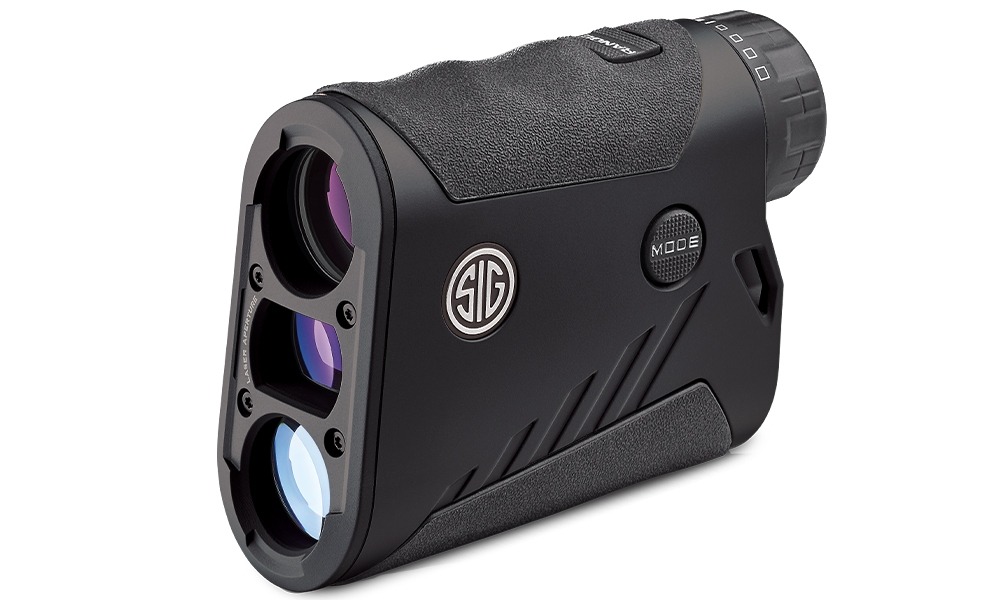
Monoculars selected for range estimation in fog help users maintain awareness when moisture, low contrast, and changing visibility make ordinary observation difficult. A standard optical monocular relies on visible light reflected from the scene, so dense fog can soften edges, flatten depth, and turn distant objects into indistinct shapes. Reticle-based ranging methods, including mil-dot or silhouette comparisons, become less dependable when the target outline is partially hidden or the apparent size changes as fog moves through the area. Thermal monoculars approach the problem differently by detecting infrared radiation and displaying differences in heat rather than relying solely on visible-light contrast. This can make a warm animal, person, vehicle, or other object easier to locate against a cooler background in misty conditions, although thermal imaging does not eliminate every limitation. Heavy moisture can still reduce detection and recognition distance, and a thermal device cannot see through solid barriers, dense vegetation, or terrain. For users comparing optics for this purpose, an integrated laser rangefinder (LRF) is an important feature because it provides a measured distance instead of requiring an estimate based on a reticle. Laser performance can vary with fog density, target reflectivity, angle, and atmospheric conditions, so rangefinder specifications should be considered alongside the optical and thermal system rather than treated as a guarantee of identical results in every environment.
Sensor quality plays a significant role when the scene is dim, hazy, or filled with vapor. Thermal sensitivity is commonly expressed as NETD, measured in milli-kelvin; lower numbers indicate that the sensor can distinguish smaller temperature differences. A rating of 20 mK or lower is often sought by users who expect to work in humid, foggy, or otherwise low-contrast conditions, while the practical result also depends on image processing, lens quality, calibration, and the temperature difference between the subject and its surroundings. Resolution matters before the ranging step because the operator must first identify the correct object and place the rangefinder on it. A 640 × 512 thermal sensor generally provides more detail and finer pixel density on a distant target than 256 × 192 or 384 × 288 options, particularly when recognition is needed near the edge of visibility. Magnification, field of view, focus range, and lens diameter should be matched to the intended distances: a wider view can make scanning through drifting fog easier, while a longer focal length may provide more detail at distance but can make moving targets harder to track. Look for a clearly specified LRF measurement range, practical accuracy information, an eye-safe laser designation, and controls that can be operated while wearing gloves. Weather resistance, sealed construction, lens protection, battery life, removable or rechargeable power options, and a display that remains readable in low light all become more noticeable during early-morning outings and the cooler months. Recording functions, image capture, onboard reticles, multiple color palettes, and wireless connectivity may be valuable for observation or documentation, but they should not take priority over reliable detection, clear controls, and consistent ranging performance. Users who are also comparing broader sighting and observation equipment can explore Long Range Optics for additional configurations suited to distance-focused applications.
These monoculars may appeal to hunters, land managers, search-and-rescue personnel, outdoor professionals, property owners, and range users who need to observe terrain or establish distance when visibility changes quickly. A hunter moving through damp timber may use thermal contrast to distinguish an animal from a cool hillside before confirming the surroundings through a conventional optic. Someone checking a large property during fog can use a compact monocular to scan fence lines, access roads, and open ground without carrying a full-size binocular setup. For range estimation, the most useful workflow is usually to locate the subject, confirm that it is the intended object, place the LRF aiming point carefully, and compare the displayed distance with known terrain features or a map. Fog can produce inconsistent readings when the beam encounters suspended moisture instead of the target, so several readings from a stable position may be appropriate when conditions permit. Users should also account for angle, reflective surfaces, branches, and intervening objects that may return a shorter distance than the subject being observed. Before using any optic around firearms or other equipment, confirm the target, know what lies beyond it, and follow all applicable laws, range rules, and safe handling practices; an electronic distance reading should support judgment, not replace it. As the weather warms and later as damp mornings and cooler evenings become more common, durable thermal monoculars with integrated rangefinding can be useful additions to an outdoor kit and thoughtful gifts for someone who spends time hunting, scouting, hiking, managing land, or observing wildlife. The best choice depends on expected range, typical fog density, target size, required detail, comfort in the hand, operating time, and the balance between advanced features and straightforward field use.