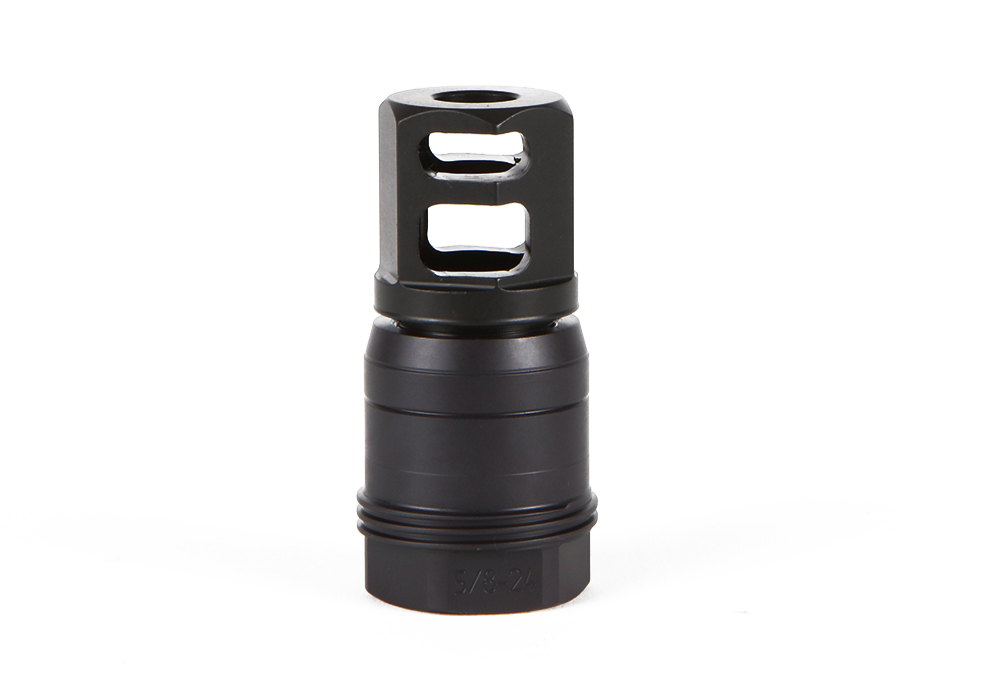
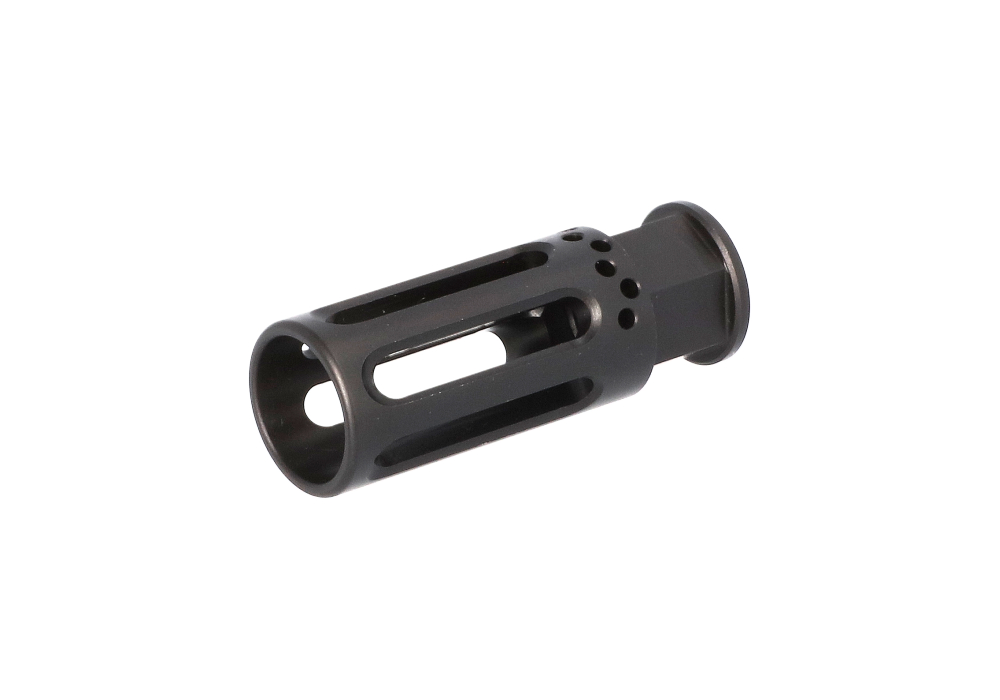
Muzzle brakes are barrel-mounted devices designed to reduce felt recoil, limit muzzle rise, and help a firearm return to its point of aim more quickly after each shot. When a cartridge fires, rapidly expanding propellant gas exits the muzzle at high pressure. A muzzle brake uses carefully shaped ports, baffles, or expansion chambers to redirect some of that gas to the sides and slightly rearward, creating a forward counterforce that works against rearward movement. Ports along the top may also direct gas upward, helping offset barrel climb and keeping the sights or optic closer to the target. The result can be a flatter-shooting feel, less movement between shots, and easier observation of bullet impacts through an optic. These benefits are especially noticeable on rifles chambered for cartridges with substantial recoil, lightweight platforms that transfer more energy to the shooter, and firearms used for precision shooting or extended range sessions. A well-fitted brake can make a rifle feel more manageable without changing its operating system, and many shooters appreciate the added control when practicing positional shooting, sighting in an optic, or working through a carefully paced string of fire. A brake may also be a thoughtful gift for an experienced shooter who spends time refining technique at the range, preparing a hunting rifle, or building a setup around consistent follow-up shots. Since muzzle devices are highly dependent on firearm specifications, gift buyers should confirm the recipient’s barrel thread pattern, caliber, and preferred installation method before choosing one.
The most important purchase consideration is compatibility. Thread pitch and diameter must match the barrel, while the muzzle brake’s bore must be appropriate for the cartridge being fired. A properly sized opening allows the projectile to pass safely while still providing effective gas control; an incorrectly selected device can create a serious hazard. Shoppers should also consider the firearm’s barrel length, handguard or stock configuration, intended use, and whether the rifle will be fired near other people. Some brakes are tuned for maximum recoil reduction, while others balance recoil control with a more compact profile or a less pronounced side blast. Port geometry influences how the firearm moves: side ports can reduce rearward push, top ports can help manage climb, and multi-chamber designs can provide more extensive gas redirection. Installation may require timing the device so its ports are correctly oriented, often with shims, a crush washer, or another manufacturer-approved method. The brake should be secured according to the device and firearm instructions, and users should verify that it does not interfere with the front sight, handguard, suppressor interface, or other accessories. Shooters who move between different configurations may also look for a device that works with compatible mounting systems, including options associated with CQB Muzzle Devices. A brake intended for a precision rifle may not be the best choice for a compact firearm used in close quarters, and a design that performs well on a heavy rifle may feel unnecessarily aggressive on a lighter, lower-recoil platform. Reviewing the manufacturer’s specifications before purchase helps avoid mismatched parts and makes installation more straightforward.
Reduced recoil does come with an important tradeoff: redirecting high-pressure gas can make the shot noticeably louder and increase the intensity of the blast felt by the shooter and anyone positioned nearby. The effect may be particularly apparent on covered firing lines, around benches, or when shooting from a confined position. Hearing protection remains essential, and additional consideration should be given to companions, instructors, range staff, and hunting partners who may be standing beside the firearm rather than directly behind it. A brake can also stir dust, grass, or loose material when shooting from a low position, so the surrounding surface and shooting posture are worth considering. For shooters who value a quieter report or plan to use a suppressor, a compatible suppressor-ready muzzle device may be a better fit than a dedicated brake, provided the components are designed to work together and all applicable requirements are followed. Before heading to the range during warmer weather or the cooler months, inspect the device for carbon buildup, looseness, damaged threads, or signs of unusual wear, and confirm that the bore remains clear. A clean, correctly installed muzzle brake can provide a tangible improvement in control, particularly during repeated practice when fatigue would otherwise make it harder to maintain a steady position. Whether selected for a new rifle, added to an established setup, or given as a practical shooting accessory, the right muzzle brake should match the firearm, the ammunition, and the environment in which it will be used.