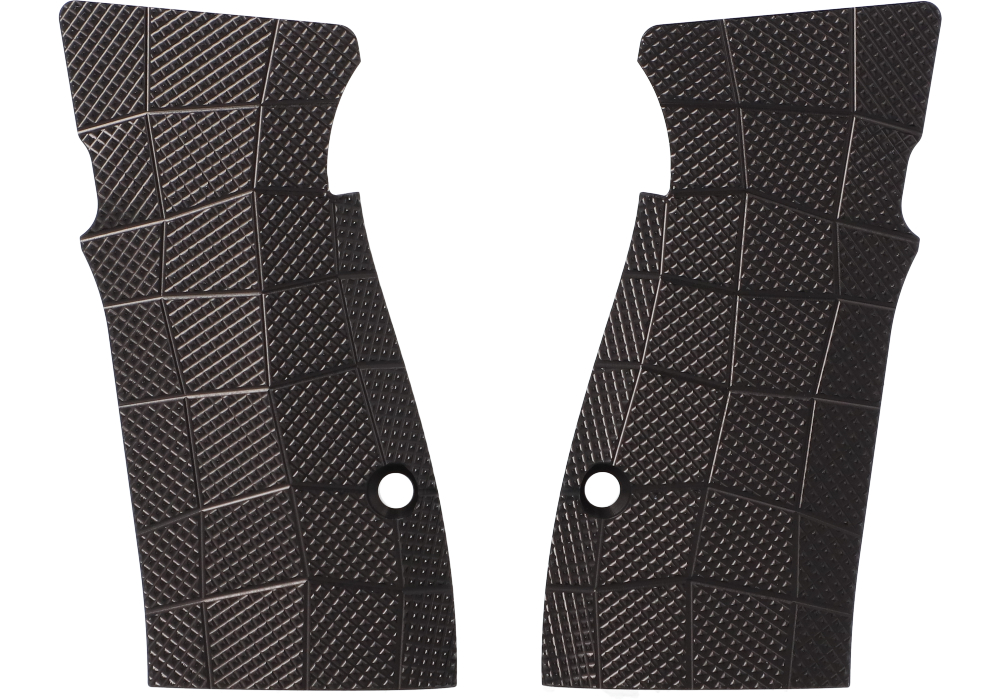
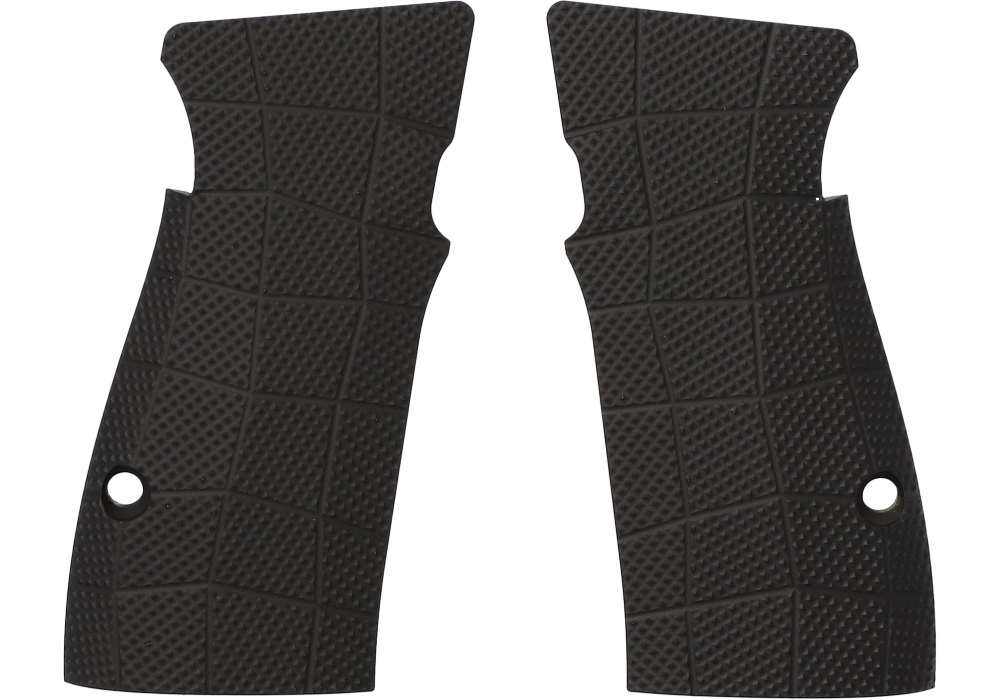
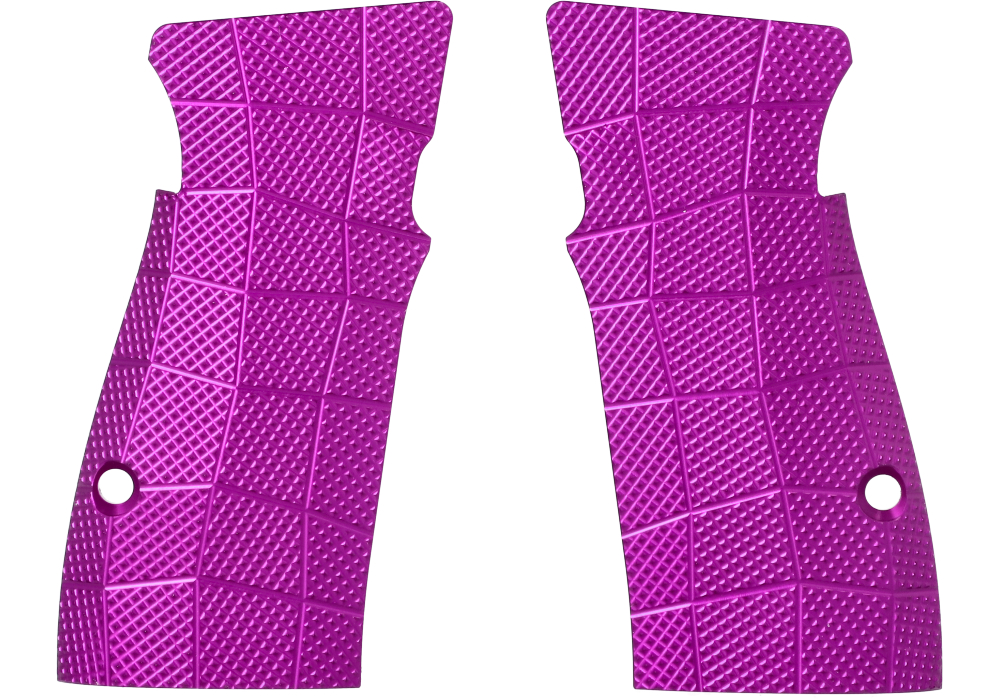
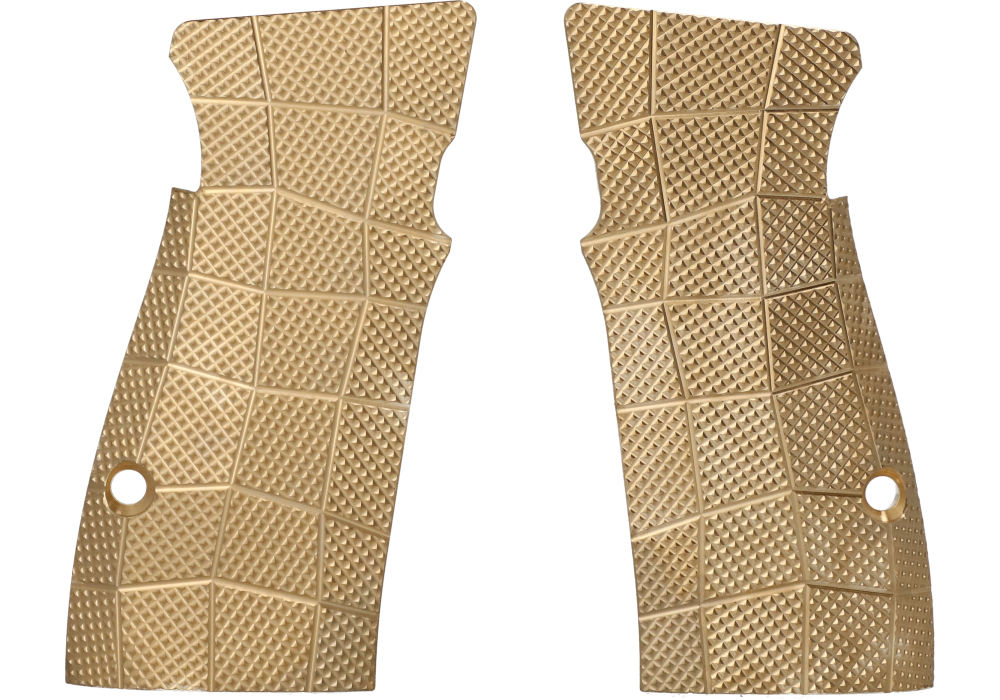
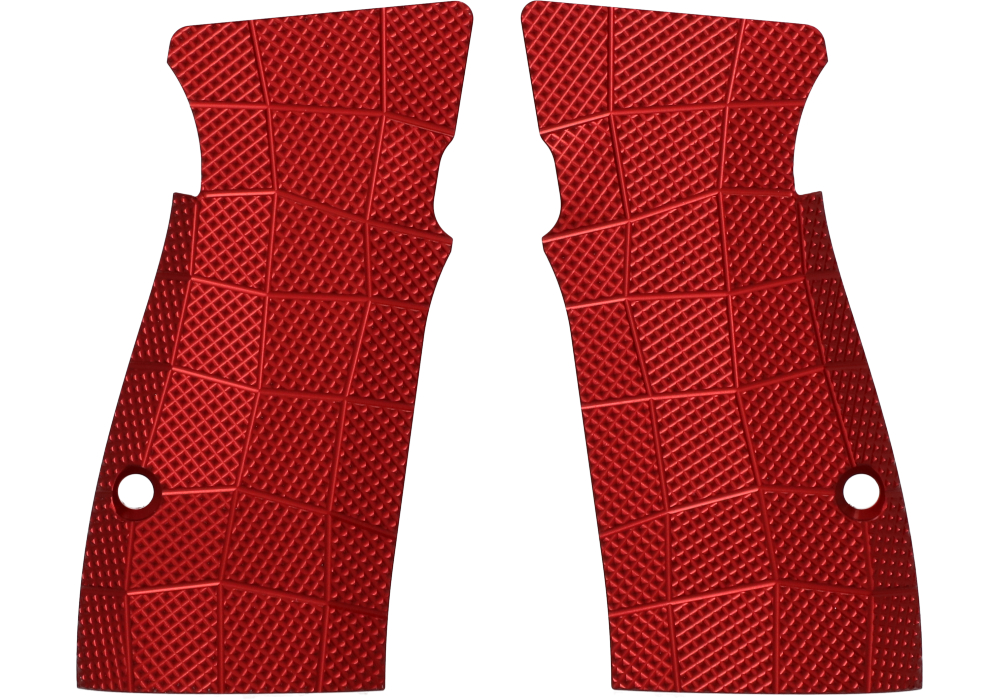
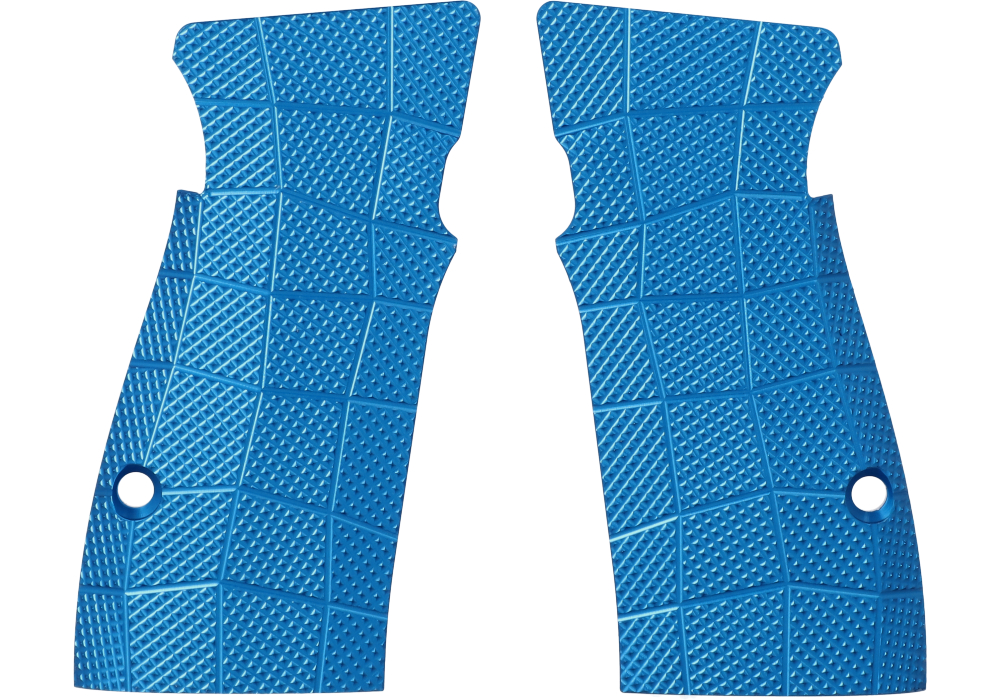
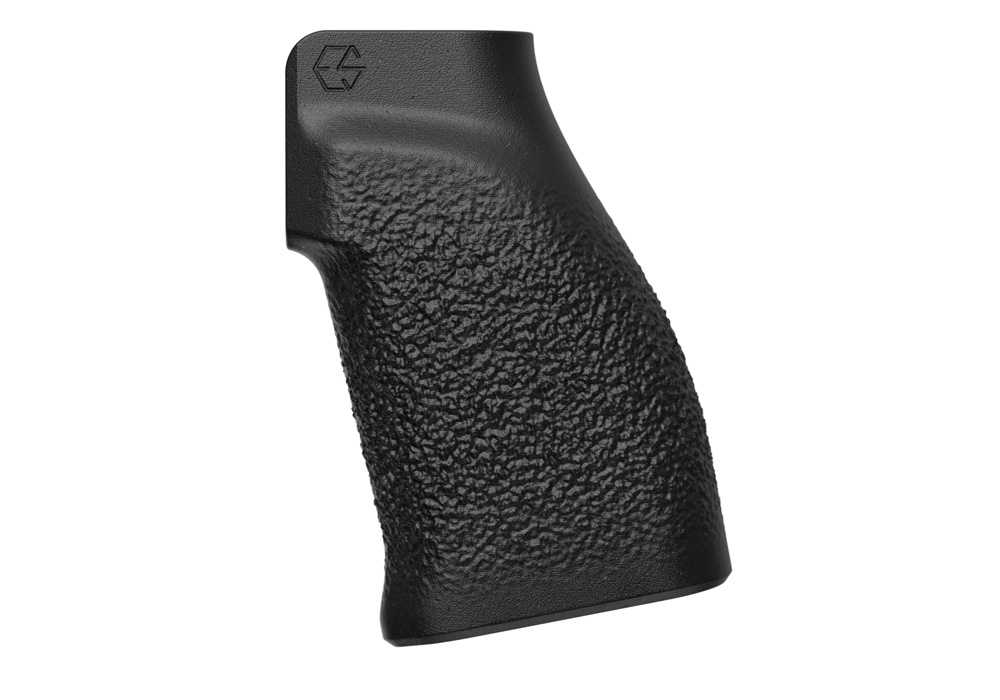
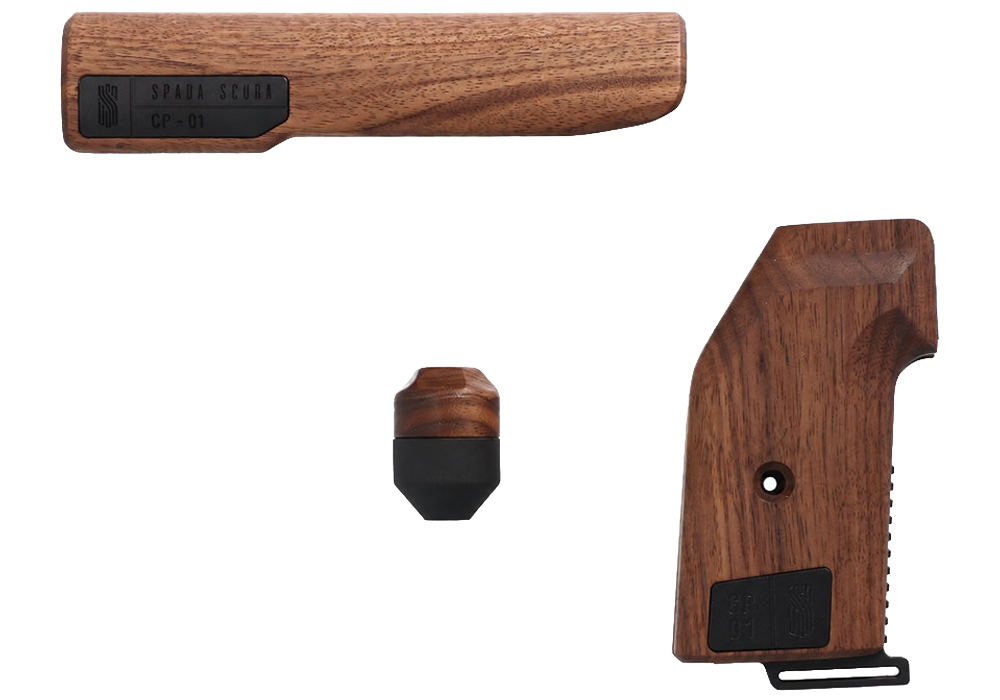
Palm swell grips are firearm grips with an outward-curving contour that fills the natural hollow of the palm. Unlike a uniformly flat grip panel, a palm swell adds fullness through a selected portion of the gripping surface, creating a rounded profile where the hand wraps around the frame. That shape can provide more even contact between the hand and grip, helping some shooters feel less pressure concentrated along a narrow edge. The difference is often most noticeable during an extended range visit, when a grip that initially feels acceptable begins to reveal an uncomfortable corner or an awkward stretch to a control. A well-matched palm swell should feel supportive rather than oversized, with enough room for the fingers to settle naturally. Although this profile is often associated with larger hands, hand size alone does not determine whether it will feel comfortable. Palm width, finger length, grip position, and the dimensions of the firearm all influence the result. Someone with a broad palm and shorter fingers may prefer a modest swell with a slimmer upper section, while another shooter may appreciate a fuller contour through the middle. Some designs keep the area near the top relatively narrow while adding width farther down, so the entire gripping surface does not have the same thickness. Palm swell grips can be relevant to recreational target shooters, competition participants, and firearm owners who find flat panels uncomfortable. They are an ergonomic option, not a universal improvement: a profile that feels natural in one hand may feel bulky in another. Their central purpose is to change how the grip meets the palm. Texture, material, and overall dimensions contribute to that experience, but the defining feature remains the curved shape itself. Comparing those characteristics together gives a clearer picture than choosing by appearance or assuming that a more pronounced swell will always provide a better fit.
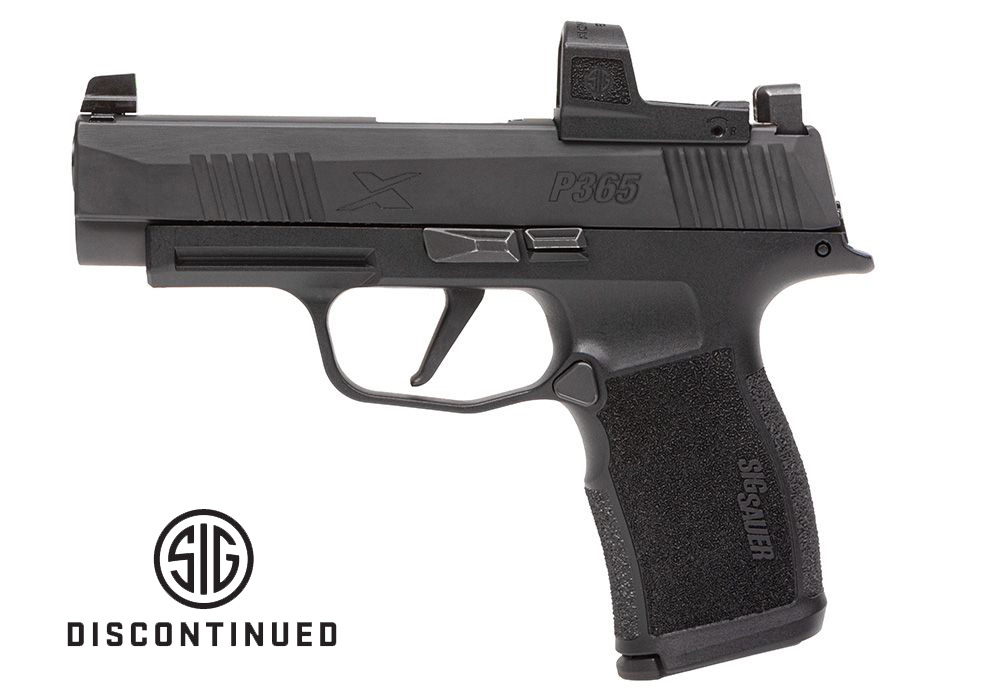
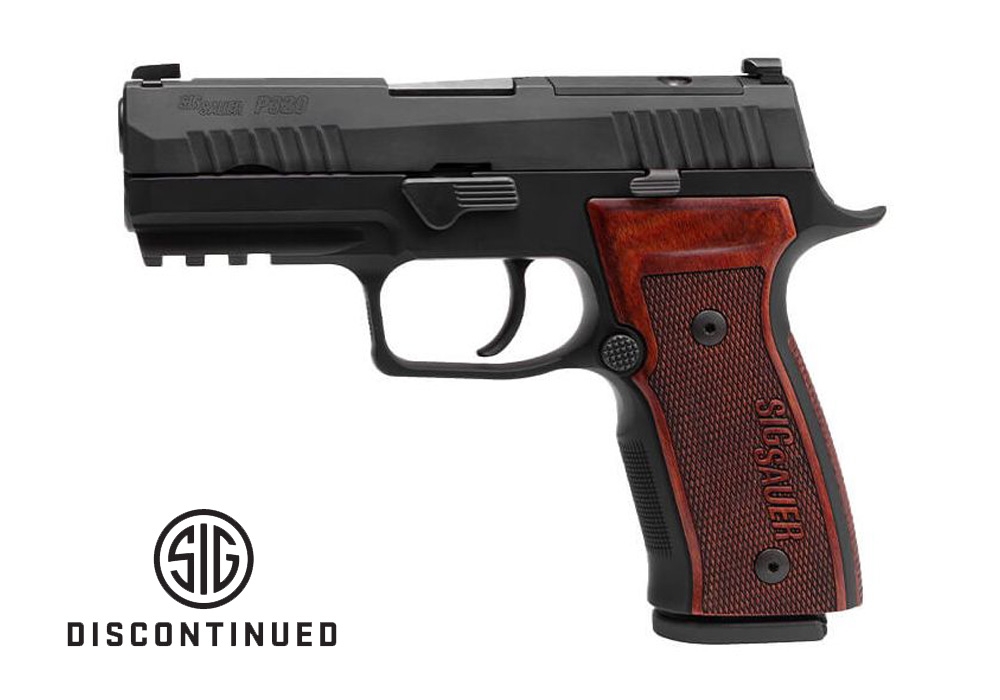
Material and surface texture influence how palm swell grips feel just as much as their outline. Common grip materials include layered fiberglass composites, molded polymers, rubber compounds, wood, and metal, each with different characteristics. A fiberglass composite can provide a rigid contour with machined texture and resistance to ordinary wear. Polymer offers considerable flexibility in shaping and surface pattern, while rubber has a more yielding feel that some hands find comfortable. Wood brings natural grain and a traditional appearance, although its finish and care requirements deserve attention. Metal generally feels firm and can add noticeable weight, depending on the alloy and construction. No material guarantees comfort by itself; a smooth, carefully shaped panel can feel more supportive than a heavily textured panel with the wrong dimensions. Texture may range from shallow grooves and fine checkering to more assertive patterns. During repeated handling, those differences become tangible: a surface that feels reassuring for a brief moment may feel abrasive against the palm over a longer session. Conversely, a very smooth finish may not provide the tactile purchase a particular shooter prefers. Intended use helps put these tradeoffs into perspective. For regular target practice, comfortable contact over time may matter more than a dramatic pattern. For a firearm carried close to the body, texture against clothing and added grip width also deserve consideration. Weight is a separate characteristic from palm-filling shape. Shooters comparing those two qualities can also explore Heavy Gun Grips, keeping in mind that a heavier grip is not necessarily a fuller one. Compatibility remains essential regardless of material or intended use. Grip panels are not interchangeable simply because two firearms look similar, and matching the exact frame configuration matters more than matching a general silhouette. Mounting locations, panel boundaries, control clearance, and the required hardware can differ between configurations. Product specifications should establish those details, including whether existing hardware is suitable. Fit should be evaluated only with an unloaded firearm and in accordance with its manual; uncertainty about compatibility or installation is a reason to consult a qualified gunsmith.
Durability depends on the relationship between material, construction, finish, and routine care. A rigid grip may resist surface wear well yet still require attention around mounting points, while a softer surface can show polishing or wear where the hand contacts it most often. Fine texture can collect residue in its recesses, and wood or coated surfaces may require different cleaning products than an uncoated synthetic material. Following the grip manufacturer’s care recommendations helps preserve both appearance and feel. A soft cloth and an appropriate soft brush can address ordinary surface debris without the aggressive scrubbing that may damage a finish. Cleaning solvents intended for other firearm components are not automatically suitable for every grip material, adhesive, or coating. Periodic inspection can reveal cracks, loose fit, damaged hardware, or a sharp edge that was not present before; those concerns deserve attention rather than being dismissed as cosmetic wear. For someone choosing palm swell grips as a gift, exact compatibility and the recipient’s preferences are more useful than a guess based on hand size. A familiar preference for wood grain, restrained texture, or a fuller palm contour offers a meaningful starting point, but the firearm’s configuration still determines which grips will fit. These accessories can appeal to an experienced range enthusiast who already knows what feels comfortable, or to an owner seeking a different feel from a flat-sided grip. Expectations should remain practical. A palm swell can change the contact area and the way pressure feels across the hand, but it does not reduce the firearm’s actual recoil or guarantee improved shooting results. Its value lies in a more suitable interface between the hand and firearm. The most satisfying choice is often the least distracting in use: a contour without an intrusive ridge, a texture that remains comfortable through repeated handling, and a material whose upkeep fits the owner’s routine. Considered together, those details distinguish a grip that merely looks appealing from one that feels appropriate every time it is handled.