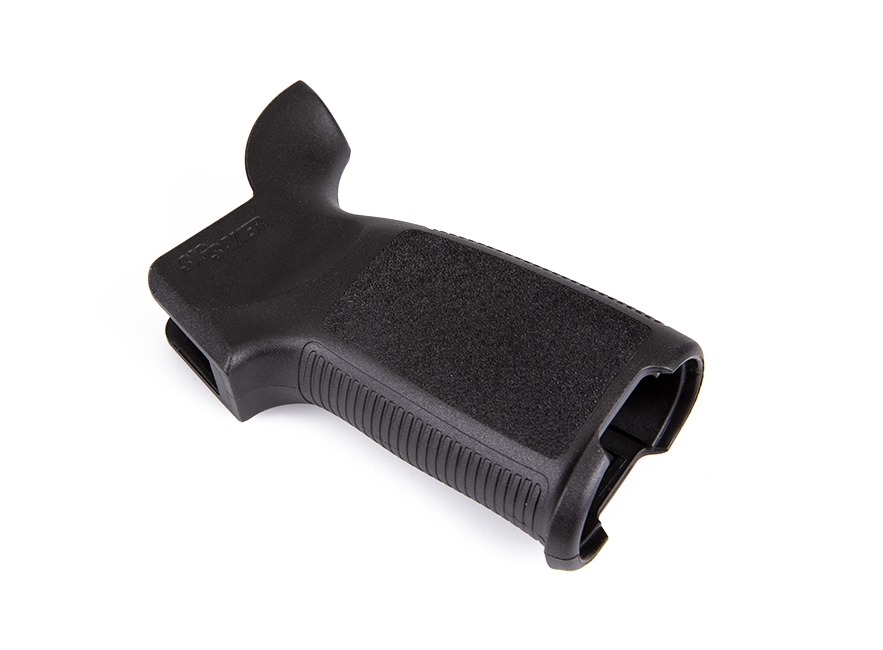
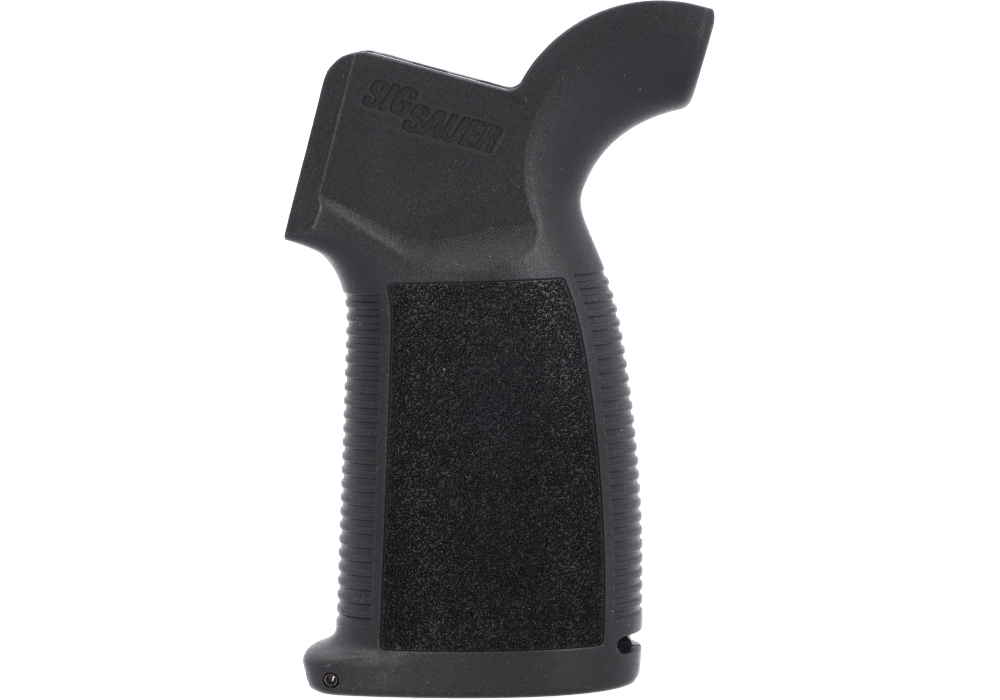
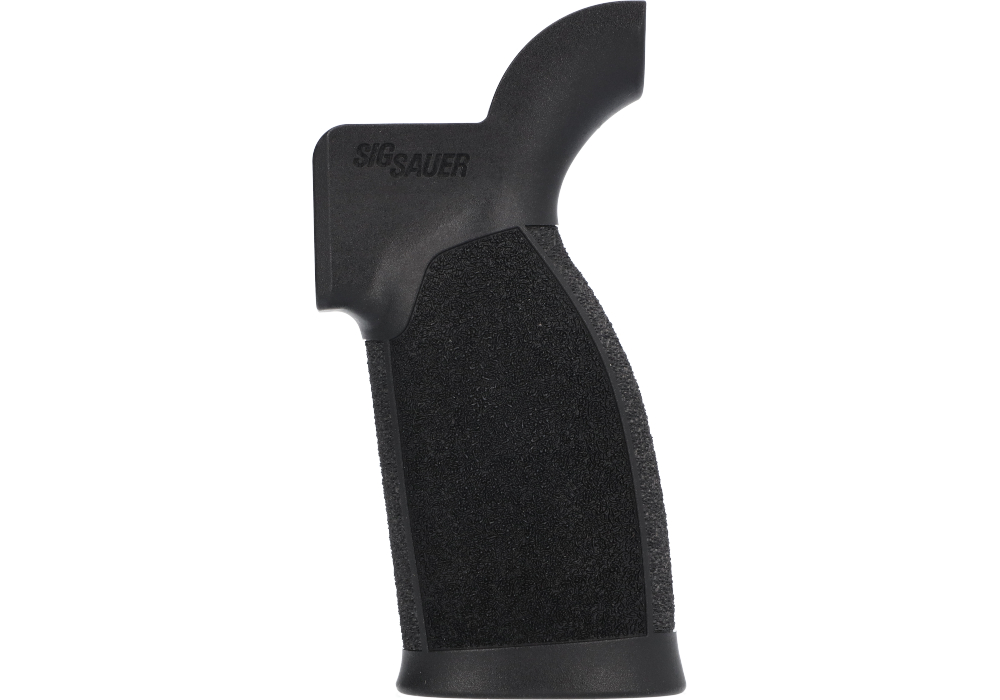
PRS rifle grips are designed for the deliberate, repeatable shooting positions associated with precision rifle competition and long-range practice. Unlike a traditional swept-back grip, a PRS-style grip typically uses a vertical or near-vertical angle that lets the wrist remain more neutral when the firing hand is placed behind the rifle. That position can help reduce tension during extended stages, especially when the shooter is working from barricades, bags, prone setups, or other supported positions. Many precision rifle grips also include a palm swell, thumb shelf, or defined thumb rest to encourage consistent hand placement from shot to shot. A fuller palm swell can give the hand a more secure point of contact, while a thumb shelf may allow the thumb to rest in a predictable location without pressing against the rifle or disturbing the sight picture. The goal is not simply a more substantial grip; it is a grip that allows the shooter to settle behind the rifle, maintain a relaxed hold, and press the trigger without unnecessary movement. When the crosshairs are steady and the firing hand is not straining to reach the trigger, small improvements in comfort and consistency can become especially noticeable over a long practice session or a demanding match stage. These grips may also be useful for hunters, recreational long-range shooters, instructors, and anyone building a bolt-action rifle or chassis system around a stable, highly repeatable shooting position.
Fit should be the first consideration when selecting a PRS rifle grip. Begin by confirming that the grip is compatible with the rifle, chassis, or receiver interface, including the mounting pattern, fastener requirements, and clearance around the trigger area. A grip that looks comfortable in a photograph may feel very different once installed, so hand size and shooting style deserve equal attention. Shooters with larger hands may prefer a pronounced palm swell or a fuller grip profile, while those with smaller hands may find a slimmer shape easier to control without stretching the fingers. A vertical profile is often favored for precision work because it keeps the wrist aligned behind the rifle, but the ideal angle depends on stock adjustment, length of pull, trigger position, and the positions used most often. Thumb shelves and rests can provide a repeatable reference point, although some shooters prefer a simpler profile that allows the thumb to move freely. Texture matters as well. A more aggressive surface can help maintain control in wet or cold conditions, while a smoother texture may be more comfortable during extended use or when wearing thin shooting gloves. Material affects both feel and durability, with reinforced polymer, composite, and other lightweight constructions offering different balances of rigidity, weight, and temperature resistance. During the cooler months, a grip that remains comfortable under gloves and does not create sharp pressure points can make a meaningful difference during an outdoor range session. It is also worth checking whether the grip’s shape provides clear access to the trigger and allows the firing finger to rest naturally alongside the receiver before the shot. For a new build, matching the grip to the chassis, buttstock, cheek rest, and bipod can create a more unified setup; for an existing rifle, a grip may be a practical way to refine ergonomics without changing the entire platform.
PRS rifle grips can be a thoughtful addition for someone who spends time practicing positional shooting, preparing for a precision rifle match, or refining a rifle used from supported field positions. They may also suit a new rifle owner who is learning the importance of a relaxed firing hand and a consistent trigger press. As a gift, a grip is best selected with a clear understanding of the recipient’s rifle or chassis, dominant hand, hand size, and preferred shooting position; a gift card or a conversation about compatibility can be more useful than guessing at fit. Shooters comparing precision grips should look for a secure mounting interface, a profile that supports a neutral wrist, and a shape that places the trigger finger naturally without forcing the hand forward or backward. Installation should follow the manufacturer’s instructions, with the rifle unloaded, the action open, and the firearm handled in accordance with all applicable laws and safe-storage practices. After installation, dry practice and careful range testing can help confirm that the grip does not interfere with the trigger, safety, magazine controls, or other equipment. A well-fitted grip should support the hand rather than make the shooter squeeze harder, allowing the rifle to settle naturally while the thumb, palm, and trigger finger maintain repeatable contact. Shooters exploring other ergonomic options may also be interested in Lightweight Pistol Grips, which address different firearm platforms while sharing the same basic focus on comfortable control and dependable handling. From a first precision build to a carefully tuned competition rifle, the right PRS rifle grip can help create a more natural connection between shooter and rifle through changing conditions, longer practice sessions, and the cooler outdoor seasons.