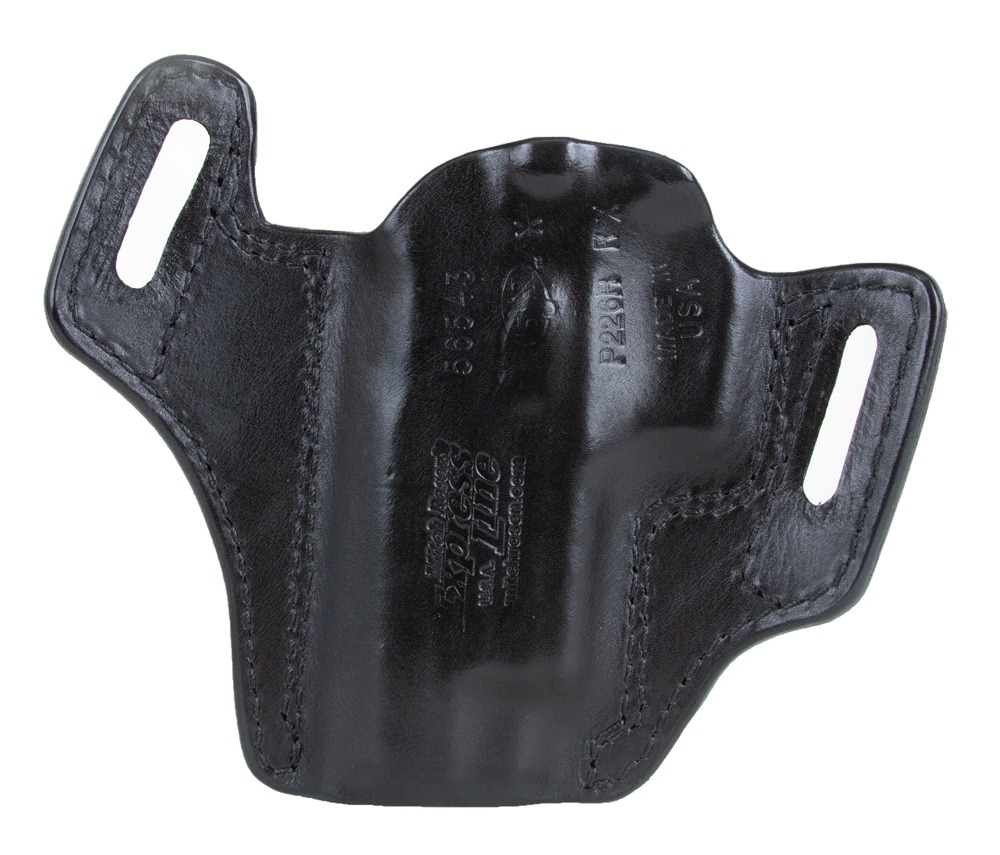
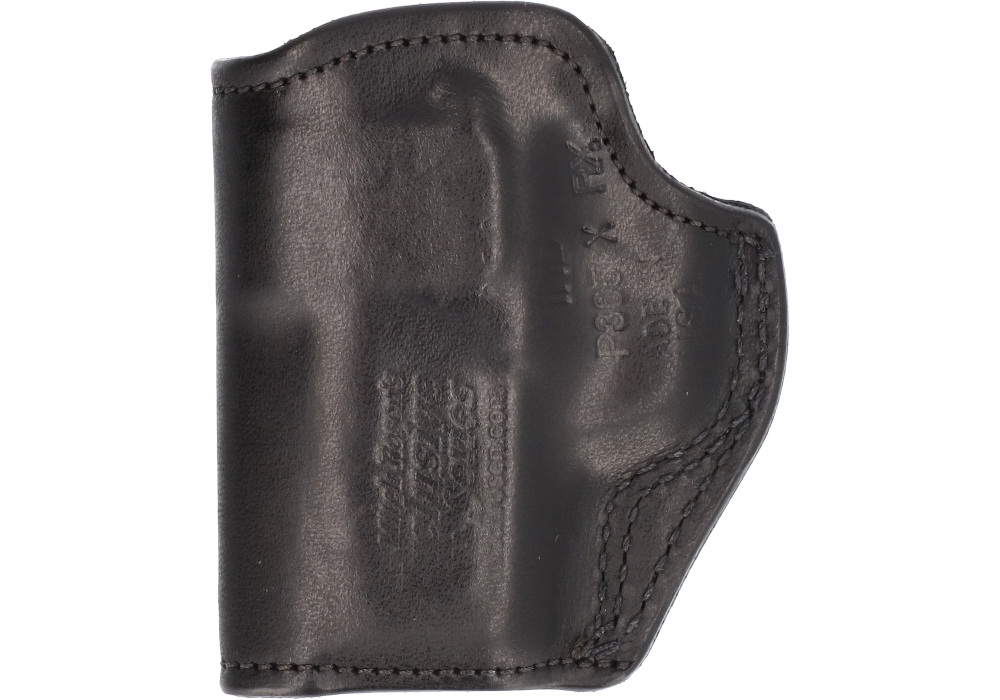
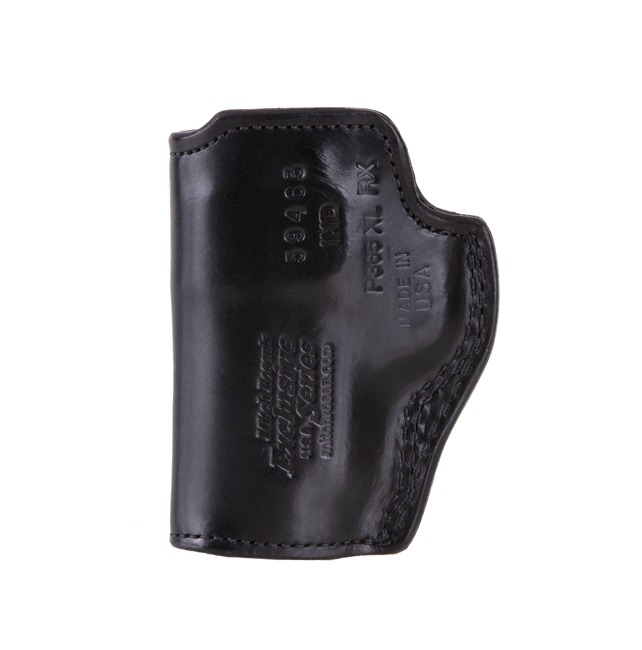
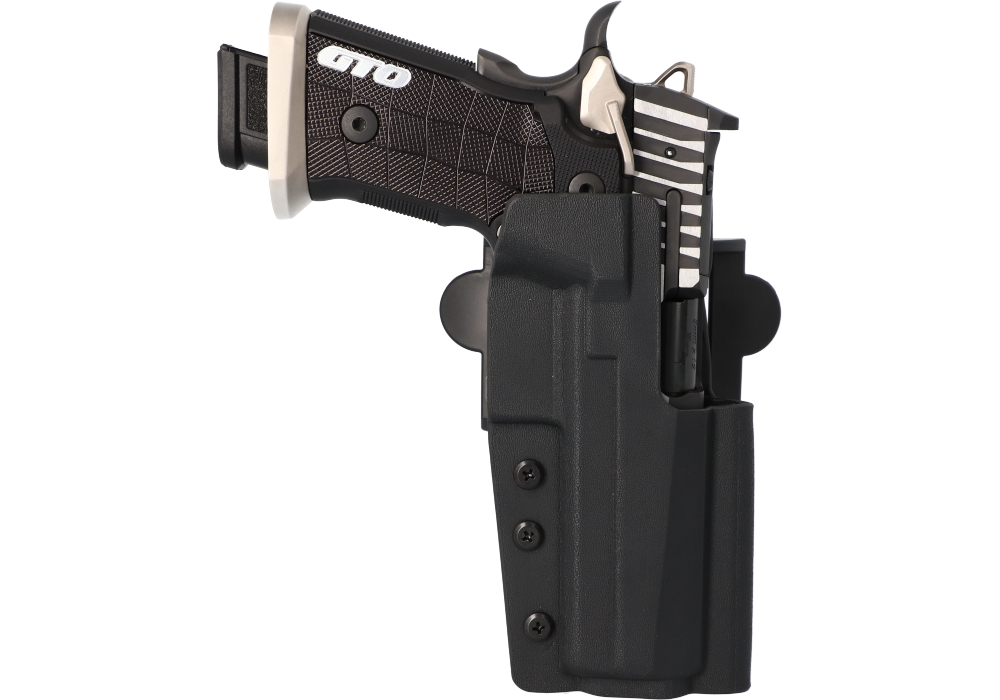
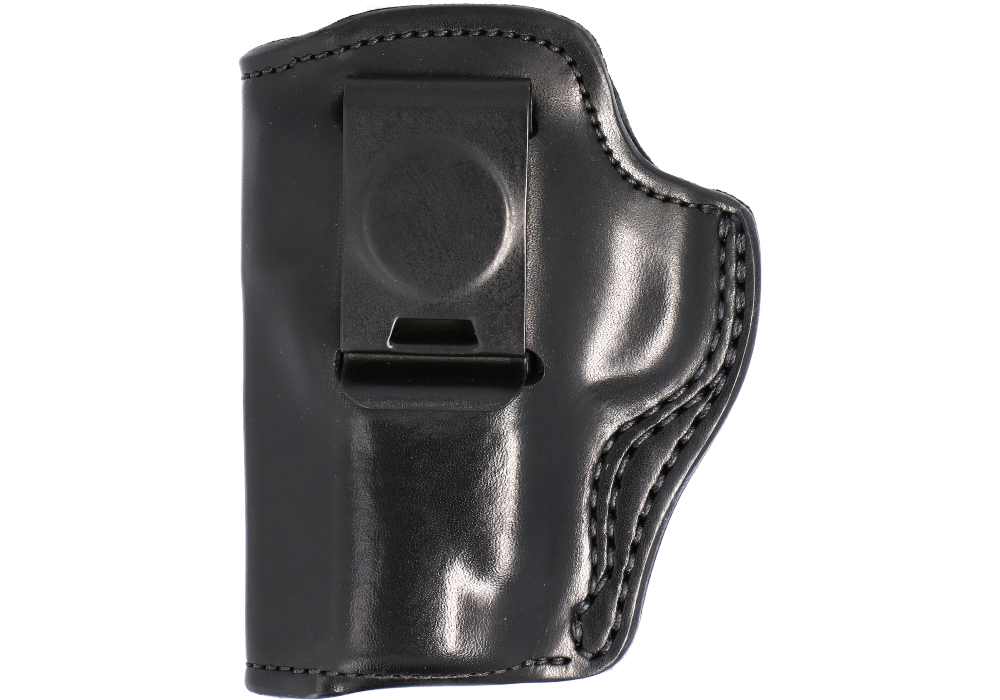
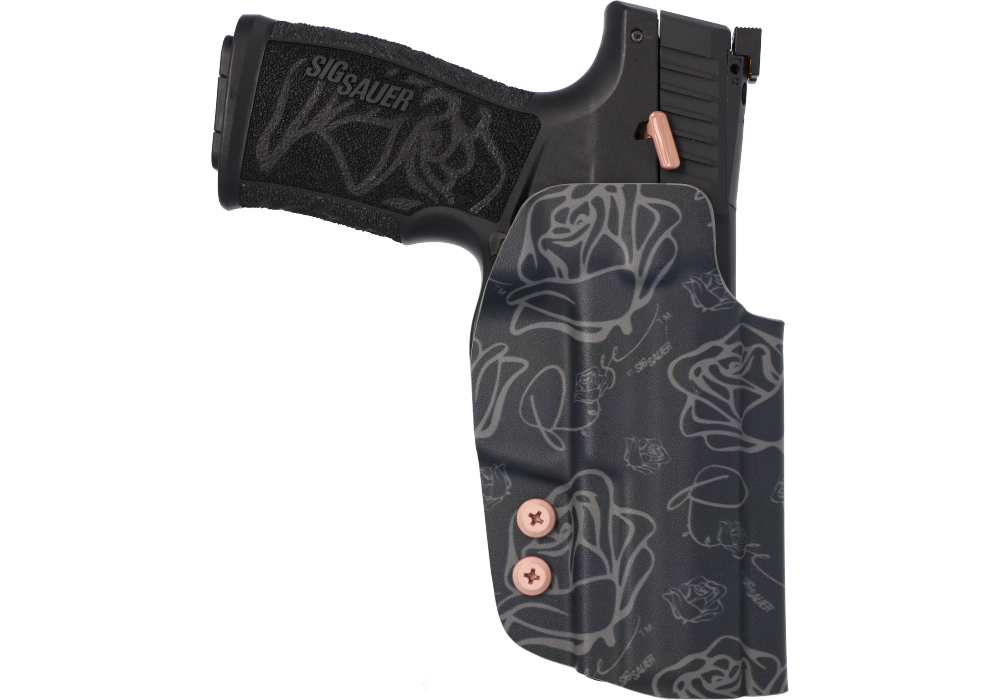
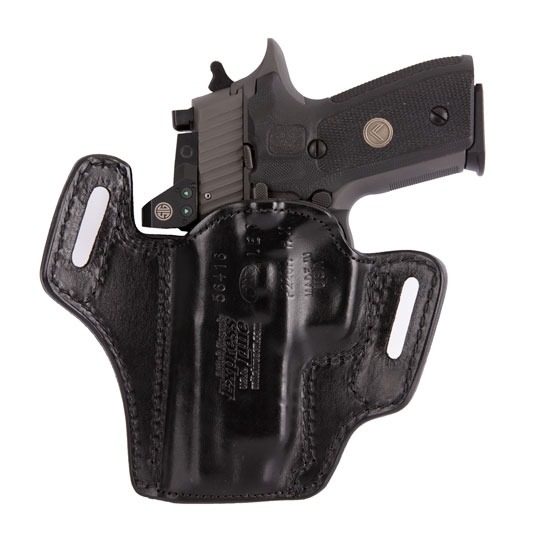
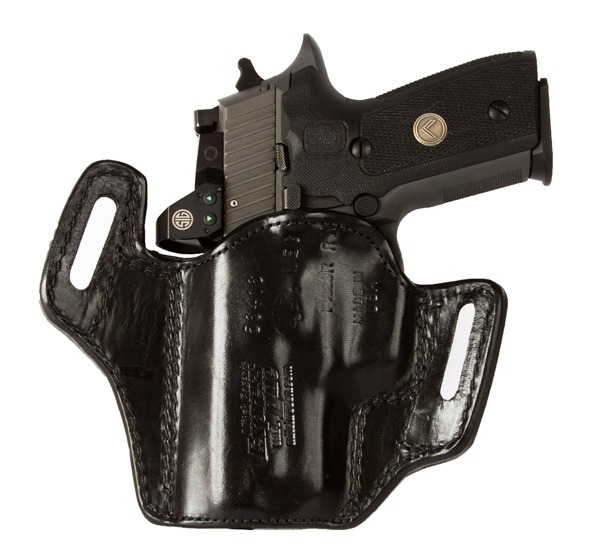
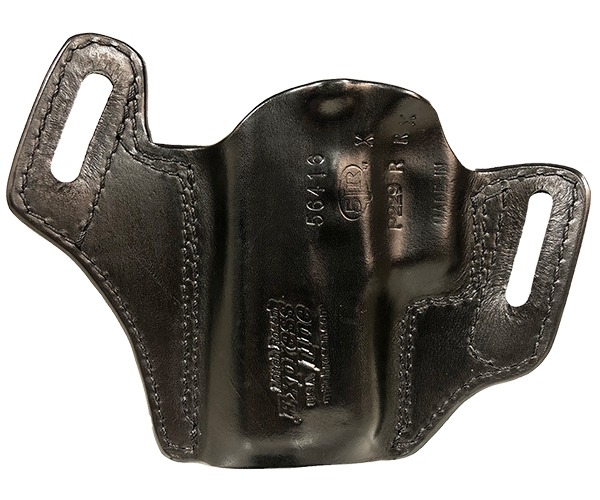
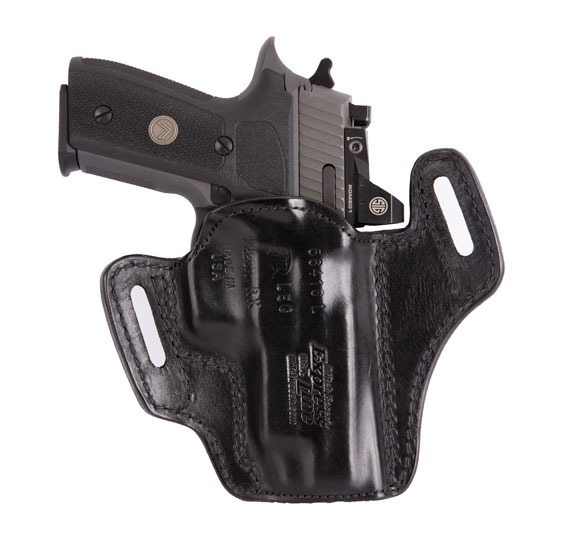
Range holsters are designed for organized practice, training sessions, and time spent on the firing line, where a secure, repeatable draw and safe reholstering routine matter. Most range-focused designs are outside-the-waistband holsters that position the firearm in an accessible location while keeping it separated from the body by a stable mounting platform. Rigid Kydex and molded polymer are popular choices because they maintain their shape through repeated use, resist moisture and abrasion, and help keep the trigger guard fully covered when the firearm is holstered. A well-fitted range holster should hold the specific firearm model securely without depending on excessive belt tension or an overly tight friction fit. Retention may be passive, using adjustable pressure around the slide or frame, or active, using a release mechanism that helps keep the firearm secured during movement. Either style should allow a consistent draw once the shooter has established a proper grip and disengaged any retention feature as intended. The holster should also remain open when empty, making it possible to reholster with one hand without sweeping clothing or placing fingers near the trigger. That detail becomes especially useful during drills, qualification courses, and practice sessions when the other hand may be occupied or when the shooter is concentrating on a deliberate, controlled sequence. Before choosing a holster, confirm the exact firearm fit, including the frame size, barrel length, slide configuration, and any installed light or optic. A holster made for a similar-looking model may not provide the same trigger-guard coverage or retention, while an optic-ready design can accommodate a slide-mounted red-dot sight without blocking the sight window. Open-muzzle configurations may be useful for firearms with threaded barrels, compensators, or suppressor-height sights, but the opening should still be appropriate for the firearm and any accessories in use. These details are worth checking before arriving at the range, when a quick fit check at home can prevent an uncomfortable or unsafe adjustment at the firing line.
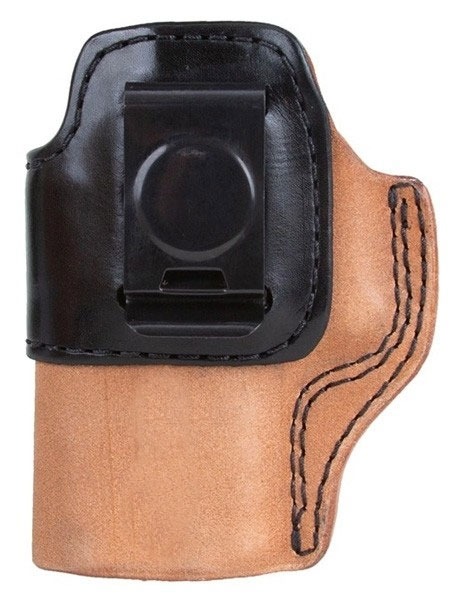
The mounting system has just as much effect on range use as the holster body. A paddle attachment offers convenient on-and-off wear and can be a practical choice for casual practice, shared equipment, or shooters who prefer not to thread a belt through a fixed loop. Belt-loop mounts and dedicated competition-style platforms generally provide a more anchored feel, especially when drawing repeatedly or moving between shooting positions. Modular quick-disconnect systems add another layer of flexibility by allowing the holster to move between compatible belt mounts, drop platforms, or other approved setups without removing the holster body. Look for a mounting pattern and hardware arrangement that match the belt or platform you plan to use, and pay attention to ride height, cant, and adjustment range. A neutral cant may support a straightforward presentation, while a slight forward or rearward angle can better suit an individual’s grip, arm length, and range commands. Ride height affects both comfort and access; a lower position may make the draw feel more natural for some users, while a higher position can keep the firearm closer to the body and reduce interference with benches, vehicle seats, or outer layers during cooler weather. The belt itself should be rigid enough to support the holster without folding or allowing the firearm to shift. After installation, check that all screws are properly seated, any thread-locking compound is used according to the manufacturer’s instructions, and the firearm remains secure during unloaded movement checks. Practice the complete motion with an unloaded firearm in a safe area, paying attention to whether clothing, draw tension, or retention controls interfere with a clean presentation. A holster that feels comfortable while standing still may behave differently when bending, walking, or working from a covered shooting position, so small adjustments to cant and ride height can make a noticeable difference over a long session. For a coordinated setup, a black finish pairs easily with most belts, range bags, protective equipment, and training clothing; explore Black Holsters for a classic, understated option.
Range holsters can serve new shooters, experienced competitors, instructors, and anyone building a dependable practice setup around a personal firearm. They are also a useful gift for a shooter who has recently added a red-dot optic, weapon light, threaded barrel, or other compatible accessory and needs a holster that accounts for the updated configuration. A thoughtful gift choice starts with confirming the firearm model and accessories rather than relying on appearance alone. Someone who spends cooler days at an outdoor range may appreciate a stable OWB holster that works with gloves, a heavier belt, and layered clothing, while an indoor-range regular may place greater value on easy removal, compact storage, and a mounting system that can be transferred between belts. In either case, the most useful range holster supports the shooter’s existing habits without encouraging rushed handling. Use it with a suitable belt, eye and ear protection, and a range bag that keeps ammunition and equipment organized. Follow the range’s rules for loading, drawing, movement, and reholstering, and treat every firearm as loaded until its condition has been personally verified. During practice, keep the trigger finger indexed outside the trigger guard until the sights are on target and the decision to fire has been made; when returning the firearm to the holster, move deliberately and make sure clothing, straps, or other objects cannot enter the trigger area. Inspect the holster periodically for cracks, deformation, loose hardware, worn retention surfaces, or changes in fit, particularly after frequent training or transport. A clean, properly adjusted range holster should disappear into the routine: it keeps the firearm positioned consistently, supports a repeatable draw, accommodates the equipment mounted to the firearm, and gives the shooter one less variable to manage as the session progresses. During the cooler months, storing the holster dry and checking it after exposure to rain, condensation, or damp gear helps preserve its fit and finish for the next trip to the range.