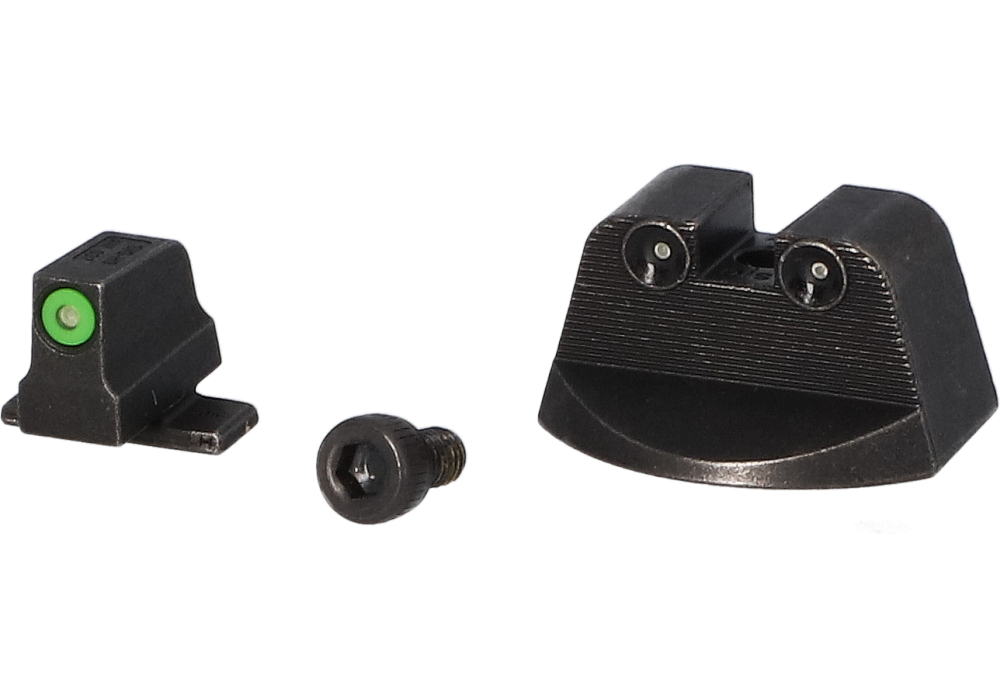
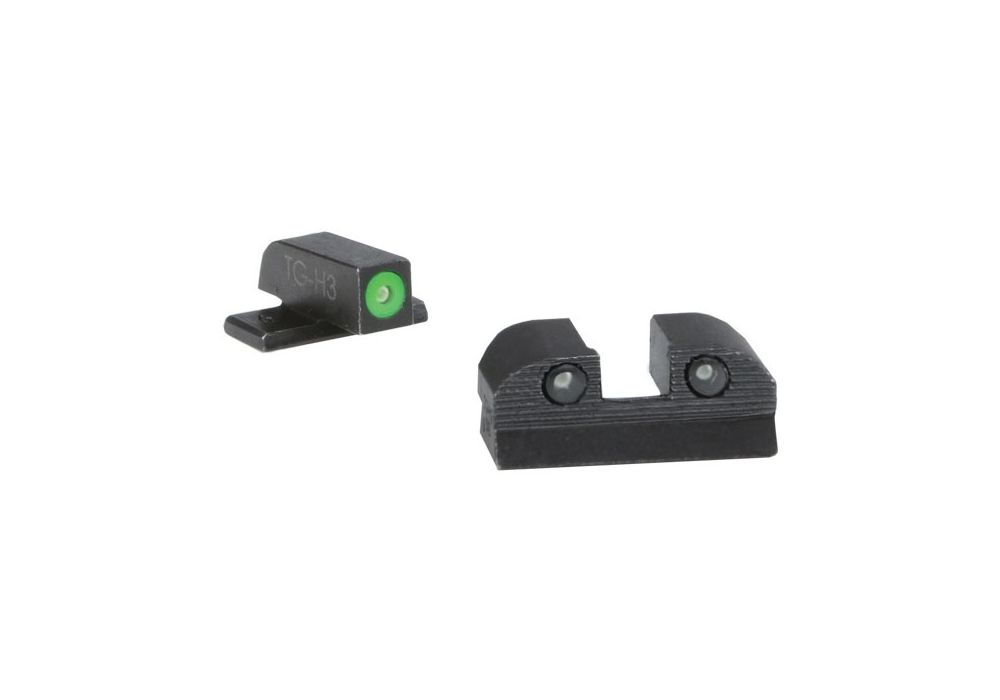
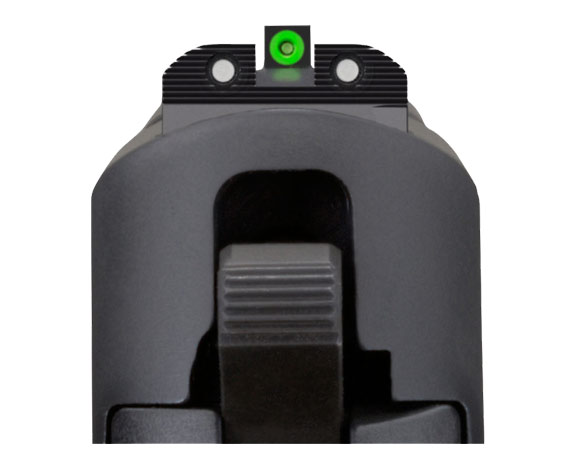
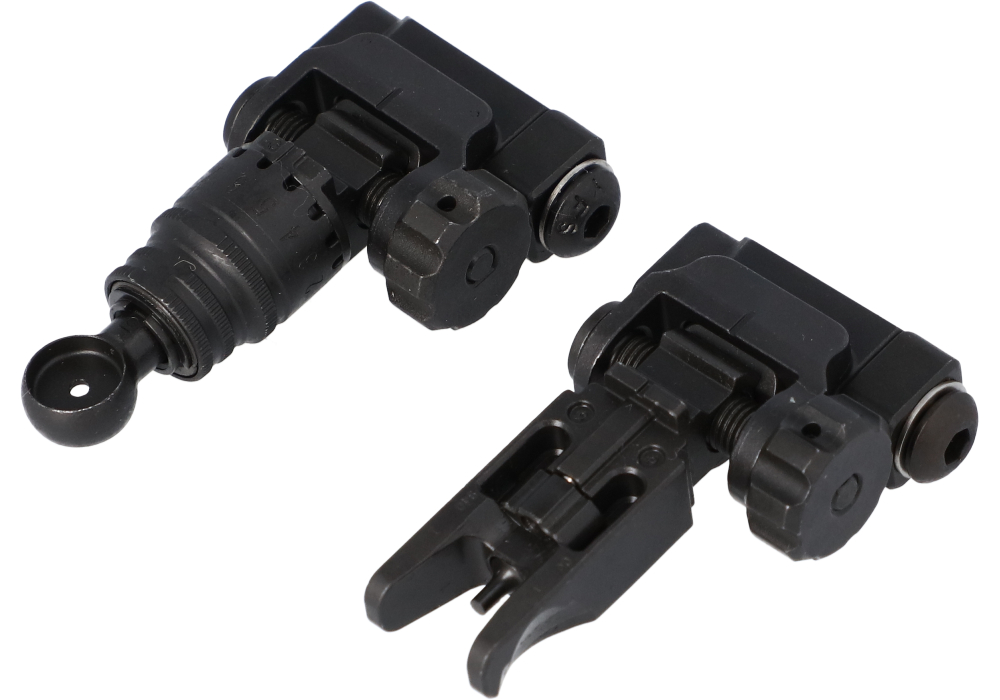
Sight sets typically pair a front sight with a compatible rear sight, creating the visual reference used to aim a firearm without relying on an electronic display. The category includes handgun sights, fixed rifle sights, and folding backup iron sights, with designs suited to different mounting systems and shooting preferences. Although commonly called iron sights, these components can use steel, aluminum, or other materials rather than iron alone. Their defining feature is the relationship between the front aiming reference and the rear notch or aperture. Handgun sets often feature a front blade and a notched rear sight, while rifle sets commonly combine a front post with a rear aperture. Plain black sights offer an uncluttered appearance, especially against clearly defined paper targets. Dot patterns, contrasting outlines, and colored front references provide other ways to distinguish the front sight from the rear. A three-dot arrangement presents a familiar visual pattern, while a prominent front reference paired with a subdued rear can feel less crowded to some shooters. Fiber-optic sights gather ambient light to create a bright reference; their appearance depends on the light reaching the fiber. Tritium night sights use self-illuminating elements that remain visible without batteries, though their brightness diminishes over time. Neither design illuminates the target, and visible sight markings never replace adequate lighting or positive target identification. Some sets combine contrasting daytime markings with self-illuminating elements, bringing different visual references into the same design. The distinction between these styles matters more than appearance alone: a fine front blade, a broad colored outline, and a plain rear notch each present a different view. People who spend time on measured target work may prefer a restrained sight picture, while others favor a more conspicuous front reference for general range use. Fixed and adjustable configurations add another distinction, with adjustable sights offering provisions for elevation or windage changes where the firearm design supports them. Personal eyesight, familiarity, and the intended shooting environment all influence which arrangement feels clear and comfortable.
Compatibility is the foundation of a useful sight set, and a firearm model name alone may not provide enough information to establish fit. Slide configuration, production variation, sight cut, mounting interface, and the intended front-and-rear height relationship can all matter. Two sights that look nearly identical in a photograph may use different dimensions or attachment systems. A matched set helps keep those relationships consistent, but its specifications still need to correspond to the firearm. Handgun sights may attach through dovetail cuts or other model-specific arrangements, and installation requirements vary accordingly. Professional fitting is appropriate when the manufacturer calls for specialized tools or fitting procedures. Sight height also deserves attention on firearms equipped with an optical sight: some configurations accommodate a visible iron-sight reference through the optic window, while others do not. That relationship depends on the complete setup rather than sight height in isolation. Taller sights can also affect holster clearance, making existing equipment part of the compatibility check. On rifles, rail-mounted Flip Sights provide a folding alternative to fixed sights, allowing the sight assemblies to sit lower when not in use. Their suitability depends on the rail interface, mounting location, and clearance around other equipment. Front and rear components must be intended to work together, particularly where mounting surfaces sit at different heights. Folding mechanisms, deployment controls, and locking features vary by design, so product specifications should establish how a set functions. Fixed rifle sights offer a different balance, keeping the aiming reference in position without a folding joint. Neither format is universally preferable; the better fit depends on the firearm’s layout and its intended role. A recreational rifle used primarily with an optic presents different considerations from a firearm configured around iron sights alone. For either arrangement, clear mounting information and confirmed compatibility are more useful than assuming that every rail-mounted sight belongs on every rail-equipped firearm.
Materials, finish, and construction influence how sight sets hold up to regular handling and cleaning. Steel is common in handgun sights because it provides a durable structure in a compact profile, while aluminum appears frequently in rifle sight assemblies where weight is a consideration. Some designs also incorporate polymer components or protected light-gathering elements. Material names alone do not tell the whole story: the shape of the sight, the protection around inserts, and the quality of moving parts all contribute to durability. A matte or textured rear surface can limit distracting reflections, while rounded edges may be more comfortable against clothing and less likely to catch during routine handling. Protective finishes help resist corrosion and wear, but they do not eliminate the need for care. Cleaning products suitable for one part of a firearm may not be appropriate for painted markings, fiber-optic rods, luminous inserts, or coated surfaces. Manufacturer-approved cleaning methods help preserve those details without clouding, loosening, or damaging them. Routine attention can include keeping the visible sight surfaces free of residue and checking for obvious looseness or damage, always with the firearm unloaded and handled according to its safety instructions. An unfamiliar change in the sight picture, a damaged insert, or movement at a mounting point warrants inspection rather than an improvised repair. For range regulars, instructors, and people participating in organized shooting sports, these practical details can matter as much as the initial appearance. A sight set can also be a thoughtful gift for an experienced firearm owner when the exact fit requirements and preferred sight style are already known. Without that information, even a well-intentioned selection may not suit the recipient’s equipment or eyesight. Long-term satisfaction rests on a straightforward combination: a clear visual reference, dimensions that match the firearm, construction appropriate to its use, and care that preserves the features the shooter relies on. Those qualities remain relevant whether the preference is for understated black sights, contrasting dots, illuminated references, or a folding rifle configuration.