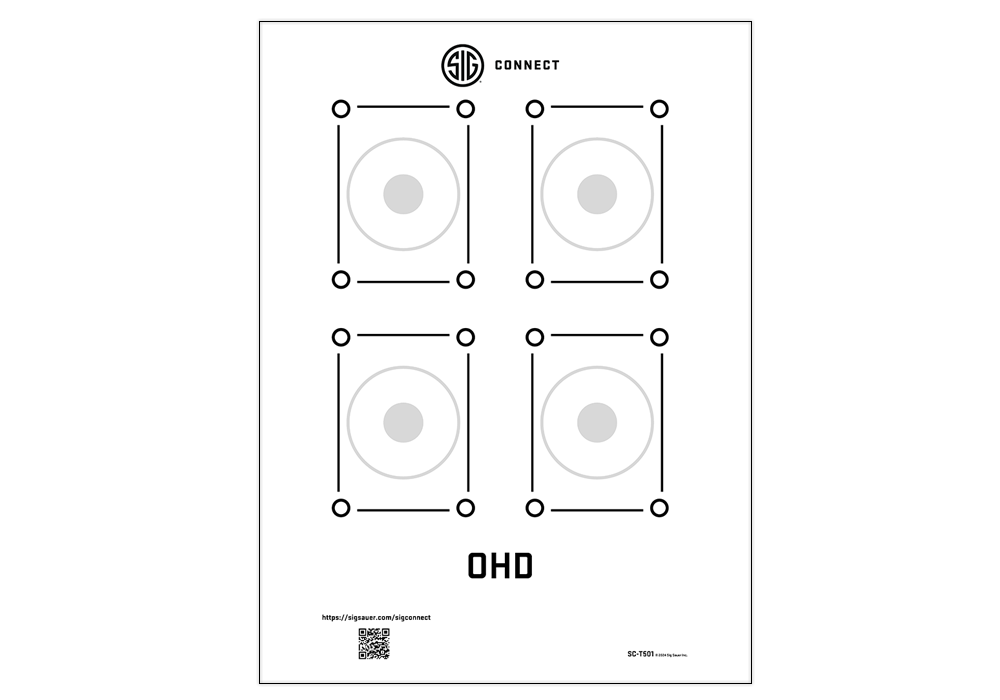
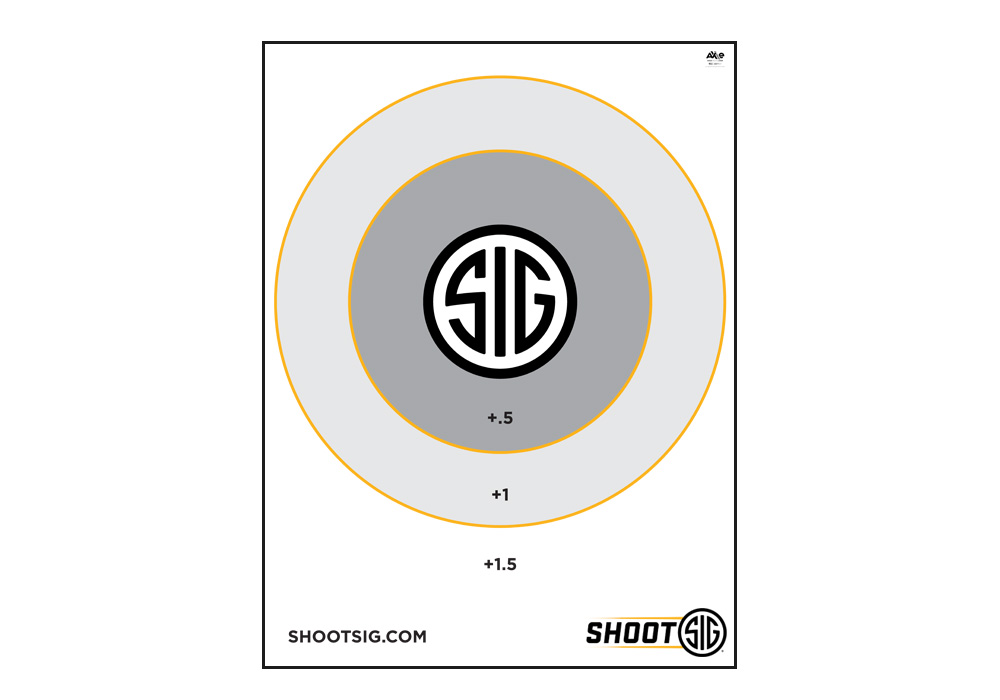
Training targets provide a practical way to turn a range session into a measurable practice plan. Whether the goal is to establish a reliable zero, tighten groups, improve draw-to-shot performance, or build confidence with a new firearm, the right target helps make progress easier to see. Paper bullseye targets are a familiar choice for foundational marksmanship because they offer clear aiming points, defined scoring rings, and an easy record of group size and point of impact. They are especially useful when sighting in a rifle or handgun, confirming an optic adjustment, or checking how a different load performs at a known distance. Targets with grids, numbered aiming points, or multiple bullseyes can help organize a session by giving each string of fire its own reference. This makes it easier to compare results as the firearm warms, the shooter settles into a rhythm, or conditions change. Diagnostic targets add another layer of useful information by pairing aiming points with visual guidance around the edges. A group that consistently lands low and left, for example, may encourage a shooter to examine trigger control, grip pressure, or anticipation of recoil rather than immediately adjusting the sights. These tools cannot replace instruction or careful observation, but they can help connect a visible result on paper with a specific part of the shooting process. For shooters who spend the cooler months practicing indoors or visiting the range less frequently, a stack of well-organized targets can make each trip more focused. Marking the date, distance, firearm, ammunition, and sight settings on the target is a simple habit that turns individual range visits into a useful training record.
Different target styles support different kinds of practice, and material is an important purchase consideration. Paper is lightweight, easy to transport, simple to post, and generally well suited to detailed scoring or repeated drills. It works well for sight-in work, slow-fire groups, fundamentals practice, and sessions where the shooter wants to examine the shape and location of every group. Cardboard offers more stiffness for outdoor setups and can be a good choice when a target needs to hold its form through repeated handling, transport, or multiple strings of fire. Silhouette and anatomically oriented designs can add a sense of proportion and placement to defensive practice, qualification preparation, or duty-related training, while still allowing the shooter to concentrate on safe shot placement and consistent technique. Command and scenario-style targets may use numbers, colors, symbols, or no-shoot areas to introduce recognition and decision-making into a drill, helping experienced shooters practice following changing instructions instead of simply firing at the same point. Steel targets offer immediate audible feedback and can be valuable for appropriately distanced pistol or rifle practice, but they require careful attention to target construction, angle, condition, ammunition compatibility, and the range’s safety requirements. Always follow the target manufacturer’s guidance and the rules of the range, use suitable eye and ear protection, and position targets so that the backstop can safely contain every shot. A target should be selected not only for its appearance, but also for the firearm, caliber, distance, environment, and type of practice planned. Someone working on a precise zero may favor a clean grid and small aiming points, while a shooter preparing for movement or timed strings may benefit from larger, more visible reference areas. Keeping several target formats available allows a single range bag to support both careful fundamentals work and more structured drills, including options found through Drill Targets.
Training targets can serve a broad group of shooters, from someone attending a first supervised range session to an experienced competitor, hunter, armed professional, or responsible defensive practitioner refining established skills. New shooters often benefit from straightforward bullseye layouts that make it easy to see where shots land and celebrate gradual improvement without adding unnecessary complexity. More experienced users may choose targets that challenge speed, transitions, visual focus, or the ability to respond to changing commands. Instructors and range coaches can use varied target designs to structure a class, demonstrate common errors, or give each student a clear assignment for the next string. A target package can also be a thoughtful gift for a shooter because it is practical, easy to store, and useful across many range visits; pairing it with a fresh notebook or marker can encourage the recipient to track group sizes, settings, and observations over time. During the transition between warmer and cooler weather, targets are convenient to keep in a vehicle or range bag so an unplanned practice opportunity does not become a trip spent searching for supplies. Before purchasing, consider the intended firearm, target dimensions, quantity, scoring style, posting method, and whether the targets will be used indoors or outdoors. Look for layouts that remain easy to read at the planned distance and choose enough variety to support the skills being developed rather than relying on one design for every session. A productive target session does not have to be elaborate: establish a safe setup, begin with deliberate shots, inspect the target regularly, and adjust one variable at a time. The visible pattern left behind—tightening groups, cleaner transitions, or fewer unexplained impacts—can provide the kind of honest feedback that keeps practice purposeful and rewarding.